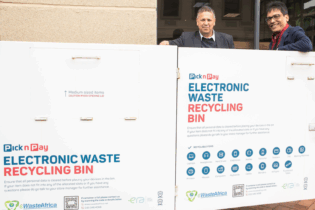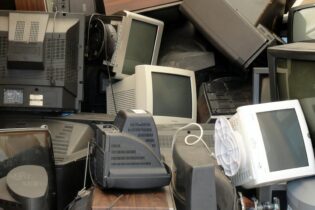
As the global community prepares for Earth Day on 22 April 2026, a transformative partnership in Cape Town is demonstrating that the solution to South Africa’s e-waste crisis may also address its disability employment gap. ERA NPC (E-waste Recycling Authority) and its beneficiary, the non-profit N.E.E.D., have spent the last 2.5 years proving that “junk” electronics can be the catalyst for human dignity.
While many view broken printers or outdated laptops as environmental hazards, this partnership views them as “handicapable” opportunities. By providing foundational capital for stipends, workshop rentals, and essential operational costs to N.E.E.D and its operational base in Bridgetown, ERA NPC has enabled the organisation to create a structured, safe, and stable environment where people with disabilities can thrive.A Blueprint for the ‘Handicapable’ Green Economy
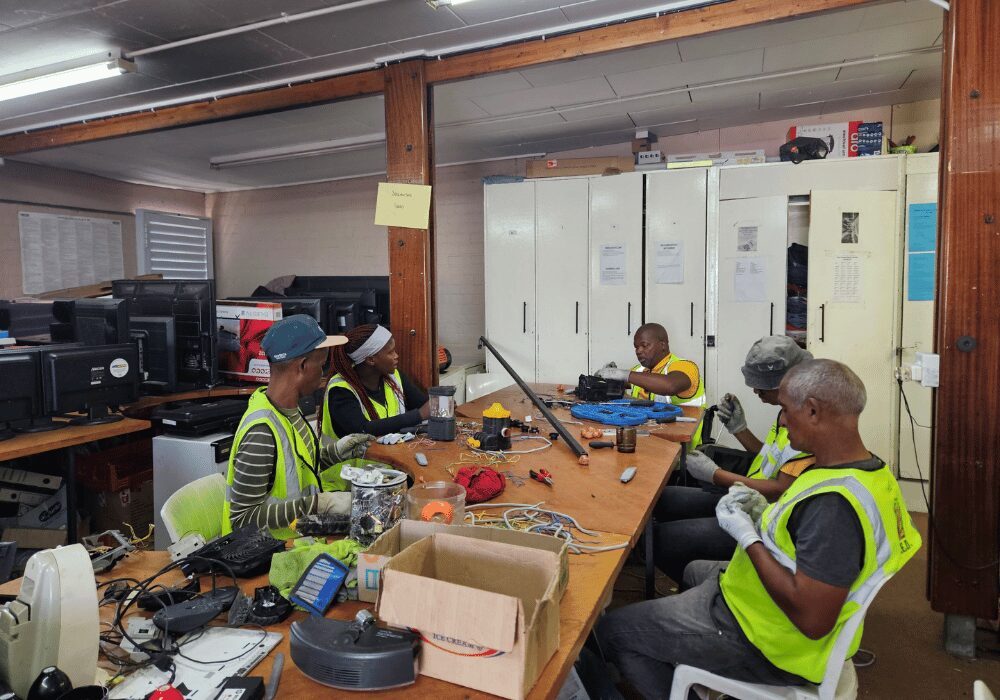
Siyabonga James Soganga leads his N.E.E.D team
“What makes this partnership so meaningful is that ERA NPC has invested directly in our people and our capacity,” says Martin.“The support ensures that the individuals we train have a stable, dignified income. It turns e-waste into a pathway for long-term development where everyone feels seen and valued”. This ecosystem allows beneficiaries to start with fundamental tasks, such as sorting and identifying components, before progressing to technical repairs and responsible recycling. Beyond the workbench, the programme integrates life skills and health and safety training, building a sense of camaraderie that transforms how participants view their own potential.
The Faces of Transformation: James and Nigel
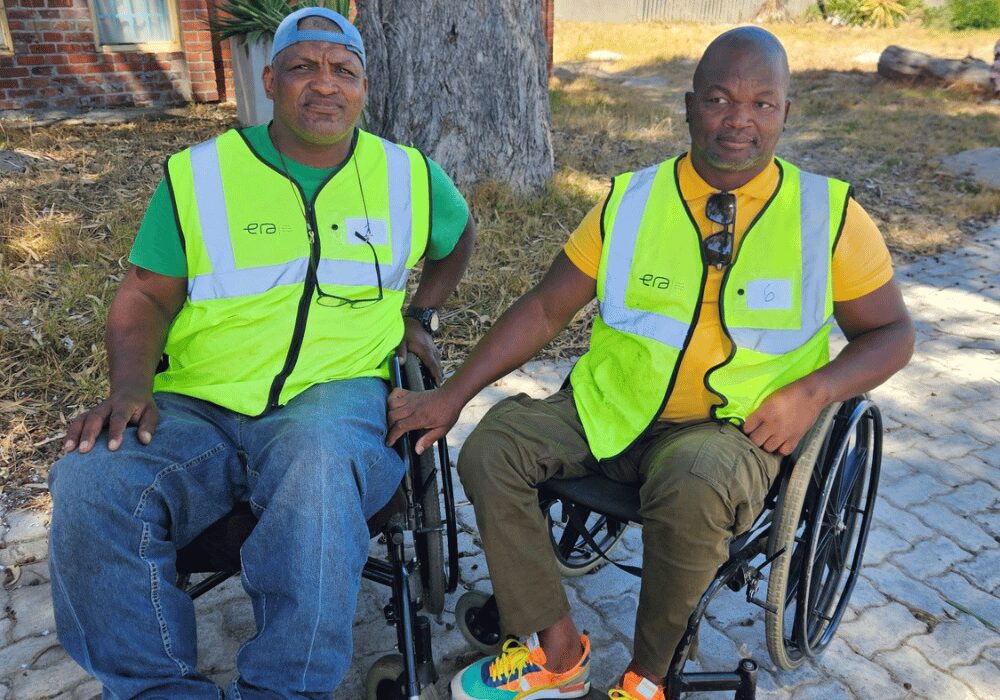
Siyabonga James Soganga and Nigel Fisher are two of the wheelchair bound N.E.E.D team members

James Soganga, a 53-year-old from Nyanga who uses a wheelchair, describes N.E.E.D. as his second home. After a life-changing injury in 1997, Songanga struggled to find acceptance and purpose. Today, he is a skilled technician who understands the intricate value of the materials he handles.
“I’ve learned how to fix things, how to dismantle, and how to tell the difference between various components,” Soganga explains. “It’s not just the work; it’s the respect and the community. If I can make it, others can make it too”. Kewtown resident Nigel Fisher’s story mirrors this profound shift in confidence. Like Soganga, 52-year-old Fisher has transitioned from being viewed as a “dependent” to being recognised as a valued contributor to environmental protection. Fisher explains: “The skills I have learnt here empower me both professionally and personally. I am especially proud of the fact that I can show my grandchildren that they can do anything they set their mind to, no matter what physical limitations they have.” Martin notes that both men now “stand taller” and speak with a certainty that carries over into their home lives and communities.“When people see James and Nigel succeeding, they see possibility,” says Martin. “They prove that the green economy is a space where people with disabilities can excel”.