Johannesburg’s water crisis has finally drawn national attention. Suburbs have endured weeks without supply, residents queue at tankers, and civil society is calling for disaster declarations. President Cyril Ramaphosa acknowledged infrastructure failure in his State of the Nation Address and promised investment. The focus is necessary, but incomplete.
The public conversation is currently framed around pressure management, pipe bursts, pump station failures, and under-expenditure. These are real problems. Ageing infrastructure, operational inefficiencies, and governance fragmentation have pushed parts of Johannesburg to the brink. Yet if we reduce this crisis to broken pipes alone, we miss the deeper structural issue. South Africa’s water crisis is not only about infrastructure decay. It is also about regulatory modernisation. And beneath the surface lies a governance blind spot that receives far too little attention: groundwater and the growing complexity of contaminants entering our water systems.Groundwater
Around 80% of South African municipalities use groundwater in some form. In many rural areas, it is the primary or sole source of drinking water.In urban centres, it supplements surface supply or serves as emergency backup during outages. Yet very few municipalities employ dedicated hydrogeologists. Monitoring networks are sparse. And routine water-quality testing remains focused largely on conventional parameters designed decades ago. At the same time, our contamination profile has changed dramatically. Across Africa, including South Africa, groundwater systems are increasingly impacted by contaminants of emerging concern, such as pharmaceuticals, antibiotics, personal care products, endocrine-disrupting compounds, industrial chemicals such as PFAS (per- and polyfluoroalkyl substances), and microplastics. These compounds are persistent, mobile, and often resistant to conventional treatment processes. They are not hypothetical risks. They are being detected in shallow and fractured aquifers influenced by wastewater leakage, landfill leachate, and urban runoff. When wastewater treatment works fail, and many are failing, the problem is not limited to nutrients and pathogens entering rivers. It includes pharmaceuticals from human consumption, industrial compounds from manufacturing zones, and persistent chemicals that can migrate through soil profiles and vadose zones and ultimately into aquifers. When landfill containment is weak, leachate carries complex chemical mixtures into the subsurface. When irrigation reuse expands under water-stressed conditions, treated effluent may introduce trace contaminants into shallow groundwater systems. Yet our regulatory frameworks and monitoring regimes have not evolved at the same pace. The Department of Water and Sanitation’s Blue Drop, Green Drop, and later No Drop programmes were important governance innovations, introducing benchmarking and performance transparency for drinking water quality, wastewater treatment performance, and water loss management. However, while these frameworks improved accountability around conventional parameters and infrastructure efficiency, they were not designed to address the emerging contaminant profile now shaping groundwater and surface water risks. The National Water and Sanitation Master Plan provides a strategic blueprint for infrastructure renewal and long-term supply security. These initiatives deserve recognition. But they were designed in an era when conventional contaminants dominated policy thinking. Microbiological safety, nutrients, turbidity, and traditional chemical parameters remain essential. However, they no longer represent the full risk landscape. We modernised how we measure water quality. We now need to modernise what we measure. Most municipalities do not routinely screen for pharmaceuticals in groundwater. Few, if not all, have the capacity for high-resolution mass spectrometry to detect complex contaminant mixtures. Groundwater-specific guideline values for many emerging contaminants remain absent. Analytical capacity is unevenly distributed, concentrated in a handful of research institutions and specialised laboratories. In effect, we are managing a 21st century contamination profile with 20th century regulatory tools. This is not a criticism of individuals working within the system. It is a structural gap.
Beneath the surface
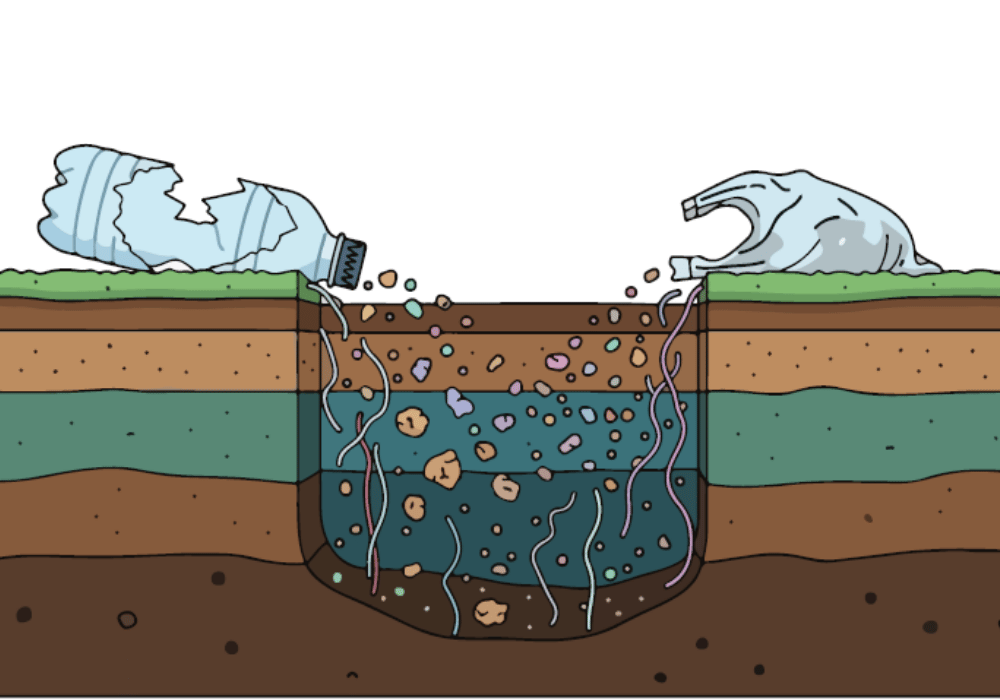 Johannesburg’s current crisis is framed as a quantity problem: reservoirs too low, pumps not functioning, supply interrupted. But quantity and quality governance are inseparable. When surface systems falter, communities turn to boreholes and private abstraction. When wastewater infrastructure collapses, shallow aquifers become more vulnerable. In highly urbanised and industrial settings such as Gauteng, where fractured and unconfined aquifers enhance hydraulic connectivity, contaminants can move more rapidly than we assume. We should not wait for a contamination scandal to discover this blind spot.
The People’s Water Forum and other civil society groups are correct to demand accountability, transparency, and systemic reform. Calls for independent investigations and emergency funding highlight legitimate frustrations. But beyond stabilising supply, we must ask a more fundamental question: are we equipping our water governance systems to manage the contaminants of today and tomorrow?
Cape Town’s experience during the 2018 Day Zero crisis offered important lessons. Behavioural change, transparent data-sharing, and diversified supply planning helped avert catastrophe. Long-term strategy, including groundwater abstraction, desalination, and reuse, became central to resilience planning. But resilience is not only about augmenting supply. It is also about understanding what moves through that supply.Contaminant governance
If Johannesburg and other metropolitan areas increasingly integrate groundwater, reuse, and alternative sources into their portfolios, then contaminant governance must be modernised in parallel. This includes systematic monitoring of emerging contaminants in vulnerable aquifers, development of interim screening thresholds informed by international benchmarks, and integration of hydrogeological vulnerability mapping into infrastructure planning. Recent regulatory developments in Europe, such as enforceable limit values for selected PFAS in drinking water, illustrate how governance frameworks can evolve in response to emerging risks. Direct transplantation of international standards may not be feasible in South Africa’s socio-economic context. However, the principle of precautionary, risk-based monitoring is instructive. We do not need perfect data before acting. We need adaptive governance that recognises complexity. The Johannesburg crisis should therefore serve as a catalyst, not only for infrastructure repair, but for regulatory renewal. This renewal requires investment in the right skills. Municipalities that depend on groundwater must, as a matter of urgency, employ registered and skilled hydrogeological expertise. Monitoring networks must extend beyond surface reservoirs to include aquifer systems. Laboratory capacity must be strengthened to detect complex contaminant mixtures. Data must be publicly accessible, fostering the same transparency that proved decisive in Cape Town. Above all, groundwater must be brought into the epicentre of the water governance conversation. It cannot remain an invisible, emergency backstop. It is a strategic national asset. South Africa does not lack policy documents. It lacks integrated implementation that bridges infrastructure investment, regulatory modernisation, and scientific capacity. The National Water and Sanitation Master Plan acknowledges systemic weaknesses. Blue Drop and Green Drop provide accountability mechanisms. Civil society is demanding action. The President has signalled urgency. The newly established National Water Crisis Committee now provides a platform to embed groundwater governance and contaminant modernisation into the national response, not as an afterthought, but as a core pillar of reform. The opportunity now is to connect these strands.
Yazeed Van Wyk, research manager, Water Research Commission