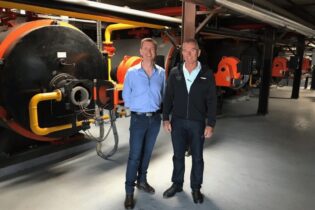

Neil Webb, consulting engineer and past president of the Corrosion Institute of Southern Africa.
Steel pipelines
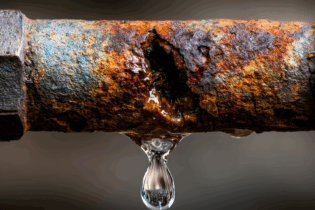
Steel pipelines are vulnerable to corrosion from both external soil conditions and the internal water they convey. “While corrosion is not the only issue surrounding water pipelines, it is a significant contributing factor to their collapse,” adds Webb. Steel pipes can corrode internally because water itself can be corrosive by nature. When water has low alkalinity, low hardness, high dissolved oxygen or elevated chloride and sulphate levels, it can actively promote corrosion.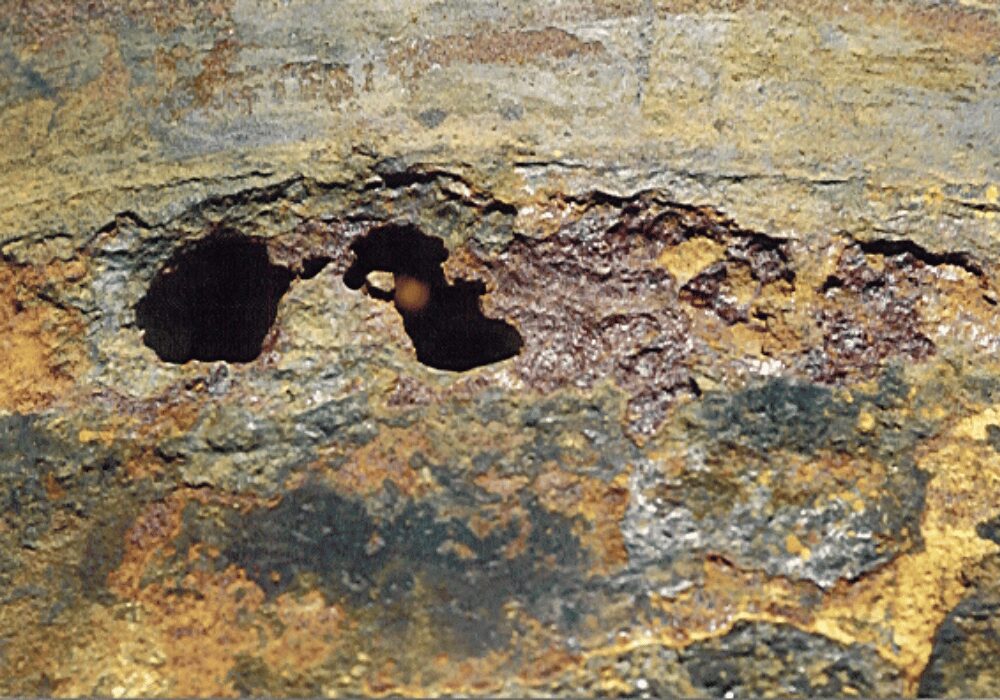
External corrosion on an old bitumen coated pipe (Credit Isinyithi)
1. General soil corrosion
In average soils, steel may corrode at roughly 0.1 mm per year. That may sound slow, but for a pipeline designed to last 50 to 100 years, that steady loss can gradually erode the wall thickness to the point where its structural integrity is compromised long before its intended service life ends. Long cell action caused by differential soil conditions can accelerate corrosion by a factor of 10 or more.2. Bacterial corrosion
Sulphate-reducing bacteria (Desulfovibrio, Desulfobacter, Desulfotomaculum, Desulfobulbus, and Desulfomicrobium) are found in certain soils, particularly in mining-affected regions. This can accelerate corrosion dramatically. These organisms generate by-products that are highly aggressive to steel. Corrosion rates of 1 mm to 2 mm per year are possible in extreme cases. Given that most steel pipelines have a wall thickness of just 6 mm to 12 mm, losing 1 mm to 2 mm each year amounts to a substantial reduction in structural integrity over a relatively short timeframe.3. Stray current corrosion
One of the most destructive corrosion forms arises from electrical interference, especially near direct current (DC) railway systems. Stray currents enter the soil and use pipelines as alternative return paths. Where the current discharges, catastrophic corrosion can occur. “A new pipeline can perforate in a matter of months under severe stray current conditions,” Webb warns.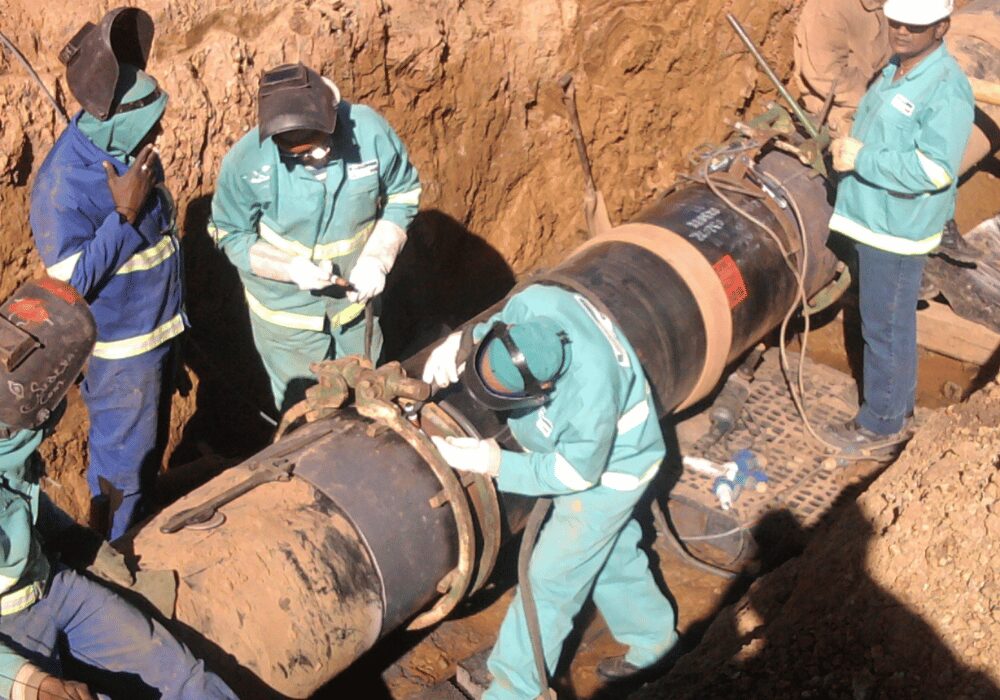
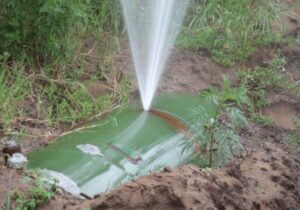
Emergency repairs in progress (Credit Isinyithi)
The problem with cathodic protection
Cathodic protection is used to counteract stray current corrosion. This is the application of external current to protect metallic structures by creating cathodic conditions on the surface. “Cathodic protection works together with external coatings and wrappings and can also be used to counteract general soil and bacterial corrosion. Cathodic protection is a specialist field and expert advice should be sought for the design, installation, supervision and commissioning of cathodic protection systems. It needs to be properly designed and maintained,” adds Webb. Maintenance, theft and vandalism is the weak link with cathodic protection. Equipment is frequently installed in remote areas and becomes a target for vandalism and theft. Transformers, copper cables and even power supplies are stripped. Without functioning cathodic protection, corrosion accelerates rapidly. “The extent of theft and vandalism of cathodic protection systems is horrendous. We are almost at a point where it is becoming nearly impossible to maintain cathodic protection because components are stolen almost immediately after installation,” says Webb.
Internally, water pipelines are protected by linings, most commonly cement mortar or epoxy-resin based systems. Spun-bitumen linings, widely used decades ago, are no longer applied.
These internal linings are the only barrier between the steel and the water. Their performance is therefore critical. “Even when HDPE (High-Density Polyethylene) or PVC (polyvinyl chloride) pipelines are used, there is almost always a steel component somewhere along the line that requires protection. A pipeline is only as strong as its weakest link. If that fitting corrodes, it can compromise joint integrity, trigger leaks, reduce system pressure and ultimately result in premature failure and service disruption,” explains Webb.Other challenges
“Most municipalities are under-resourced in qualified personnel and funds. One of the most damaging patterns in municipal maintenance is reactive repair. Crews are under pressure to restore water supply quickly. Therefore, the quickest, easiest way to patch a leak is to insert a plastic section into a steel line and add a sealant. Or the leak is simply patched without reinstating the coating. The water flows again, but the corrosion control system is compromised, especially if the pipe has a cathodic protection system. Ultimately there will be more degradation and more leaks as the repair was, at best, temporary,” says Webb. He explains that another major obstacle is the municipality’s limited capacity to determine the root cause of a leak. “Without the necessary in-house skills, they are unable to assess failures properly or implement long-term corrective measures. It is extremely difficult to fix a problem effectively if you do not first understand why it exists in the first place.”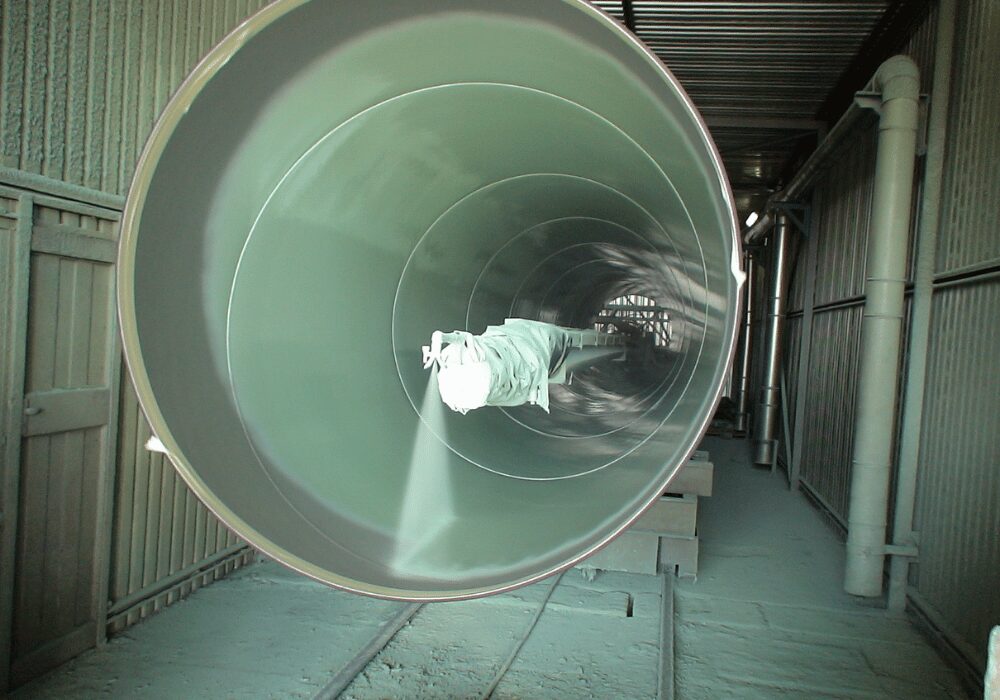
Internal epoxy lining application (Credit Isinyithi)
New technologies
Encouragingly, technology has evolved. Electrical survey techniques can assess the corrosion status of steel pipelines without excavation. Active corrosion status can also be identified through estimating metal loss. Trenchless technologies allow old steel pipelines to be rehabilitated by cleaning and inserting new plastic liners, avoiding large-scale excavation. These methods can be cost-effective compared to full replacement, particularly in dense urban environments. However, they require upfront investment and technical capacity, both of which are in short supply. Through the Corrosion Institute of Southern Africa, Webb and his peers are working to close the skills gap. The Institute offers training for inspectors, technicians and infrastructure owners, focusing on coatings, cathodic protection and corrosion management systems. “South Africa does not lack standards or technical guidance. The frameworks exist. The challenge lies in consistent application, competent oversight and sustained maintenance,” he adds.Maintenance crisis
Webb references the broader infrastructure reality highlighted by Dr Vishal Haripersad, president of Consulting Engineers South Africa: “What we are facing should be recognised for what it is: A national infrastructure maintenance crisis. Nowhere is the crisis more visible than in the water sector. Earlier this year, Parliament was told that R400 billion is required to rehabilitate South Africa’s water and sanitation systems. For many communities, the impact is already clear – not because water does not exist, but because ageing infrastructure can no longer deliver it reliably.” Perhaps the most important message is economic rather than technical. Corrosion protection typically represents around 15% of the capital cost of a large pipeline project
Kirsten Kelly