
Andrew van Zyl, managing director of SRK Consulting South Africa
“Mines play a vital role – often underestimated – in bringing critical mass to the adoption of valuable technologies that would otherwise struggle to gain a local foothold in communities around Africa,” said Van Zyl.“Decentralised renewable energy is a good example, which can rapidly transform livelihood opportunities, productivity and general standards of living among communities.”
First movers
 He pointed out that mining companies have often acted as critical first-mover customers for innovations in renewable energy, paving the way for value chains to develop into new territories in Africa. This, in turn, allows other stakeholders to adopt and benefit from life-changing products and expertise.
This has occurred with the application of solar power installations at mining operations, thus creating demand for local inventories and expertise for installation and maintenance. Once a mine’s investment in this technology has incentivised the establishment of local service providers, more affordable access by communities in the country or region often follows. This opens doors for small businesses and households to adopt innovations that transform lives and livelihoods.
“These processes can advance transformation even more effectively when a country’s relevant legislation, regulations and incentives are aligned with the economic and technological opportunities,” he explained.
He pointed out that mining companies have often acted as critical first-mover customers for innovations in renewable energy, paving the way for value chains to develop into new territories in Africa. This, in turn, allows other stakeholders to adopt and benefit from life-changing products and expertise.
This has occurred with the application of solar power installations at mining operations, thus creating demand for local inventories and expertise for installation and maintenance. Once a mine’s investment in this technology has incentivised the establishment of local service providers, more affordable access by communities in the country or region often follows. This opens doors for small businesses and households to adopt innovations that transform lives and livelihoods.
“These processes can advance transformation even more effectively when a country’s relevant legislation, regulations and incentives are aligned with the economic and technological opportunities,” he explained.
“This is best achieved when the private and public sectors are regularly engaged in constructive discussion about adapting legislation and leveraging investment and innovation – ideally through collaboration based on robust relationships and honest engagement.”In South Africa, the licensing exemption threshold for solar and other energy plants was increased from 1 MW to 100 MW in 2021, allowing more private generation of renewable energy. The country’s mines have since put in train around 3,5 GW of power projects, in a pipeline that could reach 5 GW by 2030.
Lessons learnt
The Indaba’s focus on collaboration is relevant when considering how technological advancement also requires regulatory innovation, with both aspects – technical and legal – requiring engagement, courage and scientific rigour. Van Zyl highlighted that, while investors and project champions based key decisions on certainty and predictability, all parties still expected the mining sector to continually improve – implying ongoing change. “Innovating is seldom simple, so it does require a commitment from clients, professionals, operations and government bodies to consider new ideas and technologies in the context of lessons learnt,” he said. “This means reflecting carefully on what has worked in the past or elsewhere and applying innovations with the flexibility to make adaptations whenever necessary. We also need to have the courage to share the reasons some innovations have failed as this facilitates progress, helping others avoid making the same mistakes.” He encouraged more discussion on ways to build new ideas into the mining ecosystem at minimal risk, a process that demanded honest assessments of past performance. This approach applied as much to technical aspects of mining as it does to the policy and regulatory framework.“The mining sector – globally and in Africa – has the advantage of extensive studies and reviews of initiatives that have made a difference,” he said.“These range from equipment performance to local beneficiation strategies and are all vital to how we learn from our past experience.”
Multiplier
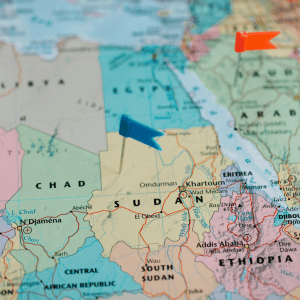
Mining is also a valuable and important catalyst in fostering intra-African trade