Thought-leadership piece by Mervin Olivier, Eastern Cape Chairperson, Institute of Waste Management of Southern Africa (IWMSA)
Something remarkable is happening across South Africa. In workshops, research facilities, farms and urban centres, pioneering minds are reimagining one of society’s oldest problems: what to do with our waste. The answer, increasingly, is turning it into something valuable.
Waste to Building Materials and Roads
What if your household waste could pave the road you drive on – or build the wall of your neighbour’s home? South African innovators are making this a reality. Waste materials including plastics, ash and industrial by-products are being compressed into durable, cost-effective building bricks, while non-recyclable plastics are being converted into bitumen-like compounds used in road construction and pothole repair. These breakthroughs reduce the volume of waste destined for landfill while simultaneously addressing South Africa’s critical infrastructure challenges.Waste to Energy
Across the country, waste is being reimagined as a fuel source. Waste-to-energy (WtE) initiatives are generating electricity and heat from materials that would otherwise fill our over-burdened landfills. From biogas captured at municipal solid waste sites to thermal treatment of non-recyclable residues, South Africa is harnessing the calorific value of waste to contribute to the national energy grid – a timely and powerful response to the country’s energy pressures.Black Soldier Fly Bioconversion
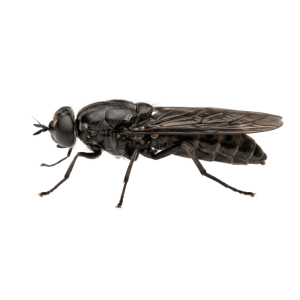
Black Soldier Fly
Vermicomposting: Worms at Work
The humble earthworm is proving to be one of waste management’s most valuable allies. Vermicomposting – the process of using worms to break down organic material – is being adopted at scale by South African households, municipalities and agricultural operations. The result is vermicast, a nutrient-dense organic fertiliser that improves soil health, reduces the need for chemical inputs and returns organic matter to the earth in a form that sustains life. It is circular economy thinking in its most tangible form.
Microbial Fermentation of Food Waste
Cutting-edge biotechnology is joining the waste management toolkit. By harnessing specialised microorganisms to ferment organic food waste, South African practitioners are accelerating the decomposition process and producing nutrient-rich soil amendments and liquid fertilisers. This approach dramatically reduces the volume and weight of organic waste, eliminates greenhouse gas emissions associated with landfill decomposition, and creates a product that rejuvenates depleted agricultural soils. It is a beautiful loop: food grown in soil, waste returned to it.South Africa: Leading the charge on the continent

Mervin Olivier, Eastern Cape Chairperson, Institute of Waste Management of Southern Africa