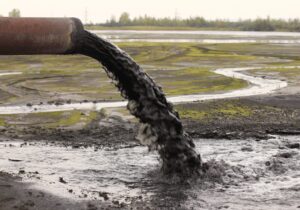
South Africa’s latest Green Drop Report is more than a dataset. It is a diagnostic of an essential national service in critical condition. Of 848 wastewater treatment works assessed, 396 are in a critical state, while only about a quarter meet required standards.
That’s not a statistic to skim past. It means that right now, poorly treated or untreated sewage is entering water sources that millions of people depend on for drinking, farming and survival. For too long, we have treated wastewater treatment plants as the ‘big toilets’ of the country that only attract attention when they overflow. The crisis is often blamed on ageing pipes and tight budgets. Both are real, but they are symptoms, not the root cause. The harder truth is that infrastructure failures reflect a deeper issue: a fragmented governance model where financial constraints, procurement delays and tariffs that don’t reflect actual costs make long-term sustainability almost impossible. Municipalities are being squeezed from every angle, but some of what’s broken is a matter of focus.The regulatory gap nobody is talking about loudly enough
Many municipalities are still operating as though Regulation 2834, an older framework built around baseline compliance and paperwork, is the standard. It isn’t. Regulation 3630, the current framework, demands measurable performance and real service delivery outcomes. The gap between perceived and actual requirements is, in itself, a governance failure. On the ground, a different story is playing out. South Africa does not lack talent. We have skilled engineers, dedicated scientists, and process controllers who are constantly upskilling, people who show up and carry the system even when the system doesn’t carry them back. Yet too many are working with one hand tied behind their backs. Decisions are delayed, resources are trapped in slow processes, and institutional support is inconsistent. As one process controller in Limpopo put it: “We know how to run these plants. We keep improving. But without support, we can’t apply what we know. And when superiors don’t even show up to roadshows, you have to ask, why wouldn’t they want better water, better staff, better communities?”
When leadership is absent, even the most skilled professional becomes a spectator to a slow-motion disaster. Accountability isn’t just about finding someone to blame when things go wrong. It’s about building a system that enables people to do things right.
What WISA can and can’t do
At WISA, our role is specific but vital. We don’t operate plants or have the legislative power to sanction non-compliant municipalities. What we can do is professionalise the sector, set rigorous standards, certify skills and amplify the voices of practitioners. But professional bodies alone cannot fix what governance, funding and enforcement have allowed to deteriorate. Turning this around requires movement on three fronts simultaneously:- Enforced accountability, with real consequences for performance failures at municipal leadership level.
- Financial realism, funding models and tariffs that reflect the true cost of running and maintaining a modern water system, not the cost of the system we wish we had.
- Institutional support, giving technical staff the authority and resources to match their expertise.

Dr. Lester Goldman, CEO, WISA