When we talk about recycling, most people immediately think of plastics, paper, or scrap metal. Glass often gets overlooked, despite being one of the most recyclable materials available.
Unlike many materials, glass can be recycled indefinitely without losing its purity or quality. Every bottle or jar discarded in a landfill represents not just waste but a missed opportunity to reduce energy use, conserve natural resources and create value. The reality is that South Africa, like many countries, still sends far too much glass to landfill. This is even though glass has the potential to be transformed into countless new products, ranging from bottles and jars to building materials, decorative landscaping features and even road safety applications. The lack of awareness about what recycled glass can be used for is a major barrier. Businesses and communities alike need to understand that glass recycling is not only an environmental imperative but also an economic opportunity waiting to be unlocked.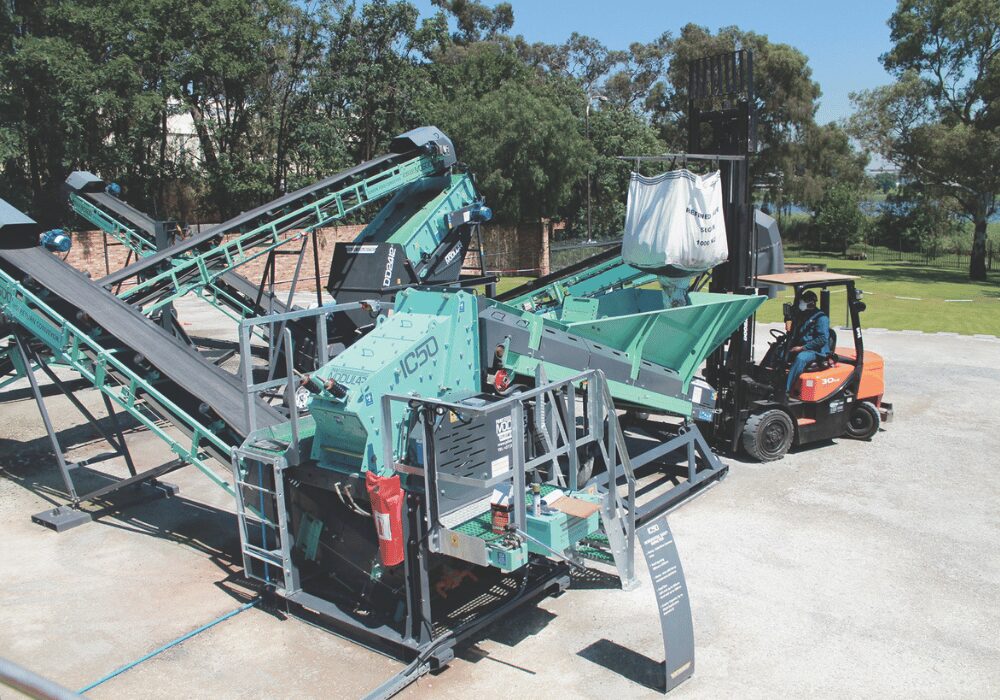
This modular glass-processing setup, incorporating a belt feeder and impact crusher, is engineered for efficient high volume crushing in demanding glass recycling operations
Growing Markets
Construction is one of the most promising growth markets for recycled glass. Crushed glass can be substituted for traditional aggregates in concrete and asphalt. When used this way, it not only reduces the demand for quarried stone but also adds strength and sometimes even a sparkling aesthetic to the finished product. Road bases, concrete countertops, and bricks can all benefit from the inclusion of glass cullet. In fact, brick manufacturers have found that adding crushed glass to their clay mixtures creates unique finishes and eco-friendly credentials that align with modern sustainability requirements. There is also a growing demand for recycled glass in landscaping and decorative applications. Once the sharp edges are removed tumbled glass can be used as a long-lasting colourful mulch in gardens or as ground cover in pathways and fire pits. It resists degradation, maintains its vibrancy, and mimics the look of natural stone, providing designers and landscapers with a durable and visually striking option. Water features, ponds, and aquariums also make use of glass cullet, taking advantage of its reflective and translucent qualities. Artists have embraced recycled glass as well, incorporating it into mosaics, sculptures and mixed-media projects that capture the imagination. Beyond its visual appeal, recycled glass is also making its mark in functional applications. For instance, crushed glass is increasingly being used as a filtration medium. In water treatment plants, swimming pools and aquariums, glass cullet is proving to be more efficient than traditional sand filters as it requires less water for backwashing and lasts longer. Industrial processes that require filtration also benefit from the durability and chemical stability of glass.
At the other end of the industrial spectrum, glass is being used as a safe environmentally friendly abrasive in sandblasting and polishing. Unlike silica-based abrasives crushed glass does not carry the same health risks, making it a preferred alternative in many applications.
The versatility of glass recycling extends even further. Road safety has benefited significantly through the incorporation of glass into reflective road markings. Glass beads made from cullet are embedded in paints and coatings to make lane markings more visible at night, enhancing safety for drivers. In some parts of the world, crushed glass is even used in environmental remediation such as replenishing eroded beaches where the processed material mimics the natural appearance of sand. Each of these examples demonstrates that glass recycling is not simply a matter of reducing waste – it is about unlocking the potential of a material that can drive value across multiple industries. This is where the financial opportunities become apparent.The potential of glass recycling in South Africa
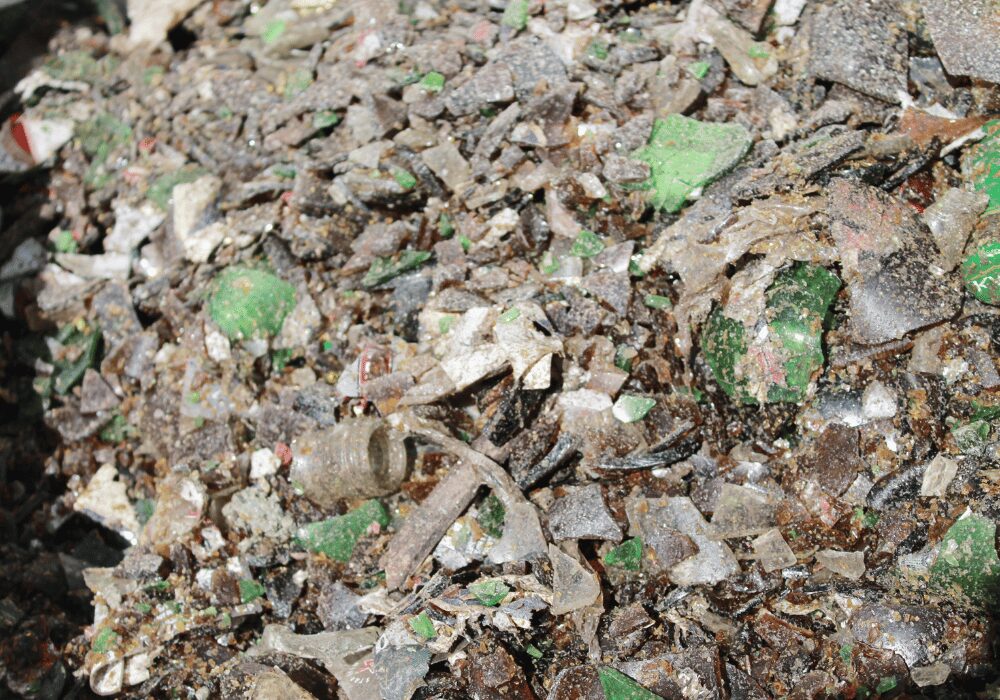
The Pilot Crushtec IC50 impact crusher offers variable speed control settings to optimise glass bottle crushing, reducing blockages and limiting excessive fines to deliver consistently higher-quality cullet
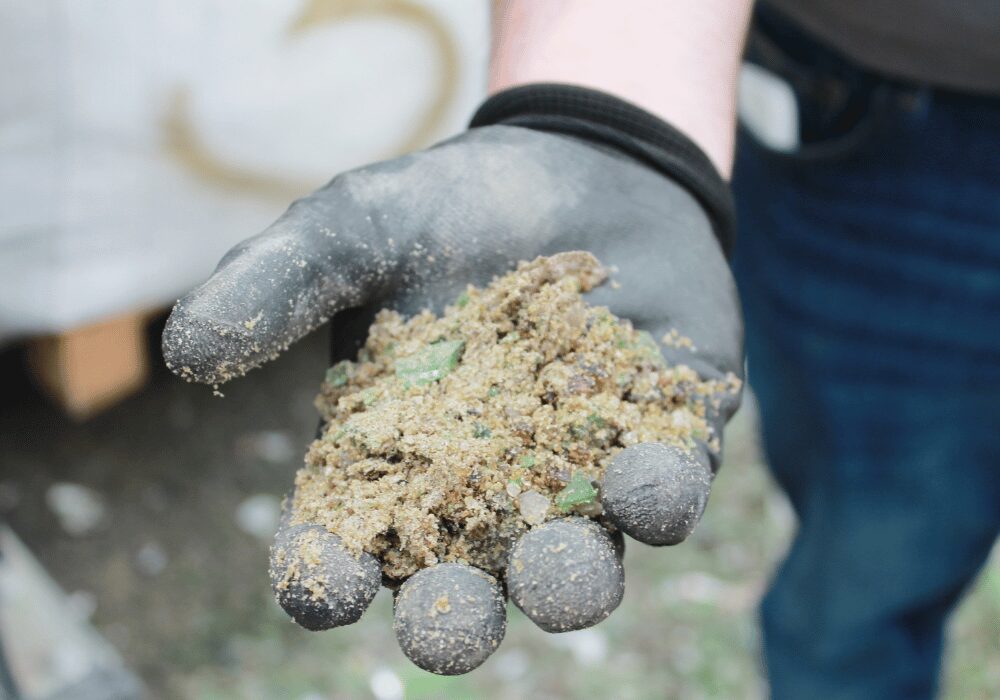
Crushed glass bottles processed through the Pilot Crushtec VSI crusher, produces superior shaping and further size reduction for cleaner well-formed sand and minus 3 mm fine products