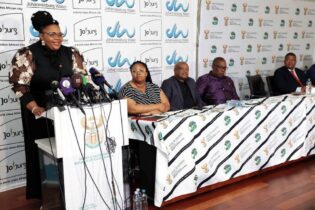
South Africa’s Department of Water and Sanitation is intensifying disciplinary action, SIU investigations, and anti-corruption measures to tackle fraud, procurement irregularities, and governance failures in the water sector.
South Africa’s water crisis is often framed in terms of low investment, lack of maintenance, and non-revenue water, but an underlying problem, sometimes the driver of these issues, is corruption and fraud within the water sector.
In the Minister of Water and Sanitation’s own words, “this Department of Water and Sanitation (DWS) has historically been affected by financial mismanagement, irregular expenditure, and weak internal controls.” Under her tenure as minister, there has been heightened scrutiny of municipalities, and the Department has adopted a zero-tolerance approach to corruption. This has manifested in punishing offenders through suspensions, dismissals and, where appropriate, criminal prosecution. And with the added teeth that the National Water Amendment Bill aims to provide the department, this will likely continue. Actioning this promise, DWS and the Special Investigation Unit (SIU) are collaborating on 16 proclamations, the name given to cases under the SIU.Internal disciplinary action
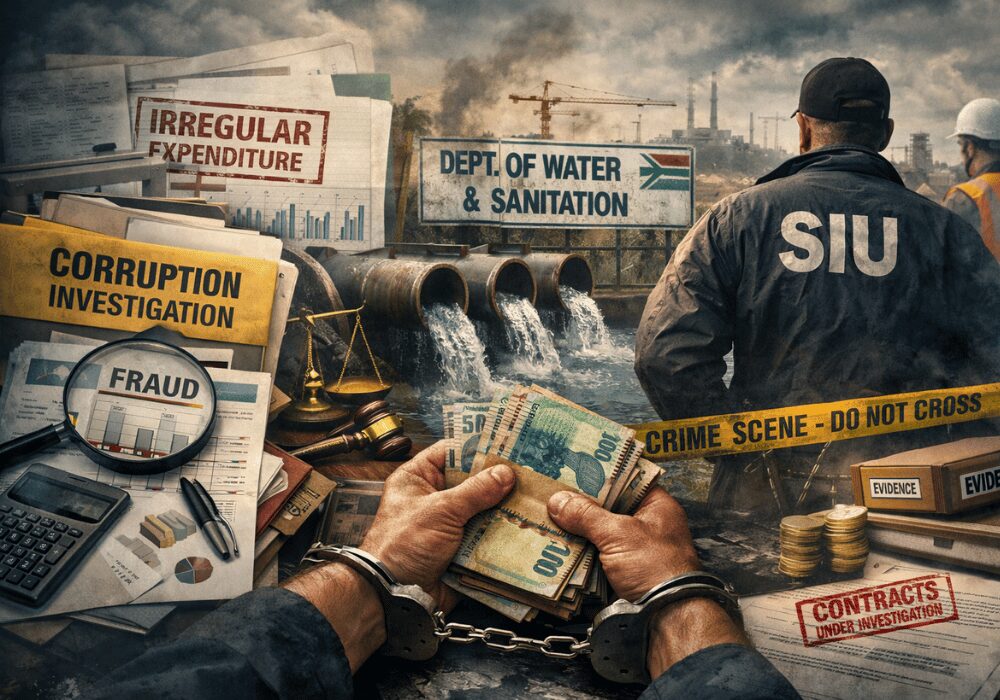 Internally, the department has formalised a clear disciplinary process aligned with public service regulations. Cases are assessed by Labour Relations to determine whether sufficient evidence exists, after which they may be resolved through progressive discipline, such as warnings, or escalated to formal hearings. Employees are afforded the right to respond to allegations, representation during hearings, and the ability to appeal outcomes. This process is supported by internal governance mechanisms, including a Consequence Management Committee and regular oversight by executive leadership.
However, while the framework appears robust on paper, the volume and duration of cases suggest ongoing systemic strain.
Between the 2023/24 and 2025/26 financial years, the Department has been managing a steady flow of disciplinary matters, many of which are carried over year to year. In 2024/25, 22 cases were inherited from the previous financial year, with an additional 27 new cases reported. By the end of that period, 18 had been finalised, leaving 31 still in progress.
The trend continues into 2025/26. A total of 31 cases were carried over, with 21 new cases added. As of March 2026, 28 cases had been finalised, while 24 remained in progress. Notably, only a portion of these resulted in sanctions, with others closed due to resignation, retirement, or death, an issue that continues to complicate accountability efforts.
Sanctions imposed for financial misconduct show a reliance on corrective rather than punitive measures. In 2024/25, just two dismissals and two suspensions without pay were recorded, alongside several warnings. In contrast, 2025/26 saw an increase in total sanctions issued (21 cases), but the majority were still final written warnings rather than dismissals. This raises ongoing questions about whether disciplinary outcomes are sufficiently stringent to deter misconduct, particularly in cases involving financial irregularities.
In addition to financial cases, the Department is also dealing with a significant number of non-financial misconduct cases. For 2025/26, 40 such cases were recorded, with 23 finalised and 17 still in progress.
Sanctions in these cases similarly skew towards suspensions combined with final written warnings, though there have been instances of demotion and at least one case resulting in a not guilty finding.
Internally, the department has formalised a clear disciplinary process aligned with public service regulations. Cases are assessed by Labour Relations to determine whether sufficient evidence exists, after which they may be resolved through progressive discipline, such as warnings, or escalated to formal hearings. Employees are afforded the right to respond to allegations, representation during hearings, and the ability to appeal outcomes. This process is supported by internal governance mechanisms, including a Consequence Management Committee and regular oversight by executive leadership.
However, while the framework appears robust on paper, the volume and duration of cases suggest ongoing systemic strain.
Between the 2023/24 and 2025/26 financial years, the Department has been managing a steady flow of disciplinary matters, many of which are carried over year to year. In 2024/25, 22 cases were inherited from the previous financial year, with an additional 27 new cases reported. By the end of that period, 18 had been finalised, leaving 31 still in progress.
The trend continues into 2025/26. A total of 31 cases were carried over, with 21 new cases added. As of March 2026, 28 cases had been finalised, while 24 remained in progress. Notably, only a portion of these resulted in sanctions, with others closed due to resignation, retirement, or death, an issue that continues to complicate accountability efforts.
Sanctions imposed for financial misconduct show a reliance on corrective rather than punitive measures. In 2024/25, just two dismissals and two suspensions without pay were recorded, alongside several warnings. In contrast, 2025/26 saw an increase in total sanctions issued (21 cases), but the majority were still final written warnings rather than dismissals. This raises ongoing questions about whether disciplinary outcomes are sufficiently stringent to deter misconduct, particularly in cases involving financial irregularities.
In addition to financial cases, the Department is also dealing with a significant number of non-financial misconduct cases. For 2025/26, 40 such cases were recorded, with 23 finalised and 17 still in progress.
Sanctions in these cases similarly skew towards suspensions combined with final written warnings, though there have been instances of demotion and at least one case resulting in a not guilty finding.
Pattern recognition
Financial misconduct is often repeated, resulting in a pattern of behaviour rather than a single instance and is largely linked to:- Irregular expenditure
- Fruitless and wasteful expenditure
- Fraudulent subsistence and travel claims
- Procurement irregularities, including failure to award bids to the highest-scoring suppliers
- Unauthorised remunerative work outside the public service

SIU referrals: Progress and complexity
 A key component of the department’s disciplinary workload stems from referrals by the Special Investigating Unit (SIU). These cases often involve complex, high-value contracts and can take years to resolve.
For example, disciplinary action linked to the Vaal River East Sub-System project involved multiple officials at different levels, with mixed outcomes ranging from dismissal to no action, depending on the evidence presented. In other cases, such as the Giyani Water Project, disciplinary processes intersect with ongoing litigation and criminal investigations, further delaying resolution.
Several SIU investigations, including those related to initiatives like ‘War on Leaks’ and ‘Drop the Block’, remain ongoing, with expected completion dates extending into mid-2026.
Overall, the Department reported 51 finalised disciplinary cases and 41 still in progress as of March 2026, spanning both financial and non-financial misconduct.
While there is evidence of progress, particularly in the increased number of cases being finalised, the persistent backlog, coupled with relatively lenient sanctions in many instances, suggests that consequence management remains a work in progress.
This underscores a broader challenge facing the public sector: balancing procedural fairness with the need for timely and decisive action. As scrutiny intensifies, the effectiveness of disciplinary systems will be a key indicator of institutional integrity and a deciding factor in restoring public trust.
A key component of the department’s disciplinary workload stems from referrals by the Special Investigating Unit (SIU). These cases often involve complex, high-value contracts and can take years to resolve.
For example, disciplinary action linked to the Vaal River East Sub-System project involved multiple officials at different levels, with mixed outcomes ranging from dismissal to no action, depending on the evidence presented. In other cases, such as the Giyani Water Project, disciplinary processes intersect with ongoing litigation and criminal investigations, further delaying resolution.
Several SIU investigations, including those related to initiatives like ‘War on Leaks’ and ‘Drop the Block’, remain ongoing, with expected completion dates extending into mid-2026.
Overall, the Department reported 51 finalised disciplinary cases and 41 still in progress as of March 2026, spanning both financial and non-financial misconduct.
While there is evidence of progress, particularly in the increased number of cases being finalised, the persistent backlog, coupled with relatively lenient sanctions in many instances, suggests that consequence management remains a work in progress.
This underscores a broader challenge facing the public sector: balancing procedural fairness with the need for timely and decisive action. As scrutiny intensifies, the effectiveness of disciplinary systems will be a key indicator of institutional integrity and a deciding factor in restoring public trust.
External measures
As previously stated, the department is also working alongside the SIU as a means of prosecuting the more serious criminal cases. These ongoing investigations span major infrastructure and service delivery projects, including those linked to Lepelle Northern Water, the Rooiwal Wastewater Treatment Works in Tshwane, and water and sanitation services in eThekwini, as well as projects in municipalities such as Masilonyana and Dihlabeng. These cases frequently involve large-scale contracts where weak supply chain management has allowed costs to escalate far beyond initial budgets. Completed investigations into projects such as the Vuwani pipeline, COVID-19-related procurement at Amatola Water Board, and contracts awarded to major service providers have resulted in a mix of disciplinary, civil, and criminal referrals. However, the SIU’s inability to prosecute directly means that accountability depends on coordination with other law enforcement and judicial bodies, where delays continue to limit the effectiveness of consequence management.
Duncan Nortier