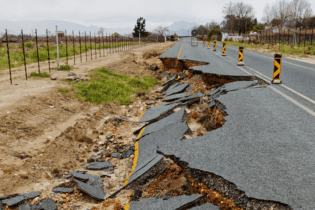
Discussions about South Africa’s infrastructure challenges usually focus on failing water systems, deteriorating roads, unreliable electricity supply and mounting maintenance backlogs. Less often discussed is one of the root causes of many of these problems: The growing shortage of engineering skills in local government.
As the country marks Youth Month, the conversation around infrastructure resilience must include the critical issue of who will design, manage and maintain the infrastructure that South Africa needs to grow, says the Institute of Municipal Engineering of Southern Africa (IMESA). For municipalities across the country, attracting and retaining engineering talent has become increasingly difficult and has never been more important. The challenge is not simply about filling vacancies. It is about building the technical capacity required to support economic growth, service delivery, climate resilience and sustainable development, IMESA stresses. Industry bodies have for years warned of a critical shortage of engineers, engineering technologists and technicians. It is estimated that South Africa has a dire deficit of as many as 60 000 engineering professionals. At the same time, universities are producing fewer engineering graduates than the economy requires, particularly in scarce skills disciplines. The competition for those graduates is fierce. Energy, information technology, manufacturing and consulting firms often offer attractive remuneration and clearly defined career pathways. Municipal engineering, despite its importance to society, frequently struggles to compete for attention.Municipal engineering offers purpose
Yet municipal engineering may offer something many young professionals increasingly seek, which is purpose, IMESA asserts. “Municipal engineering is one of the few sectors where engineers can see the direct impact of their work on people’s daily lives,” says Bhavna Soni, IMESA operations director for Young Professionals and Membership. With over 28 years of experience in eThekwini Municipality’s water and sanitation division, Soni understands the urgency of investing in skilled professionals capable of addressing real-world infrastructure challenges.“Every road, water treatment works, pump station, stormwater system and sanitation project contributes directly to economic development and community wellbeing. If we want to improve service delivery and infrastructure performance, we need to inspire more young people to see municipal engineering as a career of choice,” she states.To this end, IMESA is accelerating its drive to develop young talent through its nationally expanding Young Professionals Portfolio, which has been dubbed YP². The programme, which was first launched in IMESA’s KwaZulu-Natal (KZN) branch is now being rolled out nationally and is going from strength to strength under Soni’s leadership and supported by dedicated young engineering professionals in YP² regional committees.
Developing young engineers is a growing imperative

Dhiveshni Naidu, chairperson of the KwaZulu-Natal YP committee and a Senior Civil Engineer at eThekwini Water and Sanitation

Lenesh Sukhlal, another member of IMESA’s Young Professionals Portfolio committee

YP committee member Dhiresh Dhewki
Improving people’s quality of life

water design technologist Ntokozo Mjwara


civil engineering technologist at eThekwini Municipality, Zlungile Memela

YP2 committee member Nkanyezi Mdlalose
“There needs to be more proactive engagement with learners before they select their subjects in high school,” says Naidu.
Stronger collaboration needed
IMESA’s young professionals also highlighted the need for stronger collaboration between municipalities, universities and industry. Dhewki advocates increased practical training, workplace exposure and structured graduate development programmes. Mdlalose believes graduates should receive experience across both municipal and private-sector environments.“I think that it is important for municipalities to build in-house capacity in terms of design engineering and project management capabilities and this can be achieved by working alongside industry. Graduate programmes where municipal graduates are seconded to private companies for experience should be established.”Through its growing Young Professionals Portfolio, IMESA provides mentorship, leadership development, technical learning opportunities and professional networking for young engineering professionals. The programme is already producing tangible results. Naidu credits IMESA with helping her develop the confidence required to achieve professional registration and grow into leadership roles. “Through mentorship programmes, workshops and leadership opportunities, I gradually developed confidence in engaging with others and presenting. Today I have had the opportunity to present at the IMESA Conference and this is something I would never have imagined when I started.” Beyond professional development, IMESA is strengthening engagement with universities. In 2025, IMESA KwaZulu-Natal sponsored the IMESA Floating Trophy and a cash prize for the Best Design Project Award at the University of KwaZulu-Natal Undergraduate Civil Engineering Symposium. The initiative recognises engineering excellence while promoting municipal engineering as a career path. The programme will now be expanded to additional tertiary institutions, with final-year awards being developed to encourage excellence and strengthen links between academia and industry.
“We are committed to building stronger relationships with universities and creating opportunities for students to engage with the profession before they graduate,” says Soni.The institution is also investing in community outreach programmes, including Youth Month university engagements and Mandela Day initiatives aimed at promoting leadership, ethics and social responsibility. Social media programmes have been developed to create awareness of municipal engineering among students and graduates and to recognise young professionals.
Municipal engineering offers a compelling career opportunity
South Africa’s infrastructure future will depend heavily on its ability to attract, develop and retain engineering talent. For young people seeking careers that combine technical innovation with public impact, municipal engineering offers a compelling opportunity, IMESA says. To pursue a career in municipal engineering, Sukhlal advises graduates: “Focus on gaining valuable experience and developing your technical skills. Once you have built a strong foundation, opportunities will follow.” Naidu notes that the journey can be challenging at times but says that perseverance is key. “Step outside your comfort zone, especially when it comes to communication, leadership and networking, as this is where meaningful growth happens. Working towards professional registration should always be a priority, but it is equally important to remember that learning does not end there. If anything, it increases as your responsibilities grow. Engineering will teach you patience whether you like it or not, especially when projects do not go exactly according to plan.”“The young engineers entering the profession today will shape the future of South Africa’s infrastructure for decades to come. That is an extraordinary responsibility, but also an extraordinary opportunity,” Soni concludes.