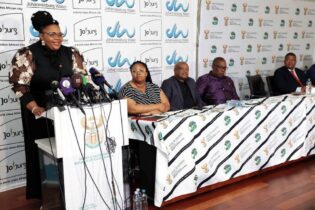
The recent inaugural meeting of the Council of Ministers of the Incomati and Maputo Watercourse Commission (INMACOM), where South Africa’s Minister of Water and Sanitation met her counterparts from Mozambique and Eswatini, marks a defining moment for the countries that share the Incomati and Maputo river systems and for the future of water governance on the African continent.
For the Association of Water and Sanitation Institutions of South Africa (AWSISA), this gathering represents a victory for water diplomacy. It demonstrates that even in an era of growing water scarcity, climate uncertainty and increasing competition for resources, African nations continue to choose cooperation over conflict, partnership over unilateralism and shared prosperity over narrow self-interest. It affirms a fundamental truth that water ignores political boundaries. Rivers connect nations, communities and economies, making their sustainability dependent on collective stewardship rather than unilateral action. The meeting reaffirmed a principle that sustainable development cannot be achieved without cooperation in the management of shared water resources. This message could not be more relevant. Climate change, population growth, urbanisation and industrialisation are placing unprecedented pressure on freshwater resources, while environmental degradation continues to threaten the ecosystems upon which societies depend. Against this backdrop, Southern Africa offers a hopeful example. Cooperation between South Africa, Mozambique and Eswatini demonstrates that shared watercourses can become instruments of peace, trust-building and regional integration. Transboundary water governance is not merely a technical exercise in allocating water volumes. It is a sophisticated form of diplomacy that strengthens relationships and creates conditions for long-term stability and prosperity. The outcomes of the ministerial meeting reflected this vision. Ministers recognised that water is not simply a natural resource to be managed. It is a strategic asset that underpins economic development, food security, public health, environmental sustainability and social cohesion. Importantly, the meeting focused on strengthening the institutional foundations required for effective transboundary water governance. Among the key resolutions were a financial sustainability plan, a communication strategy and enhanced disaster management cooperation. The financial sustainability plan seeks to ensure that INMACOM remains adequately resourced to fulfil its growing mandate. The communication strategy recognises that effective water governance requires informed and engaged stakeholders. trengthened disaster management cooperation will improve preparedness, information sharing and coordinated responses to droughts, floods and other climate-related emergencies. These resolutions demonstrate that INMACOM is maturing into a modern institution capable of addressing the interconnected challenges of water security, climate resilience and sustainable development. They reflect a recognition that successful water diplomacy must be supported by strong governance, sustainable financing, effective communication and proactive risk management. Without water security, there can be no meaningful industrialisation. Without water security, agricultural productivity is compromised. Without water security, communities remain vulnerable to poverty, disease and climate shocks. Water security is therefore inseparable from economic security, environmental security and human security. For this reason, AWSISA views the maturation of INMACOM as an important institutional achievement. The Commission reflects decades of regional cooperation and the evolution of water governance from a narrow focus on allocation towards a more integrated approach that incorporates environmental protection, climate adaptation, ecosystem restoration and socio-economic development.Importantly, the meeting took place during a year in which the African Union has elevated water as a continental priority. Africa’s developmental ambitions, including those articulated in Agenda 2063, depend fundamentally on reliable and sustainable water resources. It is therefore encouraging that discussions increasingly focus not only on governance but also on investment. The significance of this meeting should also be understood within the broader context of Africa’s efforts to place water security at the centre of the continent’s development agenda. In August 2025, AWSISA sponsored and participated in the AU-AIP Water Investment Summit in Cape Town. The summit brought together African leaders, policymakers, financiers and development partners to explore innovative approaches to mobilising investment for water security, climate resilience and sustainable development. Building on that momentum, AWSISA also sponsored the AU-AIP High-Level Breakfast Dialogue held in Addis Ababa in February 2026 on the sidelines of the African Union Summit. The breakfast session served as a report-back platform on the outcomes of the Cape Town Summit and provided an opportunity for African leaders to strengthen partnerships and advance implementation of agreed priorities. The dialogue reinforced the growing recognition that water security must be elevated as a strategic enabler of economic growth, climate resilience, food security and regional integration. AWSISA’s participation in these platforms signals an important turning point in the Association’s strategic outlook. While remaining firmly rooted in strengthening South Africa’s water and sanitation sector, AWSISA is increasingly positioning itself as a contributor to regional, continental and Global South dialogues on water governance, investment and innovation. This evolution reflects the reality that water security, climate adaptation, infrastructure development, environmental protection and sustainable financing are challenges that transcend national boundaries. The same spirit of cooperation that underpins INMACOM is increasingly shaping continental efforts to mobilise investment and strengthen water governance across Africa.
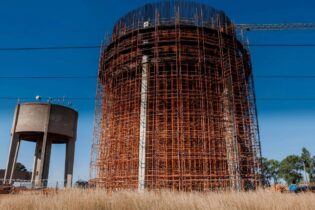
The challenge before Africa is therefore not only one of governance, but also one of financing. Infrastructure deficits, ageing water systems, pollution and climate adaptation requirements demand significant investment. New financing models, stronger public-private partnerships and innovative funding mechanisms will be essential if Africa is to close its water investment gap.
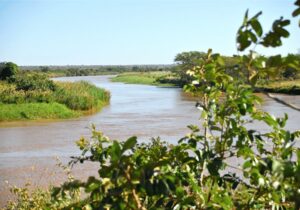
AWSISA has consistently argued that environmental sustainability and economic development must reinforce one another. This is why the Association remains a strong proponent of the polluter-pays principle. Those whose activities impose environmental costs must contribute towards restoring and protecting the ecosystems upon which society depends. The establishment and strategic utilisation of pollution funds could play a transformative role in rehabilitating degraded water resources, addressing acid mine drainage, supporting desalination initiatives and strengthening long-term water security. Environmental restoration should not be viewed as a cost. It is an investment in national resilience, ecological sustainability and economic development. Later this year, AWSISA will host the Africa and Global South Water and Sanitation Dialogue 2026. The conference will bring together policymakers, financiers, researchers, development partners and industry leaders to explore practical solutions to the water challenges confronting developing economies. The purpose of the dialogue is to strengthen cooperation among countries of Africa and the Global South, promote investment in water infrastructure, advance innovation, support climate resilience and accelerate progress towards universal water security. Our continental ambition does not end there. AWSISA is also preparing to host the African Water and Sanitation Association Congress in 2030, further positioning South Africa as a convening hub for water leadership, innovation and partnership across the continent. The rivers that connect South Africa, Mozambique and Eswatini are more than waterways. They are living symbols of interdependence. They remind us that our futures are connected and that sustainable development can only be achieved through collective action. The resolutions adopted on financial sustainability, communication and disaster management illustrate the practical evolution of INMACOM from a coordinating platform into an increasingly capable institution for regional water governance. They provide a roadmap for translating cooperation into measurable outcomes and demonstrate that African water diplomacy is moving beyond dialogue towards implementation. The true test of water diplomacy will not be found in communiqués, declarations or speeches. It will be found in healthier rivers, resilient communities, thriving ecosystems, reliable infrastructure and expanded economic opportunities for ordinary citizens. As AWSISA, we commit ourselves to supporting the objectives, programmes and projects of INMACOM, working alongside governments, development partners, research institutions and communities to advance sustainable water management, climate resilience and regional cooperation across the basin. Let us therefore seize this moment with confidence and purpose. Let us strengthen the institutions that safeguard our shared resources. Let us invest boldly in water infrastructure and environmental restoration. Let us embrace science, innovation and evidence-based policymaking. Let us deepen partnerships across governments, communities, business and civil society.
Ramateu Monyokolo is Chairperson of the Rand Water Board and the Association of Water and Sanitation Institutions in South Africa