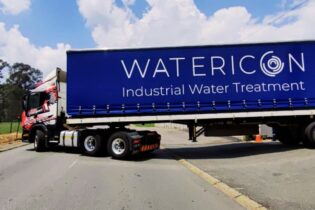
Kirsten Kelly talks to Chris Ashmore - CEO of Watericon - about operating a business beyond South African borders.
Chris Ashmore, CEO, Watericon
Local presence
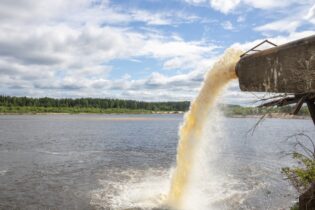
Many African countries have developed ‘local content’ policies to foster domestic economic growth. They want foreign businesses to establish a local office, register a local entity, or have a physical presence to operate, pay taxes, and comply with local laws. Watericon established offices in Ghana over two years ago.“Our expansion into Ghana strengthens our ability to support industries that are vital to the region’s growth. We supply high-quality water treatment chemicals to major mining operations and work alongside leading power producers to ultimately ensure reliable and efficient operations,” adds Ashmore.The company is currently establishing Tanzanian operations with on-ground support staff and a dedicated chemical blending facility. Beyond Africa, Watericon is setting up a 9 000 m² facility in the United Arab Emirates (UAE) as a launchpad into the Gulf, Middle East and North Africa. “The UAE presents a different environment: highly regulated, heavily documented and compliance driven. Every structural modification can require multi-level approvals. Standards are stringent, inspections frequent and operational oversight intense. But the opportunity is significant. The region’s mega desalination projects dwarf most African installations,” explains Ashmore. He has spent a significant amount of time in the UAE, Ghana and Tanzania to assess both the risks and opportunities before setting up regional bases. “In the water sector, having feet on the ground is critical to maintaining oversight, resolving challenges promptly and keeping projects on track.” Across Africa, mining licenses and industrial permits are increasingly linked to how water is managed and discharged, forcing companies to invest in compliant, reliable systems. Operating a water treatment company across Africa and the Middle East region means navigating a complicated and often paradoxical water landscape. While these regions are frequently associated with water scarcity, some areas face the opposite problem: Too much contaminated water, and the lack of infrastructure to treat and dispose of it ethically. Sewage spills, acid mine drainage, pollution, and dust all create unique challenges when it comes to wastewater treatment. Environmental regulations add another layer of complexity. Water treatment companies that can help industrial clients reduce freshwater usage, recycle wastewater, or implement zero-liquid discharge systems not only help them meet regulatory requirements but gain a competitive edge.
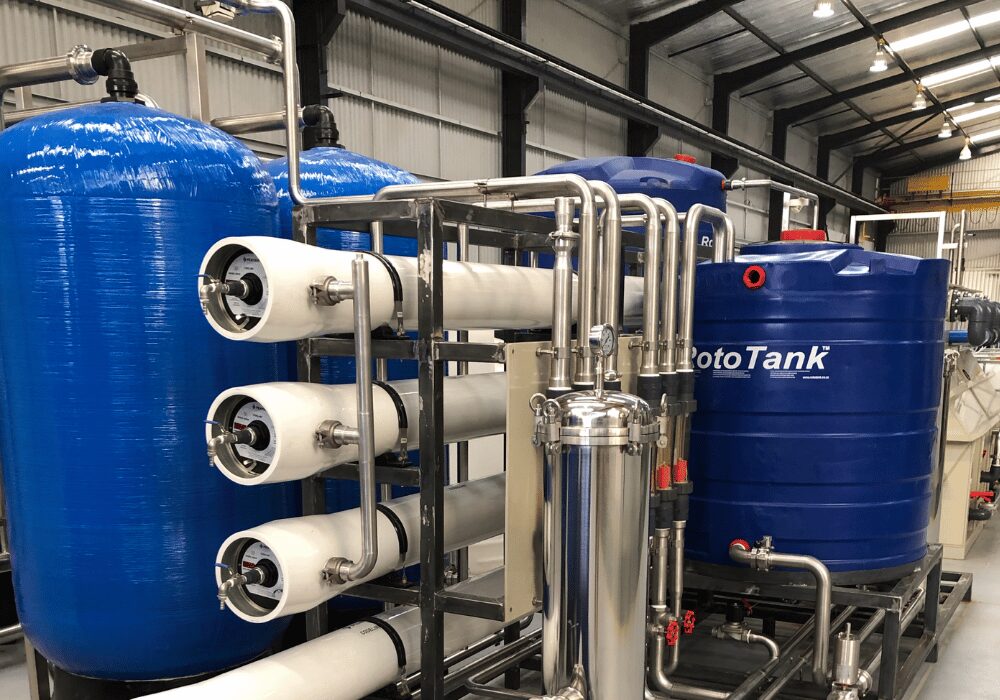 Ashmore adds that challenges include limited infrastructure, unreliable power supply, and transport and supply chain limitations.
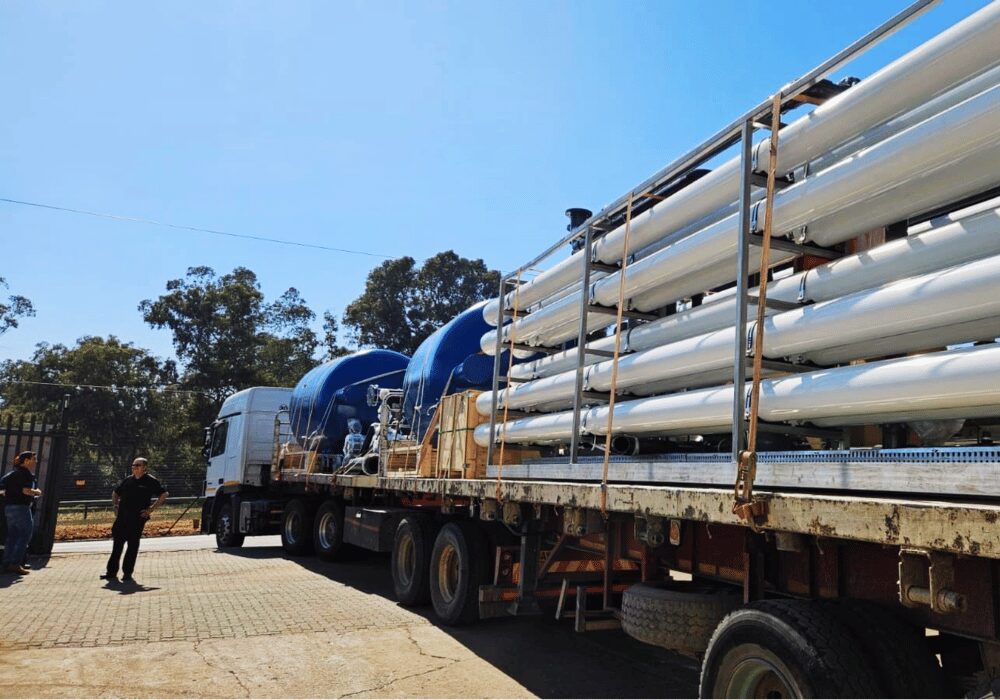
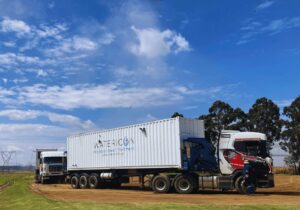
“To operate in Africa, treatment companies must invest in back-up power solutions, and build a transport network to get modular plants, chemicals and equipment to remote areas. Some specific operational challenges include highly variable turbidity levels in source water, requiring dynamic treatment protocols to dose chemicals correctly.”
Work in Africa is often beset with logistics delays, shifting import regulations and port backlogs that can derail projects. There can be exchange rate volatility and delayed payments. Currency constraints such as limited access to foreign currency, can significantly impact project costs, procurement timelines and overall financial viability in many African markets. Containers can sit at port for weeks or months if documentation requirements change mid-shipment. Elections in certain countries can temporarily disrupt ports altogether. Many countries have intermittent energy supply. These realities demand patience, capital resilience and careful partner selection. In countries such as Senegal and Ivory Coast, operating in predominantly French-speaking environments can present communication challenges, making it essential to partner with local teams that are fluent in the language and able to bridge cultural and technical gaps.
Ashmore adds that challenges include limited infrastructure, unreliable power supply, and transport and supply chain limitations.
“To operate in Africa, treatment companies must invest in back-up power solutions, and build a transport network to get modular plants, chemicals and equipment to remote areas. Some specific operational challenges include highly variable turbidity levels in source water, requiring dynamic treatment protocols to dose chemicals correctly.”
Work in Africa is often beset with logistics delays, shifting import regulations and port backlogs that can derail projects. There can be exchange rate volatility and delayed payments. Currency constraints such as limited access to foreign currency, can significantly impact project costs, procurement timelines and overall financial viability in many African markets. Containers can sit at port for weeks or months if documentation requirements change mid-shipment. Elections in certain countries can temporarily disrupt ports altogether. Many countries have intermittent energy supply. These realities demand patience, capital resilience and careful partner selection. In countries such as Senegal and Ivory Coast, operating in predominantly French-speaking environments can present communication challenges, making it essential to partner with local teams that are fluent in the language and able to bridge cultural and technical gaps.
“It’s key that we develop and train local skills,” says Ashmore. “We believe in fostering young talent and empowering communities to take ownership of sustainable water management solutions.”The competitive landscape in Africa is shifting rapidly. Chinese, Indian, and Turkish companies are entering African markets aggressively, often with scale advantages and strong financing backing. In mining and large infrastructure projects, Chinese engineering, procurement and construction (EPC) contractors can deliver at scale few others can match.

However, Ashmore notes that across many African markets there is a strong preference for partnering with South African companies, given their proven work ethic, depth of skills, technical capabilities and experience working in challenging operating environments. He adds that South African companies are also competitive in terms of pricing and overall project cost efficiency, especially when compared to European counterparts.
“Watericon focuses on identifying and solving a client’s specific pain points – the difficult water and effluent challenges that impact production, compliance or recovery – and then designing tailored solutions around those.” Watericon’s experience operating across Africa has strengthened their ability to navigate complex operating environments, equipping them with the resilience, flexibility and problem-solving capabilities needed to deliver reliable solutions in South Africa. “We often operate in very remote locations in various African countries, where a missing part or product cannot be easily retrieved. This means planning must be meticulous, with the right equipment, chemicals and spares available from the outset to avoid costly downtime and ensure that operations continue uninterrupted. The same disciplined approach has been applied to projects in South Africa,” explains Ashmore.Financing, technology and AI
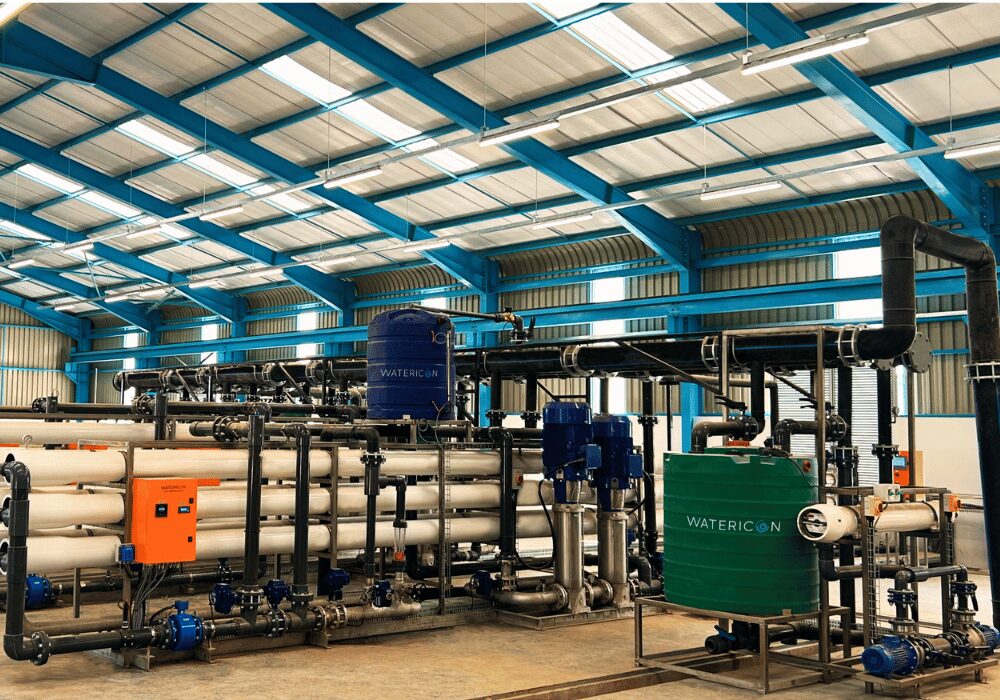 There is a growing demand for financed water infrastructure across the African continent.
Industrial clients are increasingly favouring operational expenditure models over capital investment. In response, Watericon has expanded its rental fleet and financing capacity, supporting build-own-operate structures and long-term cubic metre payment models.
The trend reflects a broader shift: water treatment is no longer only about compliance. It is about reuse, process optimisation and cost recovery..
“Looking ahead, data integration and AI-driven plant optimisation are emerging priorities,” says Ashmore. With online monitoring systems and global plant data sets, predictive maintenance and performance optimisation become possible. Instead of reacting to failure, operators can anticipate it. Instead of guessing at process instability, plants can draw on data from hundreds of similar systems worldwide.
“At the same time, Watericon’s approach to innovation remains pragmatic. The company built its early success not by inventing new technologies, but by executing proven technologies better, faster and more cost effectively.”
“There are not many water treatment companies that have the appetite to set up regional offices in other African countries. We believe our growing footprint enables us to deliver reliable water treatment solutions while responding quickly to the diverse challenges across African markets. We are also extremely excited about our Tanzania and UAE presence and have set our sights on South America too,” concludes Ashmore.
For Watericon, the focus remains clear: solve complex problems, build regional hubs, maintain financial discipline and expand deliberately.
There is a growing demand for financed water infrastructure across the African continent.
Industrial clients are increasingly favouring operational expenditure models over capital investment. In response, Watericon has expanded its rental fleet and financing capacity, supporting build-own-operate structures and long-term cubic metre payment models.
The trend reflects a broader shift: water treatment is no longer only about compliance. It is about reuse, process optimisation and cost recovery..
“Looking ahead, data integration and AI-driven plant optimisation are emerging priorities,” says Ashmore. With online monitoring systems and global plant data sets, predictive maintenance and performance optimisation become possible. Instead of reacting to failure, operators can anticipate it. Instead of guessing at process instability, plants can draw on data from hundreds of similar systems worldwide.
“At the same time, Watericon’s approach to innovation remains pragmatic. The company built its early success not by inventing new technologies, but by executing proven technologies better, faster and more cost effectively.”
“There are not many water treatment companies that have the appetite to set up regional offices in other African countries. We believe our growing footprint enables us to deliver reliable water treatment solutions while responding quickly to the diverse challenges across African markets. We are also extremely excited about our Tanzania and UAE presence and have set our sights on South America too,” concludes Ashmore.
For Watericon, the focus remains clear: solve complex problems, build regional hubs, maintain financial discipline and expand deliberately.
About Watericon
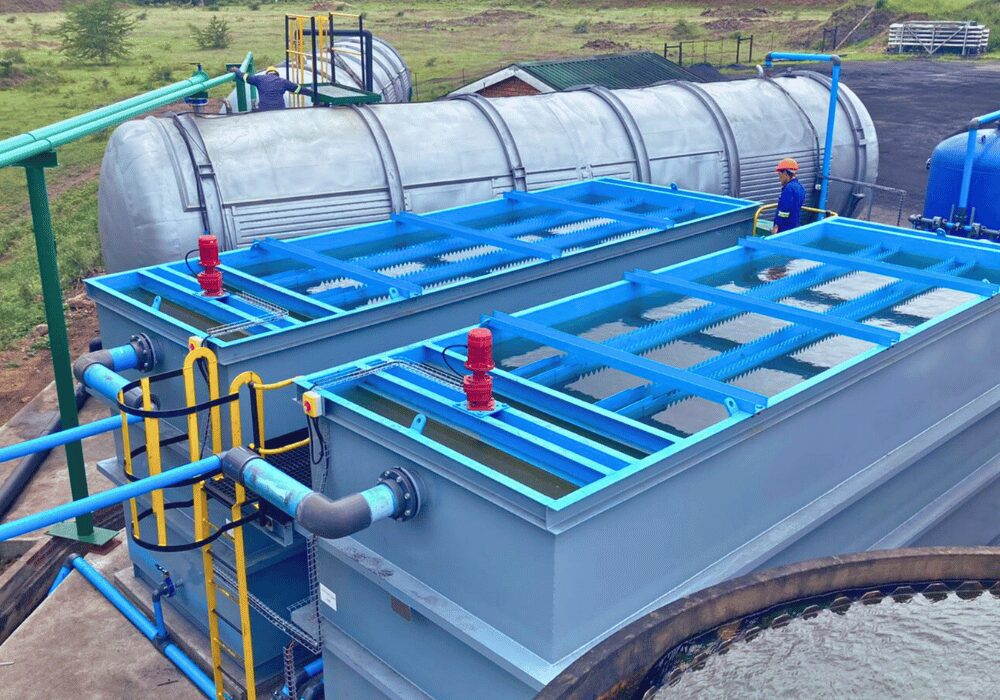 Watericon is a full-service water treatment company offering custom-engineered plants to pre-packaged modular units, supported by a full supply of water treatment chemicals and backed by a SANAS accredited laboratory for water analysis. It also offers operations and maintenance services, delivering a complete turnkey solution.
There is a research and development team that focuses on turning lab insights into practical, commercial water-treatment solutions. Watericon also has a fleet of modular rental plants, (ranging from 100 m3/h to 10 Mℓ/day) that can be taken directly to customer sites to test real feedwater and validate treatment concepts before full-scale investment. These pilots can be configured with technologies like membranes, and ion exchange, allowing the team to refine the process and costs under actual operating conditions.
Since mining remains one of the strongest opportunities across Africa, Watericon also has a team of metallurgists that look at the treatment of mining effluent.
Watericon is a full-service water treatment company offering custom-engineered plants to pre-packaged modular units, supported by a full supply of water treatment chemicals and backed by a SANAS accredited laboratory for water analysis. It also offers operations and maintenance services, delivering a complete turnkey solution.
There is a research and development team that focuses on turning lab insights into practical, commercial water-treatment solutions. Watericon also has a fleet of modular rental plants, (ranging from 100 m3/h to 10 Mℓ/day) that can be taken directly to customer sites to test real feedwater and validate treatment concepts before full-scale investment. These pilots can be configured with technologies like membranes, and ion exchange, allowing the team to refine the process and costs under actual operating conditions.
Since mining remains one of the strongest opportunities across Africa, Watericon also has a team of metallurgists that look at the treatment of mining effluent.
“There are not many water treatment companies that have the appetite to set up regional offices in other African countries. We believe our growing footprint enables us to deliver reliable water treatment solutions while responding quickly to the diverse challenges across African markets. We are also extremely excited about our Tanzania and UAE presence and have set our sights on South America too.”