

Kate Stubbs, director of strategy, marketing & business development for EnviroServ
Stubbs explains, “The role of modern landfills has changed dramatically. Historically, in South Africa, waste was disposed of at dumpsites with very little engineering or regulatory standards guiding waste management and disposal practices.”Since then, South Africa’s waste management regulations have evolved significantly since the early 2000’s with the implementation of the National Environmental Management Act (NEMA: 1998) and National Environmental Waste Management Act (NEM:WA 2008). “NEMA and later NEM:WA were developed by combining international sustainable development principles, constitutional environmental rights, and global best practice in environmental governance. They are often regarded as some of the most progressive environmental laws in the developing world,” explains Stubbs. Today, landfills are recognised for playing an important role in climate mitigation, climate adaptation, pollution prevention and resource recovery. Stubbs adds, “Modern landfills are engineered systems designed to ensure the safe disposal of waste through preventing underground seepage and contamination, capturing and controlling leachate and storm water systems, harnessing and managing landfill gas, minimising environmental impacts and maximising opportunities for resource recovery. Increasingly, operators are capturing methane for flaring or electricity generation, recovering materials where possible, reducing greenhouse gas emissions, and progressively rehabilitating land.” Stubbs says that EnviroServ views landfill management as “active environmental stewardship” and that their responsibility goes far beyond compliance. Shifted public perceptions, heightened regulations, and increasing awareness of environmental issues mean that EnviroServ see “protecting ecosystems, conserving water resources, reducing emissions and building resilience to climate change” as explicit duties that form part of their management practice.
Capping
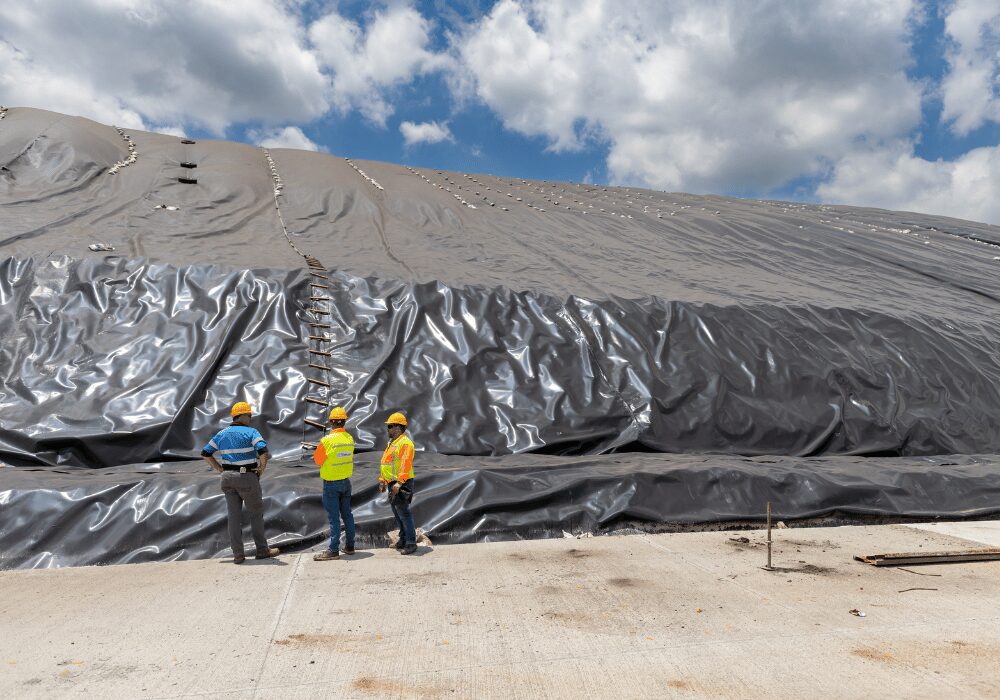
Temporary capping system installed
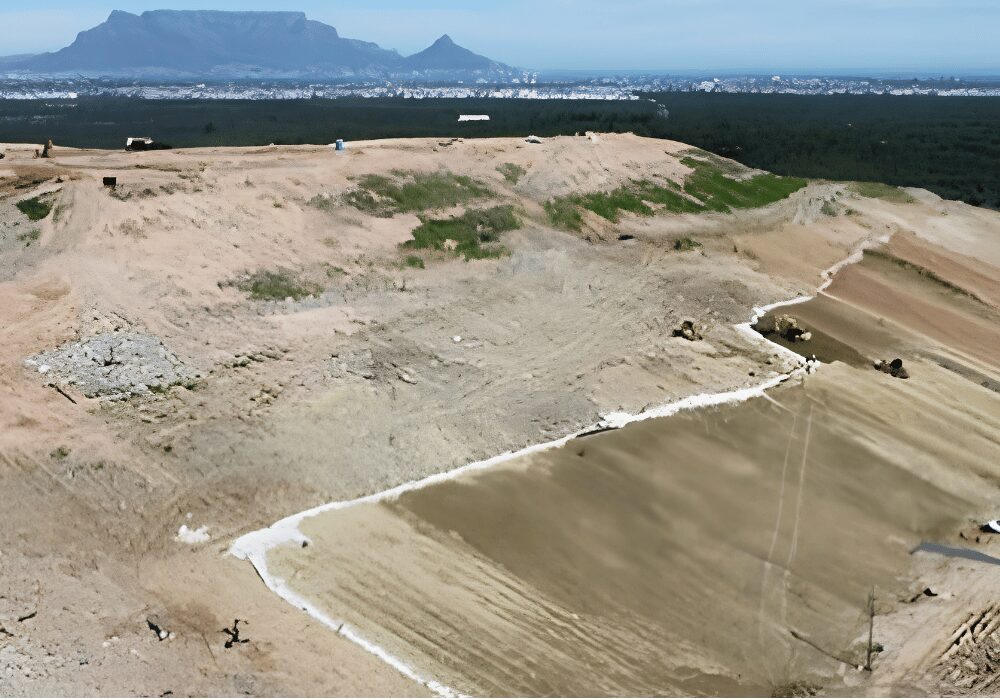
Progressive permanent capping for landfill in Cape Town
Managing leachate in a changing climate
While capping is an important tool for reducing environmental impacts, one of the most significant operational challenges at any landfill remains the management of leachate; the contaminated liquid generated when water passes through waste. According to Stubbs, modern facilities bear little resemblance to the disposal sites of previous decades. “Modern landfills are fundamentally different from historical waste disposal sites,” she says. “Today’s facilities are designed with sophisticated liner systems, leachate drainage layers, collection infrastructure, storage facilities and treatment technologies that work together to prevent contamination of soil and groundwater.” EnviroServ’s approach combines engineered containment with active water management. Stubbs explains that the company utilises “high-density polyethylene (HDPE) liners, drainage systems, leachate collection networks and dedicated treatment infrastructure to manage contaminated water.” Prevention, however, is becoming just as important as treatment. Stubbs says the company is investing heavily in source reduction through temporary and permanent capping projects. At Holfontein, temporary capping has already “reduced leachate generation by approximately 40%, significantly reducing environmental risk and treatment costs.” Similar projects at Shongweni and Vissershok are producing “measurable improvements in water management performance.” The results reinforce a broader shift in landfill management philosophy. As Stubbs notes, “Our temporary and permanent capping processes have clearly demonstrated that investing in prevention initiatives is becoming just as important as treatment.” Climate change is adding a new dimension to these challenges. More frequent extreme weather events and intense rainfall place increasing pressure on landfill infrastructure and water management systems. “We are certainly experiencing these impacts across the country,” says Stubbs. “Climate change and these extreme weather events are fundamentally changing how landfill operators design and manage infrastructure.” She explains that “more intense rainfall events increase the volume of stormwater entering landfill systems and place greater pressure on leachate collection, storage and treatment infrastructure,” while also affecting “slope stability, erosion control measures and operational access.”
As a result, climate adaptation has become a core operational requirement rather than a future consideration. “At EnviroServ, we are increasingly innovating and investing in approaches to cater for such events such as enhanced drainage systems, progressive capping programmes and improved climate resilience planning,” says Stubbs. The company also continuously reviews infrastructure performance against monitoring data, changing weather patterns and future climate scenarios.
“Climate adaptation is no longer a future consideration,” she adds. “It is an operational necessity for responsible landfill management today.”
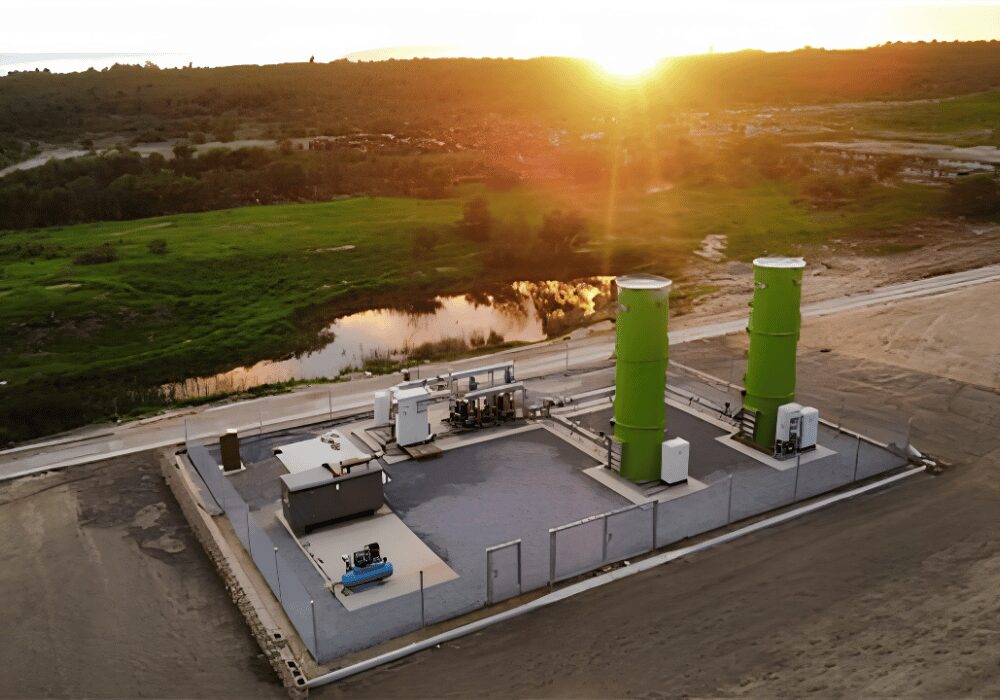
A landfill gas-to-energy facility harnessing methane emissions to generate clean, renewable electricity
Capturing methane
Methane emissions from landfills remain a major global climate concern. As organic waste decomposes, it produces landfill gas that consists primarily of methane and carbon dioxide. Managing this gas effectively is one of the most important environmental functions performed by modern landfill operators.“Landfill gas monitoring combines engineering, environmental science and data analysis,” explains Stubbs. A network of vertical and horizontal extraction wells is installed throughout the landfill and connected through a collection system.“Operators continuously monitor gas quality, flow rates, pressures and methane concentrations,” she says. “Surface emission surveys are also undertaken to identify potential fugitive emissions.”
The information gathered through these systems enables operators to optimise performance and reduce emissions. “The data allows us to optimise gas extraction, improve system performance and identify opportunities for emissions reduction,” says Stubbs. Technology is also playing an increasingly important role. Monitoring systems are becoming more sophisticated and now incorporate “digital technologies, remote monitoring and predictive analytics that enable proactive management of landfill gas infrastructure.” Once methane is collected, it can either be utilised as an energy source or destroyed through flaring. Stubbs describes flaring as “one of the most effective climate mitigation interventions available at landfill sites.” “When methane is combusted in a flare, it is converted primarily into carbon dioxide and water vapour,” she explains. Although carbon dioxide remains a greenhouse gas, its warming potential is significantly lower than that of methane. “In practical terms, destroying methane through flaring can reduce the climate impact of landfill gas by more than 90%.”
One of the most notable examples of this approach in South Africa is EnviroServ’s Chloorkop landfill gas project. According to Stubbs, more than 195 million cubic metres of landfill gas have been flared or utilised since the project was commissioned in 2008. The project has generated “approximately 1.5 million carbon credits over its lifetime,” demonstrating the environmental value that can be unlocked through effective landfill gas management. Where possible, she adds, “the next step beyond flaring is beneficial utilisation through electricity generation or other energy recovery applications.”
Balancing sustainability and economics
Despite significant technological advances, landfill operators face several obstacles when implementing greener infrastructure.“The biggest challenge is balancing environmental ambition with economic reality,” says Stubbs.Infrastructure upgrades require substantial investment in areas such as “design and engineering, capping, leachate treatment, gas extraction systems, renewable energy projects and climate resilience measures.” At the same time, operators must navigate increasingly complex regulatory requirements, changing climatic conditions, specialist skills shortages and the need for long-term financial sustainability.
Public perception also remains a challenge. Stubbs notes that “many people still view landfills as passive waste disposal sites, whereas modern facilities are highly engineered environmental infrastructure assets that deliver essential environmental services.” To accelerate progress, she believes that stronger collaboration is required across the sector. “The industry will need continued collaboration between government, regulators, private operators and financiers to accelerate investment in climate-resilient waste infrastructure.”
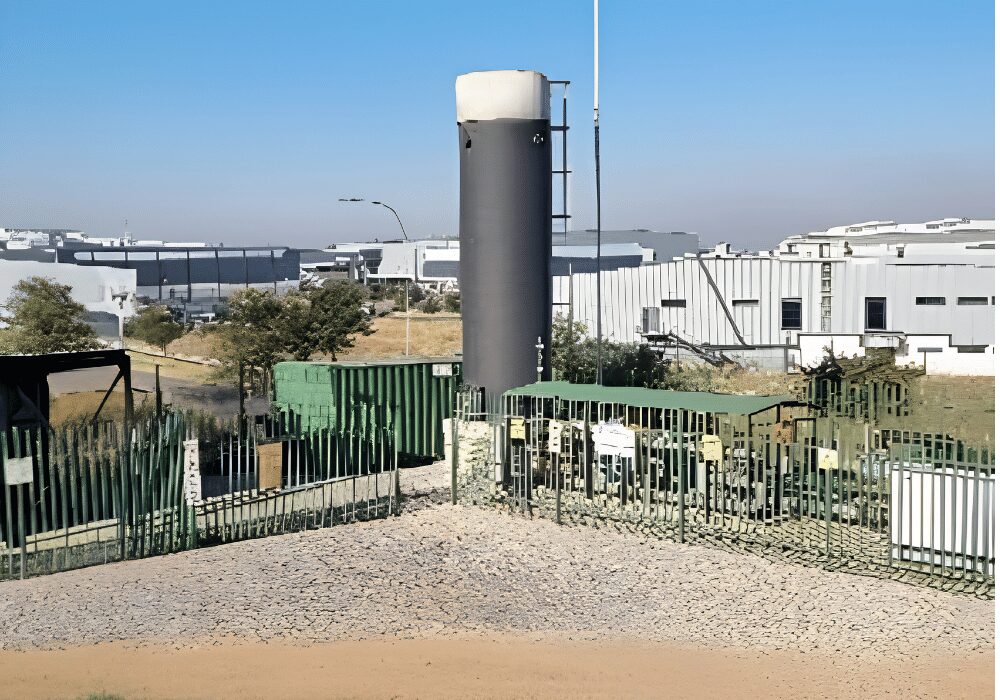
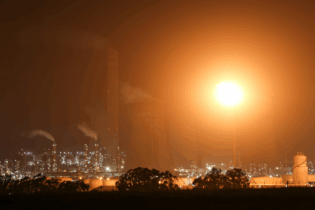
Chloorkop gas flare
The landfill of the future
Far from becoming obsolete, landfills are evolving into integrated environmental management facilities that support resource recovery, renewable energy generation and climate resilience. “The future landfill will not simply manage waste,” says Stubbs. “It will actively recover resources, generate energy, reduce emissions, support climate adaptation and be integrated into the circular economy.” She expects significant growth in advanced landfill gas utilisation, renewable energy generation, real-time environmental monitoring, AI-enabled predictive management and enhanced leachate treatment technologies. Emerging technologies are also beginning to influence the sector. Stubbs points to growing international interest in “carbon capture from landfill gas systems, drone-based monitoring, and technologies that enable operators to model environmental performance and climate risks.” At the same time, landfill management is becoming increasingly connected to recycling infrastructure, resource recovery systems and alternative waste treatment technologies.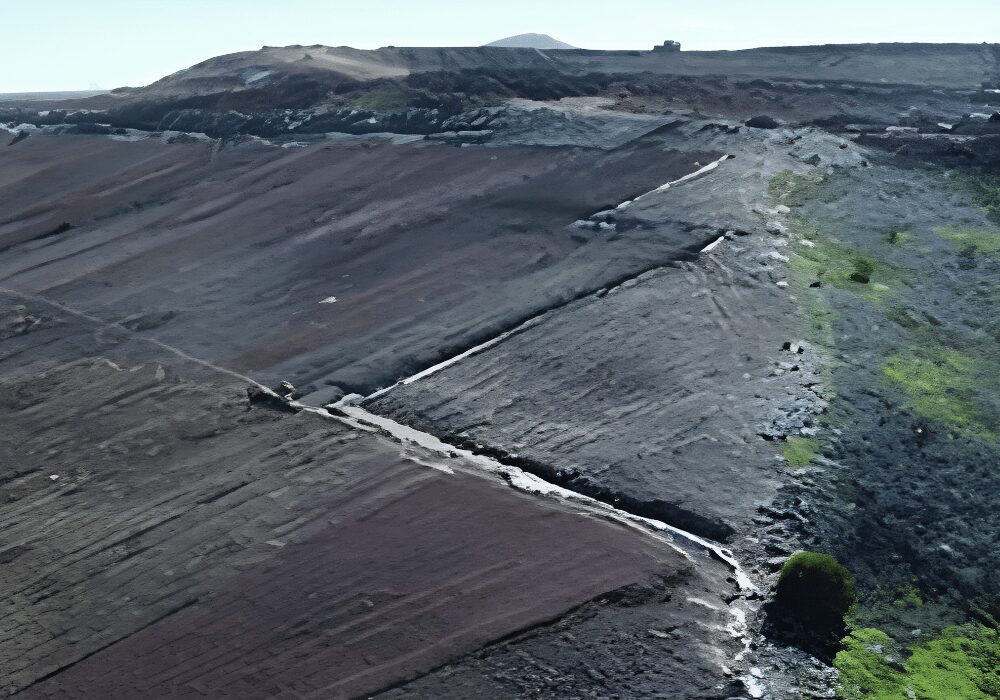
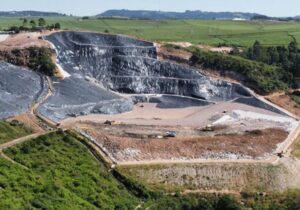
Permanent cap example in a landfill
Demonstrating results
Several recent EnviroServ projects illustrate how these principles are already being applied in practice. At the Holfontein waste management facility in Gauteng, a temporary capping initiative delivered an approximately 40% reduction in leachate generation, reducing both environmental risk and management costs. At Shongweni in KwaZulu-Natal, temporary capping improved stormwater management and gas control while reducing contaminated stormwater volumes and operational costs.Meanwhile, at Vissershok in Cape Town, permanent capping infrastructure has been installed using advanced drainage and gas venting systems. The project is expected to significantly reduce leachate generation while improving environmental performance and supporting landfill gas recovery. These projects have also contributed to greenhouse gas reductions. Stubbs points to the Chloorkop landfill gas project as “one of South Africa’s most successful examples of methane management,” noting that it has generated renewable electricity for a neighbouring manufacturer while reducing emissions and producing approximately 1.5 million carbon credits. Taken together, these projects highlight how modern landfill management is changing. As Stubbs concludes, they demonstrate that landfill operations can “simultaneously improve environmental performance, strengthen climate resilience and create long-term value for communities and the environment.”