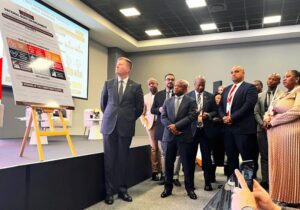

The following address was delivered by the Minister of Public Works and Infrastructure, Mr Dean Macpherson, at the second Public Works and Infrastructure Summit, hosted by the Council for the Built Environment, at The Focus Room in Modderfontein, Johannesburg, on Friday morning, 03 July 2026. The Summit was held under the theme: “From Collapse to Confidence: Strengthening Public and Building Safety, Asset Management and Infrastructure Delivery.”
- Public Works & Infrastructure Minister Dean Macpherson launched the National Built Environment and Construction Safety Framework to strengthen building safety, improve accountability, and help prevent future building collapses across South Africa.
- The Minister announced that the Ministry will gazette CBE Public Interest and Safety Regulations, focusing on structural and dolomitic occurrences, improved compliance in the erection of buildings, and certification requirements aligned to SANS 17024.
- The Minister also launched the Public Infrastructure Confidence Index to provide a periodic measure of stakeholder confidence in the performance, readiness, capability and credibility of South Africa’s public infrastructure system.

This is about ensuring that the tragedies we have witnessed become turning points by strengthening accountability, improving compliance, closing regulatory gaps, and building a culture where safety is never compromised.
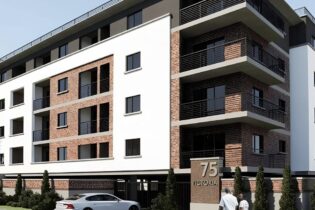
The second is: Fix It Before It Breaks: The Future of Public Asset Management. For too long, the state has allowed too many public assets to deteriorate until they reach a point of crisis. A modern public works system cannot be purely reactive. It must be preventative. It must know what assets it owns, understand their condition, plan maintenance properly, invest before collapse, and use public assets for the public good. The third is: Turning Plans into Projects: Fixing Delivery in South Africa. At last year’s inaugural Public Works and Infrastructure Summit, I said South Africa is known for great plans, but too often lacks the follow-through required. That remains one of our greatest challenges. We do not lack ambition, policies or strategies. Too often, we lack execution. The challenge is to ensure that plans become projects, projects become construction sites, and completed infrastructure changes people’s lives. Today, we are launching the National Built Environment and Construction Safety Framework. This Framework is an important step towards strengthening safety, accountability and collaboration across the built environment ecosystem. It recognises that safety is not the responsibility of one institution alone. It requires government, regulators, professional councils, municipalities, implementing agents, developers, contractors and professionals to identify risks earlier, enforce standards consistently, and place public safety at the centre of every decision. But a framework is only as strong as the action that follows it. That is why, through the Council for the Built Environment, the Ministry will also be gazetting CBE Public Interest and Safety Regulations. These regulations will focus on three important areas. Firstly, structural and dolomitic occurrences, so that there is a clearer system for identifying, reporting and responding to structural failures, near failures and risks associated with dolomitic conditions. Secondly, improving compliance in the erection of buildings, because construction must not proceed without the necessary approvals, and occupation must not take place without the required certification. Thirdly, certification scheme requirements in accordance with the principles established in SANS 17024, Conformity assessment – General requirements for bodies operating certification of persons. This is about competence. It is about ensuring that people performing critical functions in the built environment are properly assessed, certified and held to recognised standards. Today, we are also launching the Public Infrastructure Confidence Index. For too long, we have spoken about confidence in infrastructure delivery without having a clear, regular and structured way to measure how key stakeholders perceive the performance of the system. The Public Infrastructure Confidence Index will fill this gap by providing a periodic snapshot of how key stakeholders perceive the performance, readiness, capability and credibility of South Africa’s public infrastructure system. It will help us track whether confidence is improving, identify bottlenecks, test whether reforms are being felt, and move from anecdote to evidence. The work we are launching today is part of our broader mission to turn the Department of Public Works and Infrastructure into an economic delivery unit. It is part of our work to restore professionalism and accountability, use public assets for the public good, and turn South Africa into a construction site. But none of this will be achieved by the Department alone. The complexity of our infrastructure challenges demands partnership. Government cannot do it alone, nor should it. We need the private sector, the professions, academia, municipalities, provinces, public entities, regulators, professional councils, implementing agents and communities. As I said at last night’s cocktail function, partnerships are not a courtesy in this work – they are central to whether we succeed. That is why I want to specifically acknowledge our host sponsor, Broll Group, and thank Mr Mandla Msweli and his team for demonstrating the kind of practical private-sector partnership we need to move faster from plans to projects, and from collapse to confidence. That is also why the Council for the Built Environment has such an important role to play. It sits at the centre of the built environment professions and has the ability to convene, guide, advise, investigate and help government strengthen professional standards, public safety and confidence in the sector. I want to thank the CBE Council, under the leadership of Chairperson Amelia Mtshali, for the work that has gone into this Summit. I also want to thank Dr Msizi Myeza and the entire CBE team for their leadership, dedication and professionalism in bringing this important gathering together. Dr Myeza, you and your team have once again demonstrated the value of the CBE as a strategic partner to the Ministry and to the broader built environment. It is therefore my pleasure to announce today that I have recommended to the Board of the Council for the Built Environment that Dr Myeza be reappointed as the Chief Executive Officer of the CBE. Ladies and gentlemen, The success of this Summit will not be measured by the quality of the programme or the number of discussions held today. It will be measured by what happens after we leave this room. It will be measured by whether we strengthen enforcement, close regulatory gaps, improve public asset management, accelerate delivery, and restore confidence in the built environment. The Beitbridge facility built within 96 hours showed us what is possible when urgency meets capability. The painful lessons of George, Redcliffe and Ormonde remind us why reform cannot wait. The National Built Environment and Construction Safety Framework gives us a platform for action. The Public Infrastructure Confidence Index gives us a tool to measure progress. The forthcoming CBE Public Interest and Safety Regulations give us a path to strengthen public safety. Let us use today to move from collapse to confidence, from disaster to excellence, from neglect to maintenance, and from plans to projects. Together, let us build South Africa. I thank you.