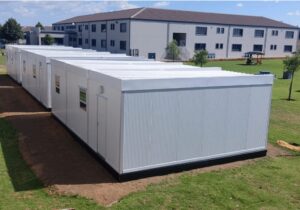

Discover how modular classrooms help South Africa's private schools expand faster with flexible, cost-effective and sustainable infrastructure.
South Africa’s private school sector is experiencing steady growth as increasing numbers of families seek alternative education options. While this growth reflects confidence in the sector, it is also creating new infrastructure pressures, with many schools needing to expand capacity faster than traditional construction methods can accommodate.
According to a World Bank Economic Update, South Africa will need to accommodate 1.2 million additional learners by 2030, highlighting a growing gap in educational infrastructure. This surge in demand is outpacing traditional building timelines, forcing institutions to rethink how quickly they can expand. In response, modular classrooms have shifted from a stop-gap measure to a strategic necessity, offering schools a way to scale at the pace parents now expect. Modular construction allows schools to deploy fully equipped classrooms in a fraction of the time required for traditional builds. Because most of the work happens off site, installation causes minimal disruption to teaching and campus operations.Unmatched pace of modular construction
For example, a modular classroom from an existing rental fleet can typically be delivered and installed in about a week, while newly manufactured units are ready within three to four weeks. This pace is unmatched by traditional brick and mortar construction, which often stretches over several months once design, approvals, and site work are factored in. The speed advantage alone makes modular infrastructure a compelling choice for schools that need additional capacity immediately rather than months down the line. Just as importantly, modular solutions ease the financial burden by reducing upfront capital expenditure, particularly through rental models, freeing schools to direct more of their budget toward core educational priorities rather than long term infrastructure commitments. Rather than locking funds into long term infrastructure projects, schools can preserve cash flow and channel resources into their core educational offering, while still expanding capacity quickly and effectively, without compromising financial flexibility. Offering unmatched flexibility
Speed and affordability are only part of the equation. Modular classrooms offer a level of flexibility that permanent structures simply cannot match. They can be expanded, reconfigured, relocated, or even stacked into multi storey formats as campus needs evolve.
This adaptability allows schools to respond quickly to fluctuating enrolment numbers or shifting spatial requirements, without being locked into the constraints of fixed, traditional buildings. At the same time, modular units are produced in a controlled manufacturing environment governed by rigorous quality management systems, including ISO 9001 and ISO 14001 certification. This disciplined approach ensures consistent build quality, long term durability, and full compliance with relevant safety and environmental standards. The result is reliable, high performance infrastructure that schools can trust to deliver over many years.