
South Africa’s rail story is often told as one story, when it is really two.
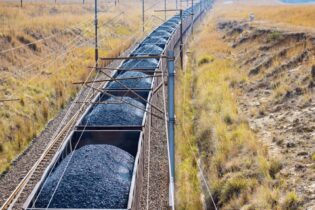
There is freight rail, which carries the minerals, agricultural produce, manufactured goods and export cargo that move through the economy. Then there is passenger rail, which shapes how people move through cities, how much time they lose in traffic and how much of their income is absorbed by commuting. For businesses and investors, freight is the more immediate commercial opportunity. It sits close to production, exports, ports and logistics costs. When freight rail underperforms, the effect is felt quickly. Mines produce goods they cannot move efficiently. Farmers use trucks where rail could be more competitive. Exporters carry higher costs. Roads become more congested. Ports absorb pressure from a system that is already stretched. According to an independent study by the Gain Group as cited in the Master Plan, the current annual cost of rail dysfunction is R276 billion, equivalent to 3.6% of GDP, in exports that never materialised and freight forced onto roads at higher cost to the economy. The Master Plan gives a sense of the scale. In 2022, rail moved about 150 million tonnes of freight, against an estimated viable rail market of 262 million tonnes. In value terms, rail moved commodities worth R273 billion, although the potential market was estimated at R1.316 trillion. The plan also estimates that rail could reduce South Africa’s national freight bill by R50 billion, or by as much as R100 billion when wider costs are included. For every R1 million invested, the economy stands to gain approximately R4.35 million in GDP, alongside the creation of eight full-time equivalent jobs and an increase of R4.38 million in household income. This is where rail reform becomes especially relevant for investors. The opportunity extends across rolling stock, terminals, sidings, depots, cold storage, port handling, private berths, security and maintenance. A freight corridor works well when all of these pieces support one another. A train that arrives at a congested port still leaves an exporter waiting. A rehabilitated line without the right rolling stock will not move the required volumes. A port without enough supporting storage creates delays before goods even reach a vessel. This is also why rail and ports should be viewed together. In freight logistics, they meet in the same cost base. For freight in particular, rail and ports have to be understood together, because the value of an efficient rail corridor is limited if goods still face delays once they reach the port. There are some useful examples to consider. In the Eastern Cape for instance, farmers have had to move produce to Cape Town for cold storage, before moving it again to Durban for export. That kind of movement adds cost, time and quality risk. It also shows how a single missing piece in the logistics chain can change the economics of an entire route. For minerals, the same logic applies at a larger scale. If mines can produce, but cannot move enough product to port, productivity is held back. More reliable corridors, more available train slots and better rolling stock could ease backlogs at mines and ports, while allowing more material to reach export markets. The capital requirement is significant. The Master Plan estimates the total cost of projects required to restore rail as the backbone of South Africa’s logistics and mobility system at R1.9 trillion. Spread over a decade, this is approximately R190 billion a year. That scale creates room for a more practical conversation about public and private roles. The state remains central as owner, regulator and steward of the national system. Private capital can bring funding, technical expertise, operating discipline and long-term delivery capability where the commercial case is clear enough. A well-structured partnership model gives each side a clearer role. The public sector can set the outcomes, protect the public interest and regulate access. The private sector can help deliver, operate and maintain assets against agreed performance standards. In infrastructure, this balance works best when risk allocation is clear and when performance is measured in ways that matter to users.
Passenger rail carries a different set of considerations. Freight demand can often be traced to commercial cargo flows. Passenger rail has to deal with affordability, safety, commuter behaviour, public subsidy and last-mile connections. People choose trains when the full journey works, from the first step out of the house to the final trip from station to destination.
In many successful cities, rail forms the backbone of the transport system, while buses, taxis, e-hailing and walking routes feed into it. South Africa already has a strong minibus taxi network, which plays a major role in last-mile mobility. Any passenger rail recovery will likely work better where taxis, buses and trains are considered part of the same commuter reality. The Gautrain example is instructive. Its value comes not only from the train, but from the supporting bus and shuttle links that help people complete the journey. The draft Master Plan notes that PRASA transported 39 million passengers in 2024, with projected demand expected to rise significantly by 2030. It also links passenger rail to a broader social goal: reducing the share of income low-income households spend on commuting. This is a transport issue, but it is also a household income issue, a productivity issue and a city planning issue. At AIIM, our perspective is shaped by long experience in infrastructure where public purpose and private capital meet. We have worked with government and private partners across different forms of long-term infrastructure delivery, including PPPs, renewable energy, logistics, ports and corridors. That experience matters in rail because the sector requires patient capital, disciplined risk allocation and a clear understanding of how assets perform over decades. We also bring a value-chain lens. Through platforms such as The Logistics Group, African Ports & Corridors Holdings and Bulkstream, we have built exposure to ports, logistics corridors and rail-adjacent services. This gives us practical insight into how goods move from production to market, where bottlenecks emerge and which interventions can unlock wider value. Our approach looks across the entire value chain, from pit to port and across the different sectors that depend on efficient movement. That view is important because the investment opportunity in rail will often sit in the links between assets. A line may be valuable because of the mine it serves. A depot may matter because of the rolling stock strategy behind it. A cold store may shift the economics of an agricultural route. A private berth may reduce friction at a port. For businesses, the question is how rail can support competitiveness. Lower logistics costs, more reliable export routes and less congestion can improve margins and productivity. For investors, the opportunity lies in understanding where long-term capital can support assets with durable demand and clear system value. A more functional rail system would show up in practical ways: fewer trucks on the busiest routes, better movement of minerals to port, more efficient agricultural exports, improved port flows, more reliable commuter options and stronger productivity across sectors that already have demand. South Africa’s rail network remains one of the country’s most important economic assets. Its revival will take time, capital and cooperation. For businesses and investors, the attraction lies in the possibility of helping an existing system become more useful, more reliable and more closely aligned to the way the economy needs to move.