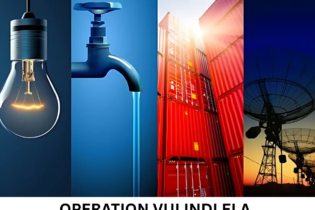
Operation Vulindlela's Q1 2026 report highlights progress on electricity, water, freight rail, municipal reform and digital government in South Africa.
Operation Vulindlela, a joint initiative by the Presidency of South Africa and the National Treasury, launched in 2020, aims to “accelerate structural reforms, modernise network industries, and boost economic growth in South Africa.”
Six years on, the operation has entered into Phase 2, and while progress is slow or uneven in some areas, the quarter 1 report does indicate progress.
Electricity
Perhaps the biggest achievement, or at least the most visible, is the end of load shedding. This is the culmination of structural reforms to both Eskom and the addition of private energy producers entering the grid.
The report states, “The Eskom Restructuring Task Team (ERTT) completed the first phase of its work to oversee the establishment of a fully independent state-owned transmission entity. This is a critical step to ensure that the restructuring of Eskom is conducted in a manner that minimises financial, operational, and fiscal risk while maintaining energy security and advancing the objectives of electricity sector reform to reduce the high cost of electricity. Government remains focused on completing the transition to a competitive electricity market by launching the South African Wholesale Electricity Market (SAWEM), with key steps taken to establish a regulatory framework for the market.”
The report notes a lag in reforming the electricity distribution industry to establish financially and operationally sustainable distribution entities, and suggests that intervention is required to progress this aspect of electricity reform.
Freight logistics
The primary mechanism behind freight reform in South Africa is developing a framework that allows for increased private sector participation. This quarter, the first of 2026, shows progress in this regard with the latest version of the Network Statement enabling private sector access to the national rail network. The report notes the conclusion of Rail Access Agreements with 11 train operating companies, development of an implementation plan for the corporatisation of the Transnet National Ports Authority, and finalisation of the draft National Rail Bill to establish a modern legislative framework for rail reform.
Water and sanitation
Operation Vulindela’s approach to water and sanitation reform has focused on strengthening existing institutions and improving regulation while accelerating infrastructure investment. Key developments have been the establishment of the National Water Crisis Committee (WATERCOM) and publication of the National Water Action Plan, which seeks to guide the reforms and move South Africa out of the water crisis. Long in the works, the South African National Water Resources Infrastructure Agency (SANWRIA) now has a board, and is going through the process of choosing a CEO, which will hopefully operationalise the agency after many years of delay. There has also been a reform of existing legislation such as the Water Services Amendment Bill, as well as implementing the Revised Raw Water Pricing Strategy. Addressing long-standing delays in investment, Operation Vulindela also focuses on “expanding the pipeline of infrastructure investment” through the Water Partnerships Office and the new Finance and Implementation Support Agency.
Municipal reform
South Africa’s focus on municipal failure has also been highlighted in the report. While not within Operation Vulindela’s scope, the recent temporary withholding of equitable shares illustrates a severe approach to municipal budgeting and expenditure. The report notes that the key reforms come through implementing the Metro Trading Services Reform Programme to improve the governance and performance of municipal trading services. In preparation for the expanded mandate of the Public Service Commission in local government, there has been progress on developing a logical government white paper, the Municipal Finance Management Act Amendment Bill, and the review of the Local Government Fiscal Framework.
Digital infrastructure
The report notes that the implementation of the Digital Transformation Roadmap has been accelerated through deployment of the MyMzanzi platform, a unified digital government services initiative in South Africa designed to streamline public sector access, offering secure digital identity, verified credentials, and a centralised portal for social, employment, and business resources. Other reforms include a digital identity system and the payments modernisation programme.
The report states, “During the quarter, implementation focused on establishing the technical and governance foundations required to deliver integrated, citizen-centred digital services while strengthening interoperability across government systems.”
The progress in the report shows steps forward, but uneven and slower-than-anticipated structural reform, but does say, “With increasing emphasis on establishing new institutions, finalising enabling legislation and regulations, reforms can be expected to translate into tangible improvements in infrastructure investment, service delivery and economic performance.”