Explore Rand Water research on Gauteng’s water security and a proposed governance framework to improve infrastructure planning, coordination, climate resilience and service delivery.

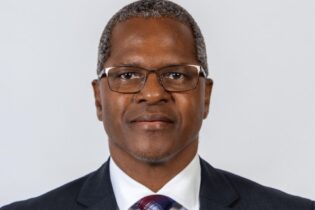
Dr Khathutshelo Godfrey Maumela, executive manager of research and development at Rand Water
As South Africa’s economic engine and most densely populated province, Gauteng depends on reliable infrastructure to sustain growth, support development and fulfil every citizen’s constitutional right to safe water.
Dr. Khathutshelo Godfrey Maumela, executive manager of research and development at
Rand Water, conducted research focused on Gauteng’s water supply system, which argues that fragmented planning, weak stakeholder coordination, and slow climate adaptation are undermining long-term water security. One of the central findings is that South Africa’s water infrastructure crisis cannot be solved through engineering alone.
Presenting his PhD research at the Water Services and Mining & Industry Forum, Dr Maumela outlined a proposed “Integrated Water Infrastructure Planning and Management Framework” designed to improve coordination across the province’s complex water value chain.
The research, titled
Planning and Management in Urban Water Infrastructure: A Case Study for Gauteng, South Africa, examines how multiple institutions responsible for water supply infrastructure interact, and where systemic failures are occurring.
“Water is the arche,” Maumela says, referring to the ancient philosopher Thales of Miletus. “Water is the source of life.” He notes that South Africa is already a water-scarce country, while Gauteng’s water consumption remains “ridiculously high” compared to both national and global averages. “In South Africa, we use about 237 litres per person per day, and in Gauteng, almost 300 litres per person per day, while the international average is 173 litres per person per day.”
Shared responsibility, fragmented execution
The Department of Water and Sanitation act as “referees” and are not directly involved in provisioning water
His research focuses on the first three stages of Gauteng’s water value chain: raw water supply, water treatment and bulk distribution, and municipal reticulation. Maumela compares the system to “a relay race” where multiple institutions are responsible for handing over water supply responsibilities across the chain.
“You can never win a relay race unless the runners are running for the same goal and understand the same objective that needs to be achieved,” he says.
The study was motivated by years of recurring water disruptions in Gauteng dating back to 2014 and the El Niño drought period of 2015. “Since then, we have experienced intermittent water interruptions almost every year in Gauteng,” Maumela says. “It became quite apparent that there’s a need to assess the impact of economic activities, climate change, 4IR technologies, as well as stakeholder management.”
According to the presentation, Gauteng accounts for 25.5% of South Africa’s population and 37% of the national GDP, making water security in the province a matter of economic as well as social importance.
Planning exists, but implementation fails
The new National Water Resources Infrastructure Agency to manage raw water infrastructure independently from DWS’s policy and regulatory functions, and act as enforcement when municipalities are failing their mandate
The research used a mixed-method approach including surveys, interviews, and Decision-Making Trial and Evaluation Laboratory (DEMATEL) analysis involving municipalities, bulk water utilities, source water institutions, and sector specialists.
One of the study’s key findings is that water institutions are generally planning over long-term horizons, but execution remains a major weakness.” Maumela explains, “The respondents said there is no problem with planning in terms of it being forward-looking. But project management is a huge challenge.”
He says procurement delays; contractor performance issues and infrastructure backlogs continue to undermine implementation.
“The planning gets done, and then there’s a stage called delays,” he says. “Some of them are delays in awarding the work, some are related to contract management, contractor performance, and poor quality.”
The presentation notes that infrastructure backlogs are also limiting effective maintenance and operational redundancy.
Climate resilience remains weak
The study also assessed how prepared Gauteng’s water institutions are for climate-related disruptions such as floods, droughts, and fires. Maumela says the results showed that organisations were largely uncertain about their climate resilience strategies.
“Climate change is going to be one of the single biggest challenges that the world will ever see in the years to come,” he says.
He points to recent flooding events in KwaZulu-Natal and ongoing international wildfire disasters as examples of growing climate risks affecting infrastructure systems.
If we were to have infrastructure built in such a way that is more resilient to floods, it means we can sustainably supply water even during times of climate change eventualities, he says.
The research also found that adoption of Fourth Industrial Revolution (4IR) technologies — including smart metering, digitalisation and smart city systems — remains slow across the sector.
“Any entity that gets smart metering right automatically reduces the component of non-revenue water,” says Dr Maumela.
The presentation identifies “slow adaptation of 4IR technologies” and “poor climate resilience strategies” as major weaknesses across institutions.
Strategic alignment is identified as a critical weakness
Using DEMATEL modelling, the research analysed relationships between critical success factors in water infrastructure management.
The study found that a “value-driven approach” was the most crucial factor, while “strategic alignment” emerged as the most important determinant of overall effectiveness.
“You would not be able to have effective planning and management of water infrastructure if you are not looking to derive value at all points, as well as if your strategic alignment is not aligned,” Dr Maumela says.
He warns that executive leadership decisions often determine whether infrastructure investment succeeds or stalls. “If you’ve got strategic leadership in an organisation that does not see a need for investment in infrastructure, it means there are going to be major problems,” he says.
The presentation notes that strategic alignment and value-driven approach in planning and management were the strongest influencing factors identified in the DEMATEL analysis.
Municipalities hold the greatest influence
Water services to households are a municipal responsibility
The stakeholder analysis section of the research identified metropolitan municipalities and the Department of Water and Sanitation (DWS) as the most influential players in Gauteng’s water ecosystem when seen through the lens of the bulk water utility.
Dr Maumela elaborates, “We picked up that metropolitan municipalities are very right up there, they actually have the highest impact and the highest influence in their relationship with the bulk water utility.”
Finance departments and executive management teams were also identified as key internal stakeholders influencing infrastructure delivery outcomes. “If finance is saying no to infrastructure for whatever reason, you will have problems in terms of money going into infrastructure-related projects,” he says.
One of the most significant recommendations from the research is the creation of a dedicated National Water Resources Infrastructure Agency to manage raw water infrastructure independently from DWS’s policy and regulatory functions.
“DWS is more like a referee and a player,” Maumela says. “They provide policy direction, they are the regulators, they are the ones that set raw water tariffs, but they are also the same ones who run the water resources infrastructure.”
He argues that separating these responsibilities would improve accountability and oversight. The framework also proposes stronger provincial coordination mechanisms, greater integration between planning and operations teams, ring-fenced municipal water utilities, and deeper consultation across institutions to synchronise infrastructure investments.
“If Rand Water is building a reservoir in a certain area, the question that might be asked is whether that reservoir is aligned with the pipeline that is being built by the municipality in the same area,” he says. “That synchronisation needs to be achieved through consultation.”
The proposed framework additionally embeds climate resilience and 4IR technology integration into every level of infrastructure planning and operations.
After developing the framework, Dr Maumela returned to industry experts for validation.
“When we finished doing the framework, we went back to the industry experts for them to give us their views as to whether this makes sense or not,” he says. “In essence, by and large, they agreed that it makes sense.”