
In South Africa and Kenya, some green energy projects have deprived local communities of land and livelihoods instead of sharing the benefits.
Private investment in clean energy projects is growing: in sub-Saharan Africa, it’s approaching US$40 billion a year. These “green transition” investments in solar and wind power are meant to benefit the environment and develop the communities where they are based.
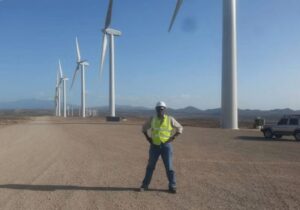
I am a specialist in natural resource governance and in a recent paper I looked at whether local communities in South Africa and Kenya benefited from these investments. Postdoctoral fellow Jacob Ulrich, research assistant Eivind Bjørås and I wanted to find out how green energy projects in Kenya and South Africa affected local communities: who benefited, who decided how benefits were shared, and who missed out. We found two broad approaches. The first was “buying in”, where communities become partners in projects through co-ownership, long-term land leases or benefit-sharing agreements. The second was “buying out”, where communities are compensated with money for giving up or losing their land to the project or are relocated, and are excluded from the project’s longer-term benefits. In South Africa, we researched the Renewable Energy Independent Power Producer Procurement Programme. This is a government programme that invites private companies to bid to build wind and solar power projects and then sell the electricity they generate to the national grid. The private companies have to give local communities at least 2.5% ownership. But our research found that even this well designed approach can end up buying communities out, if communities have no say in what a fair deal looks like. Our research found that South Africa’s big green energy projects, mainly in the Northern Cape, hardly benefited local communities. In Kenya, we interviewed local community members, officials and developers who’d been affected by the Lake Turkana Wind Power project, Africa’s largest wind farm. The project was built on land traditionally used by pastoralist communities. Protests and lawsuits followed, resulting in long-running conflicts between investors and local communities. We concluded that both cases point to the same problem. Green energy projects often measure success through jobs, dividends and infrastructure, but overlook what communities value most: their land, livelihoods and way of life. For pastoralist communities, money cannot replace access to the land they need to move livestock and sustain their way of life. Until investors start asking what communities value, and build it in from the start, Africa’s green transition will keep buying people out instead of buying them in.South Africa’s renewable energy programme
South Africa’s renewable energy programme is designed as a model of buying-in. It was created with social justice in mind, where companies have to tender for projects that are awarded by the state. The companies bidding for contracts must commit to a certain level of job creation, local (Black) ownership and community development. However, in practice, the picture is more complicated. Our research found that private energy companies in South Africa aim to meet their community obligations because it is a condition of being awarded a tender to set up a project. This is different to wanting communities to have a real say in the kind of development they need. In these projects, when money does flow to the communities it often takes years. Sometimes the communities only earn dividends years after construction starts once the project is up and running. In areas of deep poverty, such delays can be devastating to a community that gave up land for a solar farm, for example. The compensation people receive is also part of the problem. We found that people near renewable energy projects in South Africa often lose their land and are not compensated with money or other land but with community halls and social services that are chosen by the private energy companies. These only meet some needs, and the communities have no say, even though consultation is built into the tender process. Private energy companies need to work with local communities to decide how they want to be included, or whether direct cash transfers, or some combination of cash and services, would better reflect what communities themselves value.