Louis Pretorius, managing director, Corrocoat South Africa
Combining specialist coatings with advanced pipe pigging techniques, anti-corrosion engineering company –
Corrocoat – is rehabilitating pipelines over distances of up to 30 km while minimising surface disruption and environmental impact.
Corrocoat offers a full turnkey service. The company manufactures its own raw materials (glass flake) as well as formulates and produces a wide range of coatings and lining systems. Corrocoat also has the engineering expertise required to assess and specify the most appropriate solution, and can undertake installation and quality control on site. One such engineering service they offer is trenchless technology.
“Trenchless technology allows us to rehabilitate critical pipelines without digging them up. In many cases, we can restore a pipeline’s performance and significantly extend its service life while avoiding the social, environmental and operational disruption associated with replacement,” explains Louis Pretorius, managing director of Corrocoat South Africa.
Corrocoat’s involvement in trenchless technologies started in the early 1980s with a series of winched machines that could be pulled through a pipeline where the internal side of the pipes were blasted, cleaned and then sprayed with anti corrosion products.
“With this method, we achieve higher adhesion and binding strength than using traditional sleeving techniques and find that winched machines are better suited to more corrosive environments found in the mining industry,” says Pretorius.
He adds that, however, most trenchless technologies have distance limitations of up to a few hundred meters. “Therefore, Corrocoat adopted another trenchless technology – pipe pigging – that can work across distances as long as 30 km. In terms of trenchless technologies, this is a quantum leap forward. Corrocoat South Africa has become a global centre of expertise for pipe pigging operations and have completed well over a hundred pigging contracts in different countries.”
Pipe pigging
Ian van der Heever, operations manager, Corrocoat South Africa
Originally developed in the oil and gas sector during the 1960s, pigging was used to remove wax deposits, sediment and debris from pipelines. The technology has since evolved into a sophisticated rehabilitation method capable of cleaning, inspecting and coating long sections of pipeline.
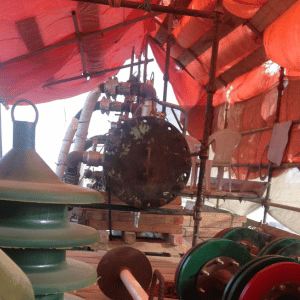
A blow-through technique is used where pigs are driven through the pipeline using compressed air provided by large diesel compressors and dehydrated using air dryers/chillers. Temporary pig traps are fitted at the beginning and end of the pipeline to allow the launching and receiving of the pigs and the batches of chemicals and coating.
In addition to the oil and gas sector, pipe pigging is used in the bulk water and wastewater industry where steel pipes are prevalent and there is aggressive corrosion from chemicals or bacteria that causes pitting.
However, there is a high initial set up cost for pipe pigging. “You need a large air spread with lots of diesel compressors, air dryers, dehumidifiers and tankage. The length of the pipeline is largely irrelevant, whether it is one kilometre, three kilometres or even 30 kilometres, as the same amount of required infrastructure must be located at the launch and receiving points. All that is needed is approximately 10 metres of clear access at each end of the pipeline, together with a flange at both the entry and exit points. Where flanges are not already in place, they can be welded onto the pipeline to facilitate the process. Therefore, the cost of pipe pigging is high for short pipelines and low for longer pipelines. The process can accommodate long-radius bends and can also pass through features such as bearings, tee pieces and off-takes. While these pipeline components may require additional preparation and can add a few hours to the setup process, they can be successfully managed,” states Ian van der Heever, operations manager, Corrocoat South Africa.
Pipe pigging minimises surface disruption and excavation, making it particularly well suited to environmentally sensitive areas. By rehabilitating pipelines from within, the technology reduces the impact on surrounding vegetation, watercourses and existing infrastructure, while also limiting the permitting and environmental approvals often associated with large-scale open-cut construction projects. Corrocoat recently upgraded a 1 km pipeline using pigging technology as it ran under a wetland.
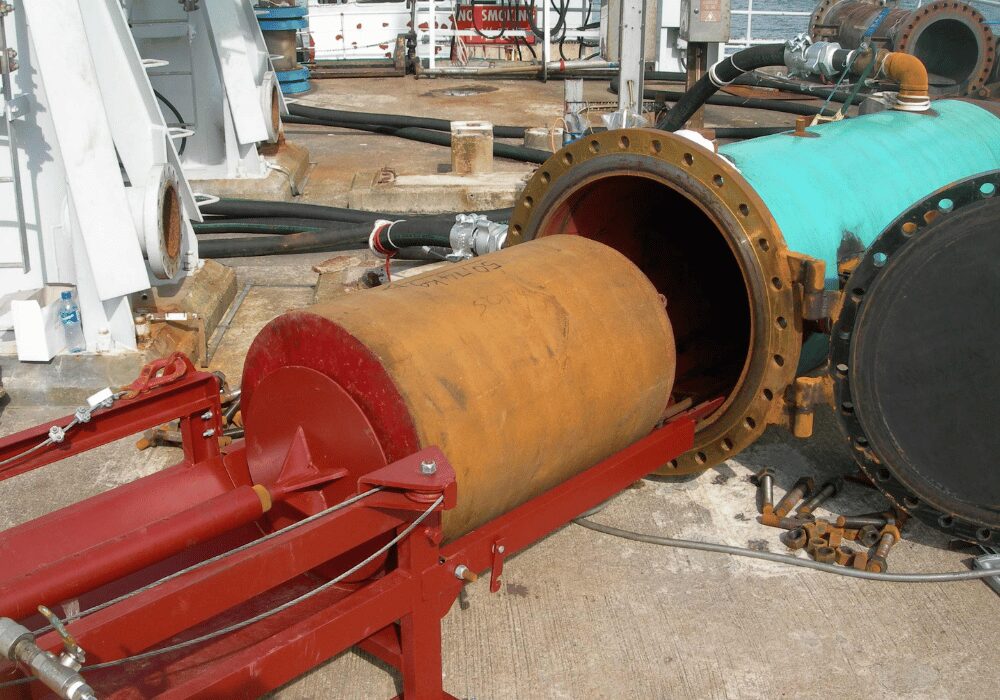
Corrocoat Pig Launcher Spool
According to van der Heever, refurbishing for example a DN 400, 20 km pipeline would take approximately 30 days. “Pipe pigging has been developed and refined over the past 25 years, with advances in materials and application techniques delivering even greater durability and strength. Pigging technology can be applied to pipelines ranging in size from DN 400 to DN 900.”
During rehabilitation projects, multiple cleaning stages remove old corrosion products, scale and contaminants before protective coatings are applied to the internal surface.
There are three phases to this pigging technology:
- Mechanical cleaning of the pipeline using foam and wire brush pigs to remove loose debris, wax, residual hydrocarbons and corrosion products from the pipeline.
- Chemical cleaning of the pipeline, using a range of chemicals batched between two pigs, to ensure a clean, dry metal finish to a visual cleanliness standard of SA2½.
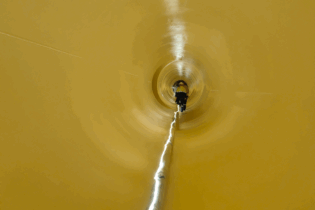
- Glass flake coating using specially designed coating pigs. These pigs make several runs, ensuring a multi-layer, continuous coating of the specified thickness, along the complete length of the pipeline.
Advances in coating systems
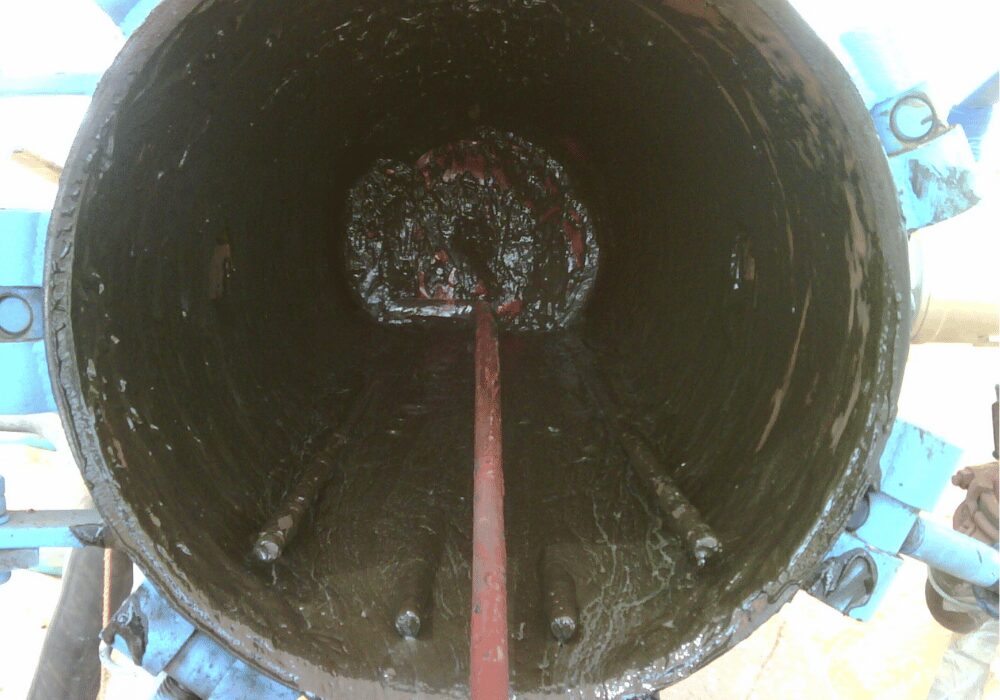
Mechanical cleaning
Corrocoat offers both thin-film and thick-film internal pipeline coating systems, selected according to the condition of the pipeline and the required level of protection. Both types of coating have a formulation that incorporates a pot-life inhibitor, which extends the workable application time of the coating while ensuring consistent performance during installation. “This allows for longer runs needed for pipe pigging,” adds van der Heever.
Thin-film coatings typically consist of a two-part solvent-based epoxy system applied at approximately 100 to 150 microns per pass. These coatings are commonly used where the substrate is in relatively good condition and a smooth, protective barrier is required to improve hydraulic performance and prevent corrosion.
“However, there are limitations in environments where there are aggressive chemicals. Corrocoat has therefore also developed a thick-film glass flake epoxy that by contrast, can be applied at substantially greater thicknesses (up to 1000 microns per pass). If required, we build this up in multiple passes to create a structural liner of up to about 5 mm thick on the inside of the pipe. This can be done over significant lengths, depending on pipe diameter, bends, and the number of tees and off-takes,” explains van der Heever.
The thick film coating incorporates nano tech glass flake that blends micro-sized glass flakes with nano-additives and has a high temperature rating. Two products used in pipe pigging are the Polyglass VE LPLP, to protect new pipelines and rehabilitate ageing assets and Fibercoat for severely corroded pipelines.
Repair of pitted pipelines
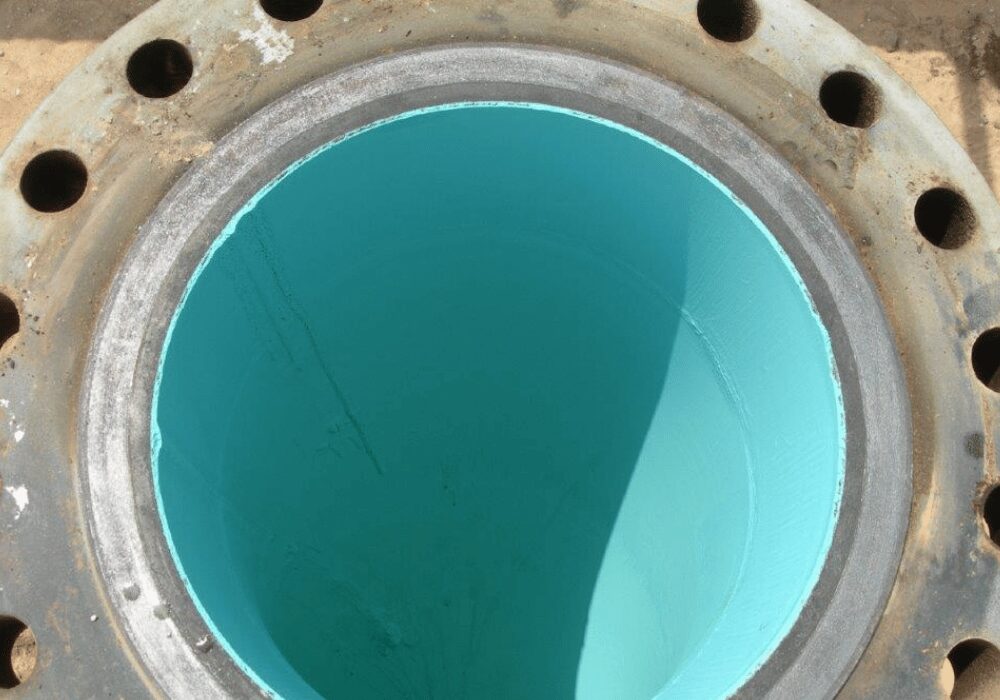
Internally coated pipeline by pigging spool flange inspection
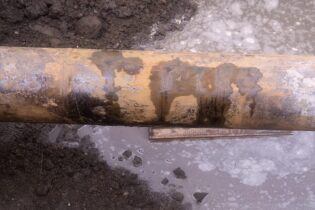
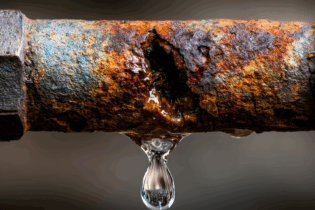
One of the most effective applications of Corrocoat’s pipe pigging technology is the rehabilitation of pitted pipelines. Over the past decade, Corrocoat has found that there is an increased need for the rehabilitation of pitted pipelines.
When a pipeline is badly pitted, sleeved liners have limitations. With a plastic liner, small voids or hollows remain between the back of the liner and the uneven internal surface of the steel pipe. A fibreglass sock liner better fills those hollows but still tends to bridge over the hollows rather than filling them completely. In a pressurised pipeline, the process fluid (even if it is only water) can slowly permeate through the internal barrier and accumulate in these pit marks or interstitial spaces between the outer surface of the liner and the inner surface of the pipe. Over time, this trapped fluid can drive further corrosion.
“To avoid this, we use a liquid-applied liner to rehabilitate the internal surface. Because it is applied in a fully liquid state, it achieves extremely intimate contact with the steel substrate, eliminating air pockets and voids,” says Pretorius.
On top of the structural benefits, this system offers substantially higher chemical and temperature resistance.
What makes this lining distinctive is its glass-flake technology. The coating is filled with thousands of microscopic, fish-scale-like platelets per square centimetre. In a standard polymer lining (such as a conventional polyester, vinyl ester or epoxy), small molecules like water, oxygen, hydrogen sulphide, chlorine dioxide or hydrogen gas can slowly diffuse through the polymer by osmosis or permeation and eventually end up in the interstitial space on the outside of the polymer. That is why even polymers are not completely impermeable.
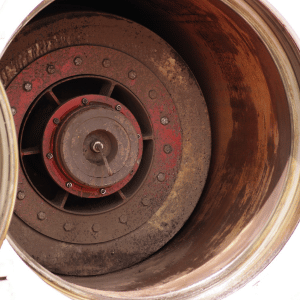
Originally developed in the oil and gas sector during the 1960s, pigging was used to remove wax deposits, sediment and debris from pipelines
“In our glass-flake system, these microscopic platelets are densely packed in multiple layers, forcing diffusing molecules to take a far more tortuous path. This slows diffusion rates by orders of magnitude, greatly reducing the transport of corrosive molecues to the steel substrate. As a result, it significantly mitigates the pitting and wall-loss mechanisms that eventually cause structural weakness and pipeline failure,” explains Pretorius.
This technology is supplied as a specialised liquid polymer in drums and then carefully blended and applied on site. “The application method is part of our intellectual property. In simple terms, we use two specially designed pigs with a charge of liquid polymer – ranging from about 1 to 10 tonnes – contained between them,” he states.
For Corrocoat, the evolution of trenchless rehabilitation reflects a broader shift in infrastructure management from replacement to asset preservation. By combining specialist coating technologies with advanced application methods such as pipe pigging, the company is able to rehabilitate pipelines over long distances, address severe corrosion and pitting, and restore critical infrastructure with minimal disruption. As municipalities, mines and industrial operators face growing pressure to extend the life of ageing assets while controlling costs, trenchless technologies are becoming an increasingly important tool in maintaining reliable pipeline networks and safeguarding infrastructure investment.