
A Limpopo project is tackling rural diaper waste through community-led governance, reusable products and local partnerships.
A community-driven project in Limpopo is demonstrating how collaborative governance, environmental education and local economic participation can help address one of South Africa’s most overlooked waste streams: disposable diapers.
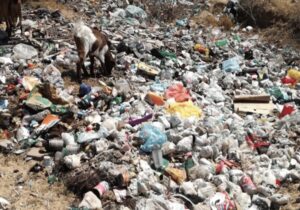
Researchers and project partners involved in the initiative say indiscriminate diaper dumping is creating growing environmental, health and social risks in rural communities, particularly in areas without formal waste collection services. Presenting findings at the Institute of Waste Management of Southern Africa Eastern Cape Conference, Prof Catherina Schenck of the University of the Western Cape says the project focuses on implementing governance systems and innovative interventions at the village level to improve diaper waste management.“We found that disposable diaper management includes burning, burying and dumping,” Schenck says. “Communities identify these practices as a threat to human and animal health, the environment, livestock and cultural practices.”The project is led by the DSTI/NRF/CSIR SARChI Chair in Waste and Society at the University of the Western Cape in partnership with Kruger to Canyons Biosphere (K2C) and Aquila Environmental and funded by the Council for Scientific and Industrial Research (CSIR)
Disposable diapers are becoming a growing rural waste challenge
The research is conducted in rural municipalities where formal waste services remain limited or absent. The study area is described as an unserved rural region that is also a strategic water source and biodiversity area managed by both municipal and traditional councils. Researchers completed 1,575 questionnaires, 18 focus groups and multiple mapping exercises to better understand diaper use and disposal practices in local communities. The findings reveal the widespread reliance on disposable diapers.“97% of caregivers use disposable nappies,” Schenck says. “The reasons include convenience, accessibility, water scarcity and perceptions that disposable nappies are fashionable.”The scale of the waste stream proves substantial. The research estimates that approximately 37,000 diapers are generated daily in the Maruleng Municipality, while around 172,000 diapers are generated daily in the Bushbuckridge municipal area. According to the presentation, many households are heavily dependent on social grants, with caregivers spending an average of R385 per child per month on disposable diapers.
Communities co-develop governance systems
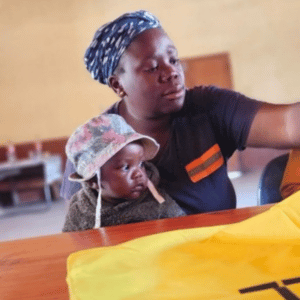
Community outreach and engagement is the best foot forward in solving complex social problems

Schenck says, “Never underestimate communities. Appreciate and build on what already works. Co-design your future waste governance systems.”
Eco-savings groups support sustainable alternatives
A major component of the project is the establishment of Eco Savings and Credit Groups, known as E-SCGs. The groups function as community-managed savings and loan systems consisting of between 10 and 20 members. According to the researchers, these groups allow households to access financial support mechanisms that can help families transition toward reusable absorbent hygiene products and improved sanitation practices. “Eco Savings and Credit Groups are at the heart of the scaled project,” the presentation notes. “Resources are pooled together, and governance is amplified.” The project also supports local economic development through partnerships with micro-businesses producing reusable sanitary products. The initiative helps local seamstresses expand their businesses while simultaneously promoting more sustainable hygiene alternatives.Environmental and policy impacts emerging
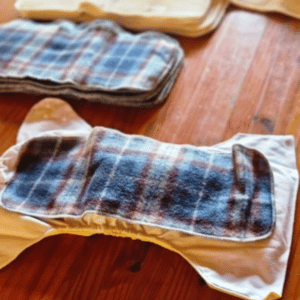
Reusable pads are one solution, but cultural perceptions need to shift
“Less disposable nappies are entering rivers and ecosystems,” Schenck says. “Conservation agreements have also been signed with the participants”The initiative is also beginning to influence national policy discussions around diaper waste management. “Findings directly informed South Africa’s national disposable diaper strategy through the Department of Forestry, Fisheries and Environment,” the project team states. According to the researchers, the work also contributes academically by producing what they describe as the first life cycle assessment examining the impacts of diaper disposal practices in rural unserved communities.
Local partnerships critical to success
One of the strongest lessons emerging from the project is the importance of trusted local partnerships. The project team describes the role of Kruger to Canyons Biosphere as “irreplaceable and critical”.“Project sustainability is impossible without a local partner,” the presentation states.Facilitative leadership and long-term community engagement are also identified as essential to the project’s success. For Schenck and the wider project team, the initiative demonstrates that environmental waste challenges in underserved communities require more than technical interventions alone. “Collaborative strength demonstrates that when universities and communities work as equal partners, respecting both academic rigour and indigenous knowledge systems, transformative solutions emerge.”