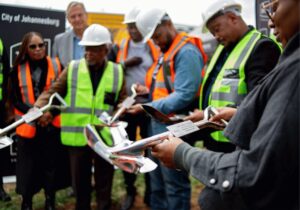

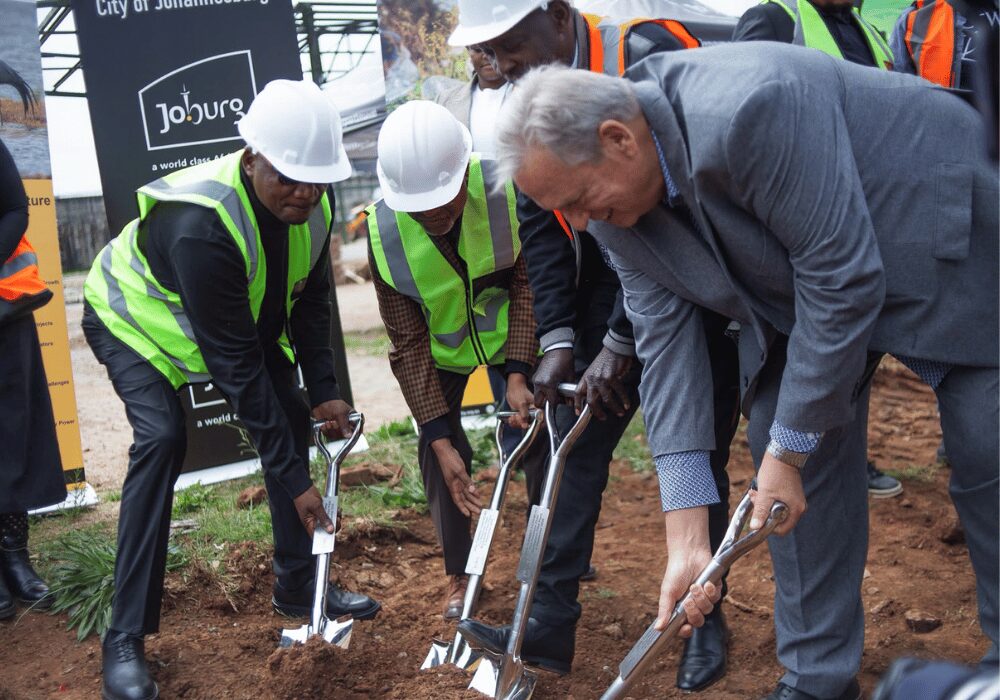
The City of Johannesburg officially broke ground on Tuesday, 08 September 2026, on a biodigester pilot plant at the Robinson Deep Landfill site, launching a municipal-scale project designed to convert organic waste into renewable energy and reduce landfill dependence.
The sod-turning ceremony, led by Executive Mayor Cllr Dada Morero, marks the start of a construction phase of a facility designed to process roughly 50 tonnes of source-separated biodegradable waste daily using anaerobic digestion technology. The initiative falls under the City’s Integrated Biodegradable Waste Management Programme and is implemented in partnership with the Global Environment Facility (GEF), the United Nations Environment Programme (UNEP), and the Development Bank of Southern Africa (DBSA). Mayor Morero was joined by the Member of the Mayoral Committee (MMC) for Environment and Infrastructure Services Department (EISD), Cllr Jack Sekwaila; Executive Director for EISD, Dr Tebogo Modiga; Ward 124 Councillor Mongameli Mnyameni as well as representatives from the Development Bank of Southern Africa, Energidrop, and other senior city management. Key partners in this project include the Development Planning Department, the University of Johannesburg (UJ) Research and Development Centre, and Energidrop, which serves as the City’s technical advisor on the project. The project responds to key challenges facing Johannesburg, including pressure on landfill capacity, greenhouse gas emissions and the need for more sustainable and resource-efficient waste management solutions.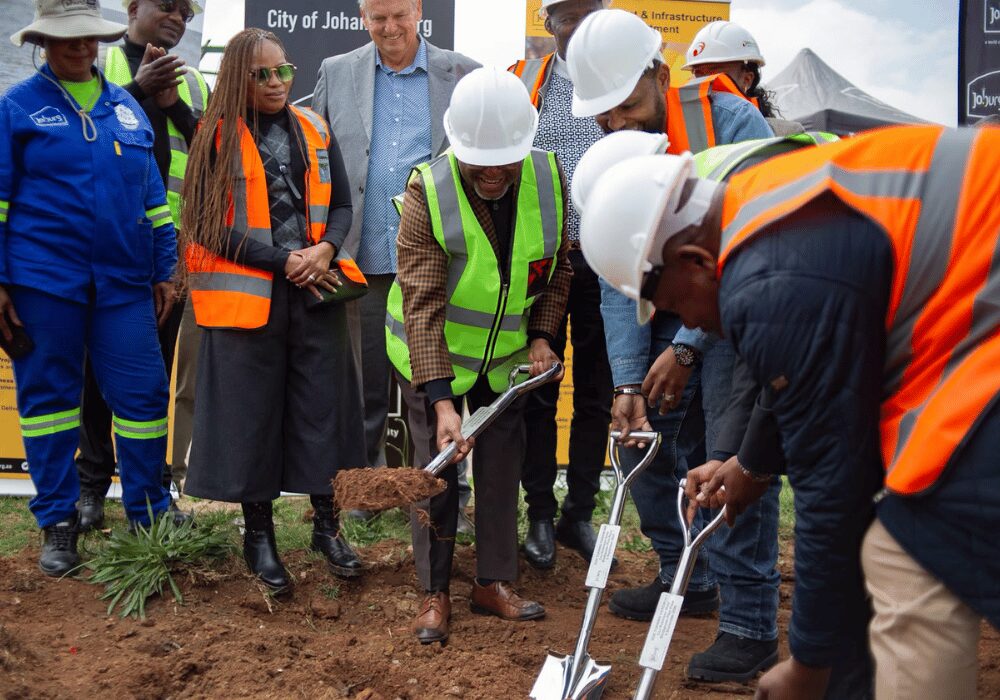
“Today’s sod-turning ceremony marks the transition of this important project from planning to implementation,” Cllr Morero said in his keynote address. “It demonstrates that Johannesburg is committed to moving beyond policy and planning and towards the practical implementation of innovative solutions that address our environmental and infrastructure challenges.”“Our vision is clear: we want to build a Johannesburg that is cleaner, greener, more resource-efficient, and more resilient,” Cllr Morero added.

The project is supported by Separation at Source initiatives, including at the Johannesburg Fresh Produce Market and selected commercial establishments, to improve the quality and availability of biodegradable waste feedstock.
Cllr Sekwaila said the facility represents a strategic shift in waste management. “Organic waste should increasingly be seen as a resource with the potential to generate renewable energy and support a circular economy.” The facility will serve as a demonstration site to test technical, operational, and financial parameters under local conditions before the city considers scaling up the technology. “The Robinson Deep Landfill Biogas Pilot Plant serves as the flagship demonstration project under the programme,” said Makhosazana Mtshali, the city’s Director of Waste Management & Regulation.“The project provides the City with a valuable opportunity to evaluate municipal-scale anaerobic digestion technology under local operating conditions while generating critical technical, financial, and operational data to inform future infrastructure investments.”
 Construction is scheduled for completion in March 2027, followed by plant commissioning and a 12-month operational testing phase.
Through this initiative, the City of Johannesburg is taking practical steps towards reducing landfill dependence, lowering environmental impacts, recovering valuable resources and building a cleaner, greener and more resilient municipality.
Construction is scheduled for completion in March 2027, followed by plant commissioning and a 12-month operational testing phase.
Through this initiative, the City of Johannesburg is taking practical steps towards reducing landfill dependence, lowering environmental impacts, recovering valuable resources and building a cleaner, greener and more resilient municipality.