
South Africa’s Supreme Court of Appeal has held electricity utility Eskom and state regulators responsible for water pollution from a coal fired power station.
About 74% of South Africa’s electricity is generated by coal-fired power stations owned by the state-owned electricity provider, Eskom.
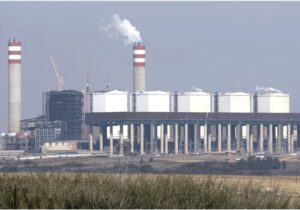
These power stations produce greenhouse gas and air pollution and can also pollute nearby streams and rivers. South African environmental law says that all power stations must have environmental authorisations and often water-use and atmospheric emission licences, which set out what the power stations must do to manage pollution risks. How effective these controls are in practice was at the centre of a recent court case. Topigs Norsvin, a pig-breeding company, said polluted water from the Kusile power station had entered groundwater, a wetland and nearby streams, putting local water sources and its farming operations at risk. Kusile power station is in Mpumalanga, South Africa’s coal heartland. It began operating in 2017 and generates enough electricity to power over three million homes. On 14 August 2026, South Africa’s Supreme Court of Appeal ruled in favour of Topigs Norsvin. It found that Eskom had broken the environmental and water-use rules that applied to Kusile. The court also found that government officials had failed to make Eskom follow the rules. As a specialist in environmental and climate change law, I argue that the judgment answers three important questions: which environmental rules still apply after a major project is approved; who must make sure they are followed; and what courts can do when both companies and government regulators fail to act. The court found that:- Eskom had broken legally binding environmental and water rules and had not taken reasonable steps to reduce the pollution or repair the damage.
- The senior government officials responsible for water and environmental affairs had acted unlawfully by failing to make Eskom follow these rules.
How a pig farm took Eskom to court
Before Eskom could start building Kusile, it had to obtain environmental approval and licences to use water. These came with rules requiring Eskom to keep polluted water contained, prevent dirty water from running into the surrounding environment, test water quality and remain within its water-use limits. Topigs Norsvin, which has a farm downstream of Kusile, became concerned after it found that Kusile was polluting nearby water sources. The company joined Kusile’s environmental monitoring committee, which was responsible for checking whether Eskom was following the environmental rules, but the pollution continued. In 2023, Topigs went to the High Court, asking it to order Eskom to follow the environmental rules and require the government’s water and environmental authorities to act. The High Court dismissed the application in June 2024, and Topigs appealed to the Supreme Court of Appeal. The Supreme Court of Appeal came to a very different conclusion.Court holds Eskom and government regulators responsible
The Supreme Court found against Eskom on a number of grounds. Firstly, it had failed to comply with several conditions in its environmental authorisations and water-use licences. These were legally binding requirements, not administrative formalities.
Secondly, the judgment records a lengthy history of problems. Some monitoring information was submitted late or not at all, while other reports had serious gaps or scientific errors. Eskom also failed to carry out some of the steps it had promised to take to fix the problems.
Thirdly, water tests repeatedly found pollution levels above the permitted limits. Eskom did not deny that Kusile had harmed water sources downstream. The court made it clear that environmental approval is not a free pass: permission to build does not allow a developer to ignore the rules attached to that permission. The court found that Eskom had broken environmental laws by failing to reduce the pollution and repair the damage. Its failure to follow the conditions of its environmental approvals and water-use licences violated the right to a healthy environment protected by section 24 of the constitution. Responsibility did not stop with Eskom. The court also found that senior officials at the Department of Water and Sanitation and the Department of Forestry, Fisheries and the Environment had acted unlawfully by failing to enforce the rules at Kusile. Environmental laws such as the National Environmental Management Act and National Water Act give regulators powers to respond when environmental requirements are breached.