
Discover why landfill geomembrane liners are critical to containment, from material choice and slope stability to installation, testing and traceability.
In modern landfills, the geomembrane liner forms the key component to the critical barrier system. Its job is simple to state, but demanding in practice: “reliably isolate waste and leachate from the surrounding environment”.
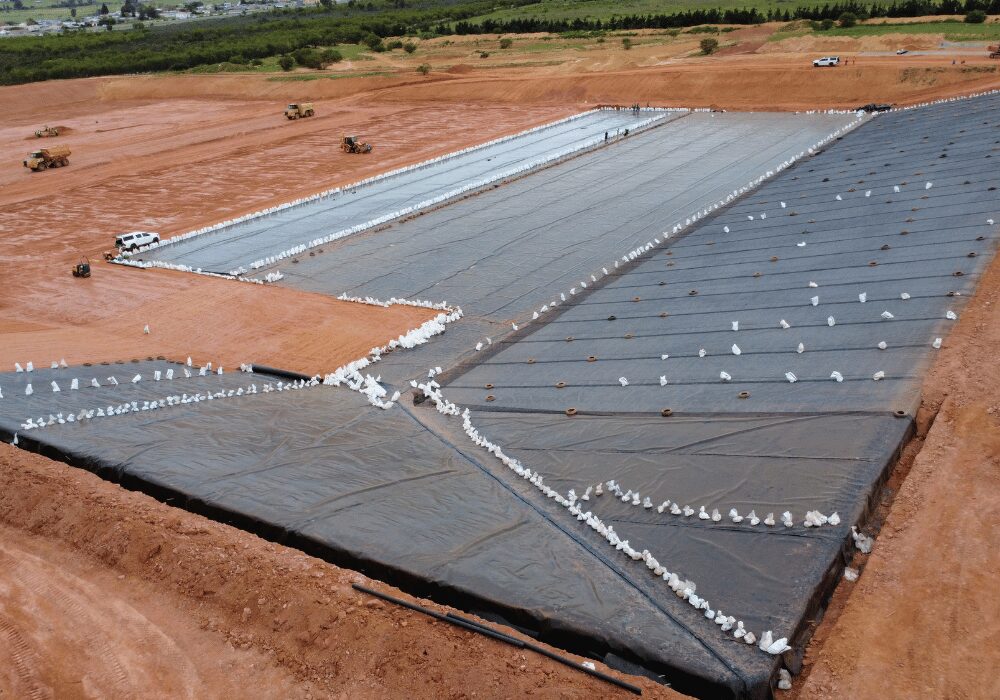
The chemistry of what’s being contained can change over time. So, the liner has to be a dependable barrier against a broad spectrum of potential contaminants. That’s why HDPE geomembranes are so widely used. But it’s not as simple as dropping in a sheet of plastic and walking away. Smooth HDPE is common, but textured geomembranes are often crucial on side slopes. Texturing increases interface friction, which gives the designer far more control over slope stability. By engineering different asperity heights on each side of a liner, we can help the engineer define higher factors of safety and even preferential slip planes within the system. Now, material choice matters too. HDPE is the workhorse – it’s been tried and tested, but LLDPE, with its extra flexibility, can be useful where differential settlement is anticipated, like in landfill caps and closures. The key is to treat the liner as an engineering component, not a commodity. The liner also needs to function as part of an overall barrier system, which might include other layer-works like low permeability clay or GCLs, protection geotextiles, grids and drainage medium. Each has a specific designed function to perform.
Price is not the right question; it is what it is containing and what the consequences are if containment fails