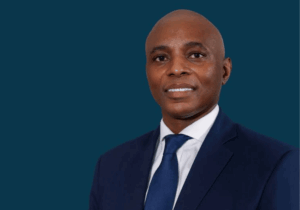
SA Council for the Quantity Surveying Profession President Arthur Quphe calls for multidisciplinary teams to develop infrastructure solutions and rethink traditional tender processes.
Arthur Quphe, President of the SA Council for the Quantity Surveying Profession, delivered a masterclass at the council’s 16th annual international research conference with a unique twist on the problems facing quantity surveyors today.
A central part of his proposal is that professionals should work collectively to originate and deliver solutions, rather than competing individually for narrowly defined assignments in the tender process. Quphe’s presentation outlined complementary roles across disciplines:- Quantity surveyors would lead commercial and investment considerations, originating opportunities and quantifying losses, affordability, whole-life value, delivery risks and potential commercial models.
- Engineers would diagnose system failures, develop technical options and establish design and performance criteria.
- Architects would contribute fit-for-purpose facilities, adaptive reuse and community-centred design, while contractors would assess buildability and deliver, commission and maintain infrastructure through lawful appointments.
“We need to be honest about the reality that while we sit around with our engineer friends, with our project managers and architects, and the solutions that we intimately know, it is time for us to think outside the traditional tender process and design solutions and innovations that we can openly approach our municipalities,” says Quphe.He also warns against equating low prices with the correct steps forward on a project. “I don’t think they understand that the right price and the lowest price; those are two different things,” says Quphe, referring to the challenges associated with low-fee competition and poorly performing projects. Quphe explains how these low fees actually equate to sometimes a 90% discount.
Submitting unsolicited proposals
The masterclass’s central proposition is that professionals should take the initiative to approach municipalities with solutions they have developed, rather than assuming that the tender process is the only route to public-sector work. He asked the floor, “How many of us have submitted unsolicited proposals? One, none. How many of us do we know that that’s an alternative to tender processes and to the 90% discount?” The argument is that professionals who originate a solution can develop a more substantive proposition than simply responding to a predetermined scope of work. They can assemble the appropriate expertise, protect their intellectual property, quantify the problem and demonstrate the potential value of their proposed intervention.“Because you own the solution, they don’t dictate your price. You become a delivery partner. You create your own team,” Quphe says.However, originating a proposal does not guarantee a contract or allow a professional to bypass procurement requirements. The presentation specifically identified section 113 of the Municipal Finance Management Act (MFMA) and Municipal Supply Chain Management Regulation 37, where applicable, as relevant to the municipal route. Public-private partnerships (PPPs) are subject to separate rules.

The distinction is important: Unsolicited proposals offer a way to initiate a conversation about an infrastructure solution, but any resulting appointment must follow the applicable legal and procurement requirements.
The presentation therefore calls for professionals to develop proposals that are sufficiently robust to withstand independent scrutiny. These should include a verified baseline, a defined technical solution, a whole-life business case, a risk model and measurable key performance indicators.
Moving from ideas to implementation
To translate the concept into action, the presentation proposed a 90-day process for developing three municipal infrastructure solutions. During the first 30 days, professionals would identify three municipal failures, establish multidisciplinary teams and validate baseline evidence. Between days 31 and 60, teams would develop interventions and technical options, assess capital and life-cycle economics, and evaluate delivery risks. During the final 30 days, the teams would submit their concepts for independent review and an appropriate, lawful procurement decision. This process is intended to move professionals beyond identifying problems towards presenting credible, evidence-based proposals that municipalities can evaluate. The speaker also highlighted opportunities that extend beyond conventional infrastructure delivery, including wastewater treatment and carbon credits. As an example, the speaker referred to a rail-related initiative that had reportedly reduced carbon emissions by encouraging people to use trains instead of cars, raising the possibility of selling carbon credits to organisations seeking to meet their targets. Such opportunities would require their own verification and commercial assessments. Ultimately, the speaker argued that professionals must take a more active role in developing solutions to the country’s infrastructure challenges.“We need to start thinking about innovation, and we need to start organising ourselves collectively,” the speaker said. “The next professional will not be a [single-discipline] engineer. It will be someone who can bring more value in a multidisciplinary environment.”The closing message was that infrastructure professionals should not view a tender advertisement as the starting point of every opportunity. “Opportunity starts where the government is,” the speaker said, calling on professionals to identify public-sector challenges and develop solutions that respond to them.
For South Africa’s infrastructure sector, the proposed shift is from waiting for work to be defined by a client to originating solutions that can be evaluated on their technical merit, commercial viability and measurable public value, while remaining within the applicable procurement framework.