

Ofentse Nthutang, chief executive, Magalies Water
Enough water – but not everywhere
Asked whether Magalies Water has sufficient licensed raw-water allocations to meet projected demand, Nthutang gives a deliberately qualified answer. “It is yes and no. It depends on the area.” The distinction lies between the water board’s Section 29 operations (its primary bulk water mandate in terms of the Water Services Act), and Section 30 activities undertaken on behalf of municipalities. Across most Section 29 schemes, Nthutang says there is still licensed headroom. Under its Section 30 operations, Magalies Water operates municipal systems, but the raw-water licences are generally held by the municipalities. Some of these areas already have supply deficits, which the master plan seeks to address through new surface-water schemes, groundwater development, water reuse and regional transfers.Magalies Water’s licensed raw-water allocations and reported daily use across its principal bulk water supply schemes
| Scheme | Supply areas | Licensed allocation | Reported use |
| Klipvoor/Moretele North | Moretele, Bela-Bela, Modimolle-Mookgophong, Mogalakwena, Rustenburg, Moses Kotane, and Thabazimbi | 60 Mℓ/day | Not yet substantially used |
| Klipdrift | Hammanskraal, Mandela Village, Marokolong, Ramotse, Kekana Gardens, Kudube Unit 9, Babelegi Industrial, Bridgeview, Moretele, Bela-Bela, Modimolle-Mookgophong, Kwalata Game Reserve | 92 Mℓ/day | Approximately 77 Mℓ/day |
| Vaalkop | Rustenburg, Moses Kotane, Thabazimbi, Mogwase, Northam, Sun City, Monakato, Maile and the Royal Bafokeng Administration | 340 Mℓ/day | Approximately 250 Mℓ/day |
| Wallmannsthal | Wallmannsthal, Leeuwfontein, Baviaanspoort, Kameeldrift, and parts of Derdepark | 30 Mℓ/day | Approximately 12 Mℓ/day |
| Cullinan | Cullinan, Rayton, Refilwe and Zonderwater areas in the City of Tshwane as well as Petra Diamond Mine | 18 Mℓ/day | Approximately 12 Mℓ/day |
“Currently, we are using roughly 50% of our raw water allocation, which gives us room to respond to increased growth in Rustenburg, Moses Kotane, Bela-Bela, Modimolle and Moretele,” states Nthutang.He cautions that water may be available within a regional system but still be separated from demand by insufficient treatment capacity, reservoirs, pump stations or bulk pipelines.
A broader supply mix
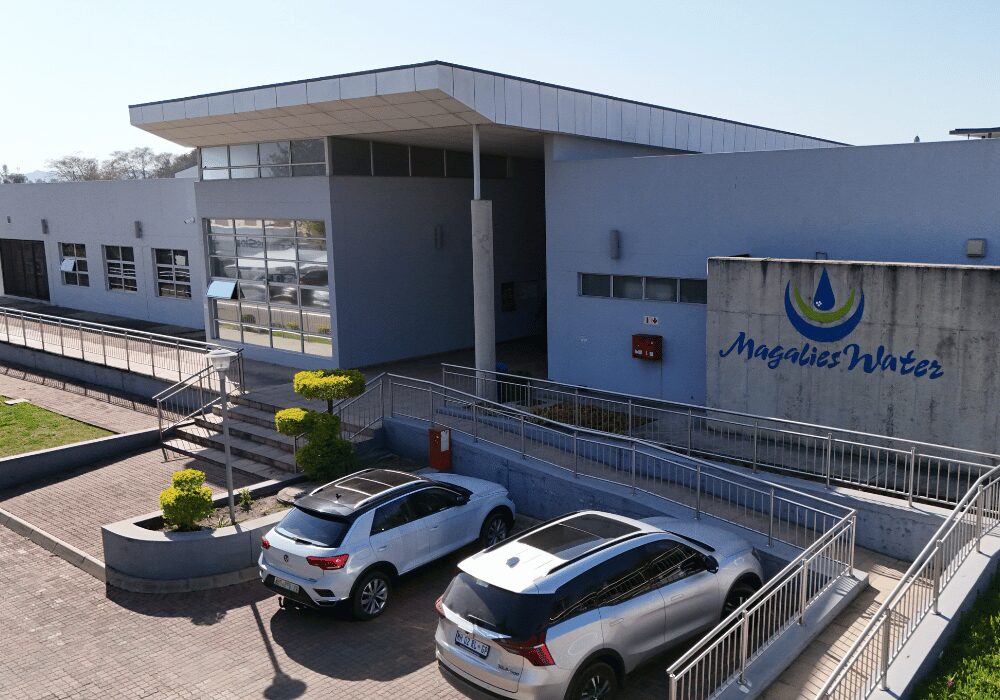
Magalies Water is a very different organisation from the one that served a much smaller footprint a little more than three years ago
Pollution is a major threat to bulk water supply
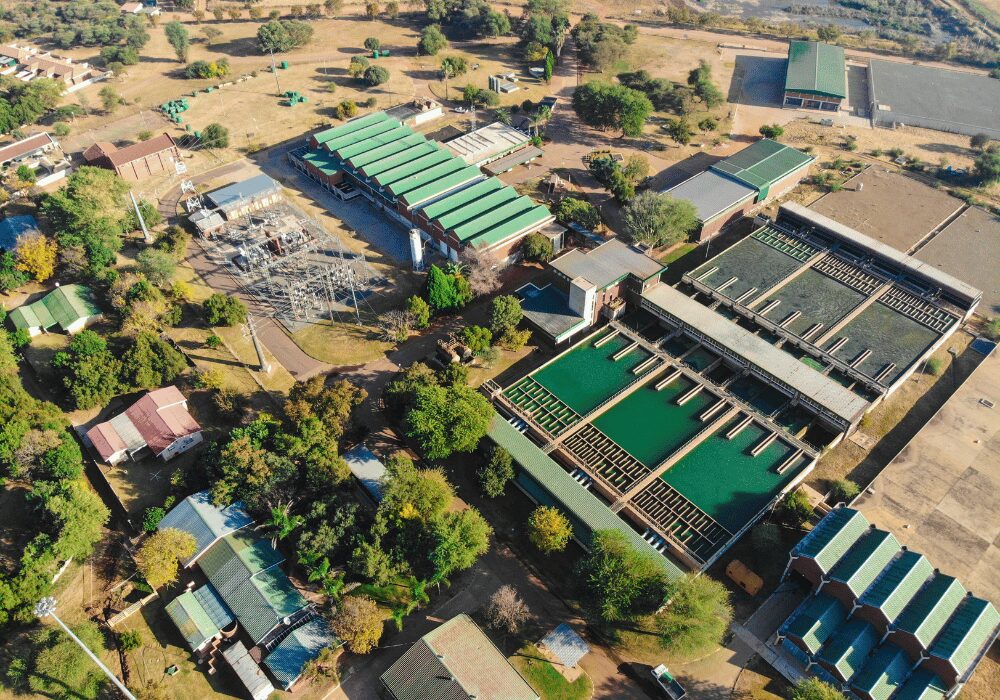
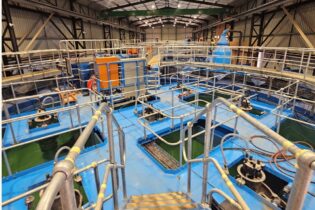
Vaalkop Water Treatment Plant
“One of the main threats to water security is deteriorating raw-water quality,” says Nthutang. “Higher contamination levels drive up operational costs of treatment plants, increase energy consumption and accelerate infrastructure wear through intensified strain. Treatment becomes less efficient, more complex and expensive.”Ammonia is a particular concern because conventional drinking-water plants were not designed to remove high concentrations of it. Nutrient-rich water also drives algal blooms and invasive aquatic vegetation, which can obstruct abstraction screens before treatment has even started.Magalies Water has responded by strengthening the science around its operations. Its SANAS-accredited laboratory holds 73 accredited methods and conducts more than 240 000 analyses a year. Raw-water results are communicated to production teams for real-time process adjustments, while process technology and research teams assess treatment improvements and emerging contaminants. In 2024/25, acute microbiological and acute chemical compliance both exceeded 99%. The same science supports pollution profiling and source tracking in the Crocodile West Catchment. At Hartbeespoort Dam, Magalies Water combines mechanical removal of invasive vegetation with biological and oxidative remediation, including nanobubble and bioremediation interventions. These measures can improve conditions within the dam, but their long-term value depends on reducing the pollution entering from upstream.
Water lost
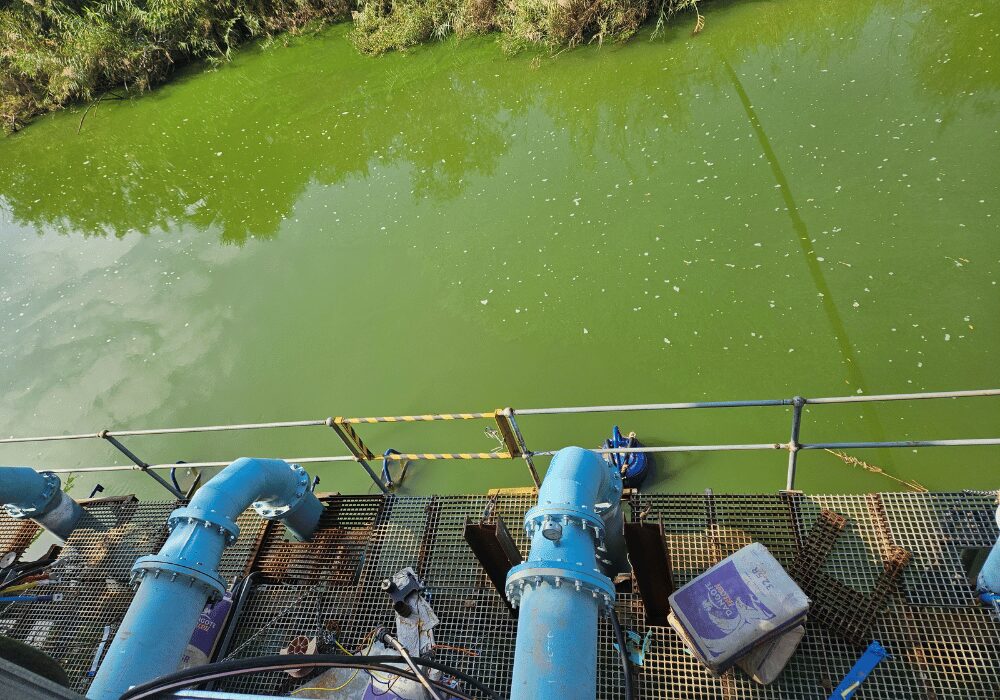
Magalies Water is confronted with some of the country’s most compromised raw water matrix
“If we address the water that is being lost, we can supply more people with the resource already available,” he says.Magalies Water is working with municipalities on leak reduction, water safety plans, process audits, smart metering and water conservation and demand management.
Climate risk is a reality
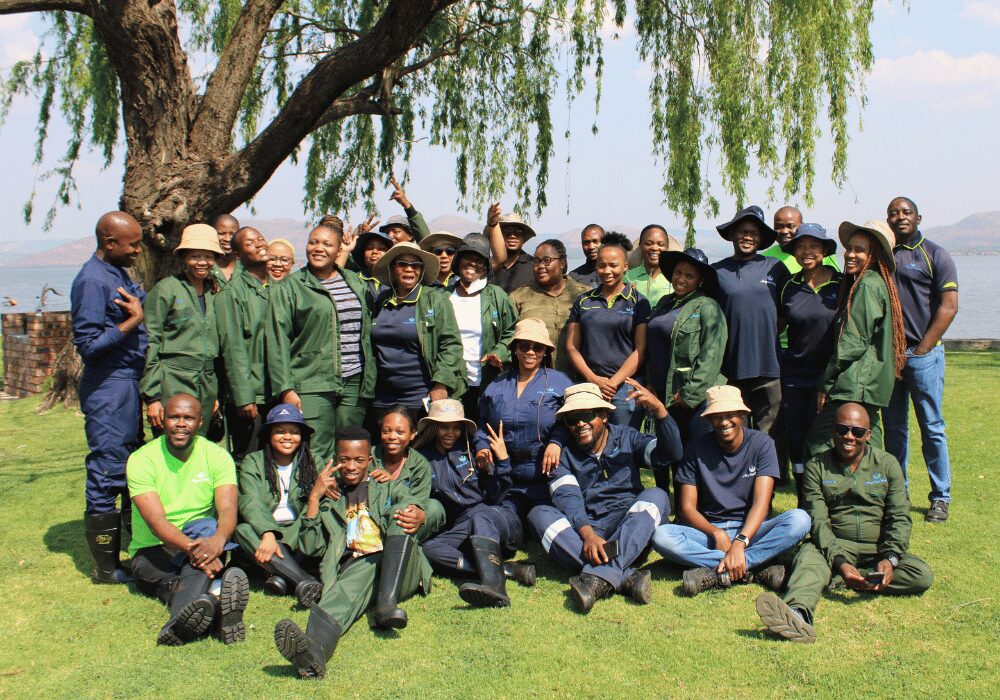
At Hartbeespoort Dam, Magalies Water combines mechanical removal of invasive vegetation with biological and oxidative remediation, including nanobubble and bioremediation intervention

The experience changed the way risk is treated. Dam levels are now monitored continuously, while drought and flood response plans are integrated into operational and infrastructure planning, especially in anticipation of El Nino.
“We may be affected by either floods or drought, so our business continuity models must inform us how to respond and minimise climate change impacts. We aim to be proactive in our response to climate change,” he says.
Finance cannot be separated from water security
The ability to maintain existing assets and build new ones depends on cash collection. At the time of the interview, Nthutang estimated that Magalies Water was owed around R3 billion. The 2024/25 audited annual report showcases the scale of the problem: gross trade and other receivables stood at about R2.77 billion at 30 June 2025, while net receivables were R1.8 billion after impairments and write-offs.“Non payment is a huge challenge for all water boards. If municipalities do not pay for the water they consume, it puts strain on a water service provider’s ability to invest in the maintenance and upkeep of infrastructure,” he says. “Non-payment threatens water security.”Magalies Water is a Schedule 3B entity whose operating model depends largely on water sales. Although the 2024/25 financial year produced a stronger surplus, the annual report estimates that more than R12 billion is still required for the capital project pipeline. This is why debt collection, borrowing approvals, government infrastructure funding and firm agreements with off-takers form part of water-security planning rather than sitting outside it.
Projects that create resilience
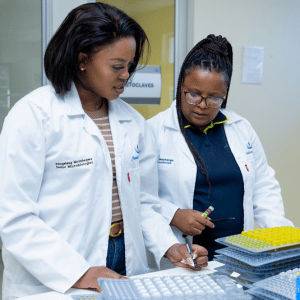
Magalies Water has a SANAS-accredited laboratory holds 73 accredited methods and conducts more than 240 000 analyses a year
“It was not an easy project,” says Nthutang. “We had to implement a brownfield project while the plant was still operating. Its successful implementation is one of the achievements of which I am most proud.”Klipdrift is one component of a much larger programme. The Moretele North Klipvoor Bulk Water Supply Scheme is planned to add 60 Mℓ/day for communities in North West and Limpopo, including Moretele, Mogalakwena, Modimolle-Mookgophong and Bela-Bela. “We are currently supplying and Modimolle-Mookgophong and Bela-Bela through the Klipdrift Water Supply Scheme but this project will address any supply gaps. Magalies Water has been requested to include Madibeng North areas like Jericho and Legonyane to the scheme and are investigating how to assist,” adds Nthutang. The Budget Facility for Infrastructure approved R1.9 billion for the scheme’s social component, but further funding is required for the full scope. “In order to source additional funding, our technical and financial consultants have identified gaps in our project preparation, and have approached treasury to assist us with a loan agreement to improve bankability.” The Pilanesberg Bulk Water Supply Scheme Phase 2 will strengthen supply around Rustenburg and Moses Kotane and has R1.8 billion in approved with the Budget Facility for Infrastructure as well as the Department of Water and Sanitation’s Regional Bulk Infrastructure Grant (RBIG). Magalies Water is seeking debt finance and participation from major off-takers for the remaining components. At Wallmannsthal, a project of about R500 million will increase treatment capacity to 30 Mℓ/day and extend storage and distribution infrastructure for growth areas such as Wallmannsthal and Roodeplaat in the City of Tshwane. Magalies Water hopes to fund this internally as well as source funding from commercial banks. Vaalkop remains central to the network. A R195 million raw-water upgrade has increased available pumping capacity to about 345 Mℓ/day and created a central inlet for future expansion. This was implemented using Magalies Water’s internal funding. The next treatment upgrade is estimated at around R3 billion and is intended to secure supply for Bojanala, Thabazimbi, mining operations and emerging renewable-energy developments. Nthutang hopes register the treatment upgrade as one of the Strategic Integrated Projects (SIPs) once the implementation readiness study is completed. Smaller and inherited projects are equally important to regional resilience. Moretele South combines pipelines and a 25 Mℓ command reservoir to meet projected demand of 25.7 Mℓ/day by 2040. The Mmabatho Water Treatment Works upgrade increases capacity from 20 Mℓ/day to 30 Mℓ/day for Mahikeng and surrounding villages, while the Dinokana intervention doubles high-lift pumping capacity from 2 Mℓ/day to 4 Mℓ/day, refurbishes groundwater sources and adds storage and distribution infrastructure.
Planning before construction
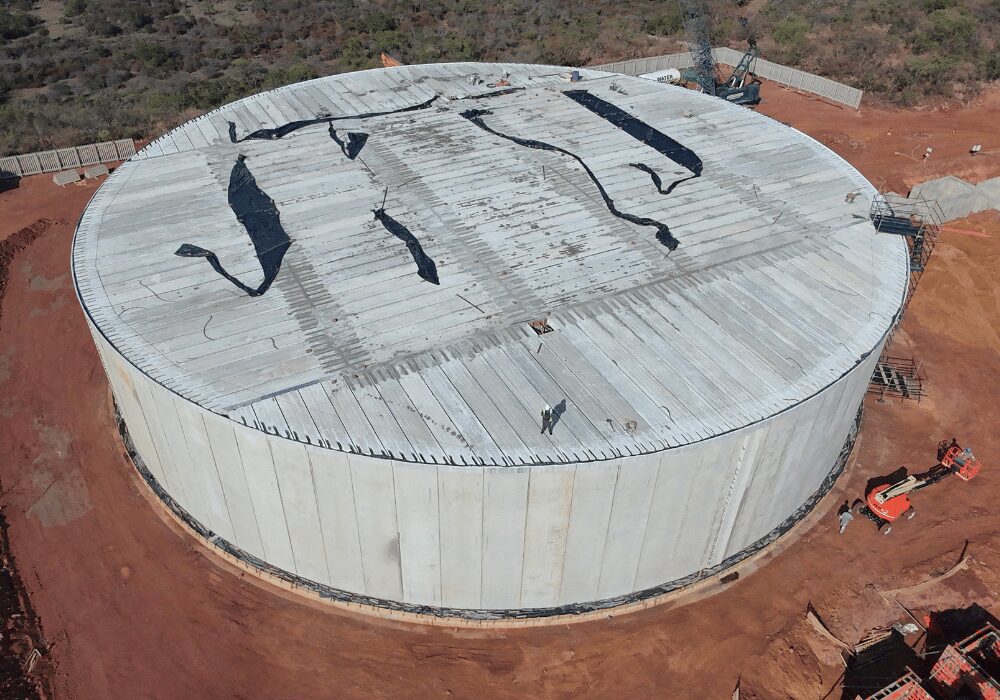
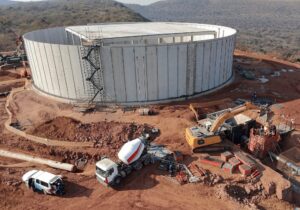
With new pipelines, reservoirs, and a water treatment plant at Klipvoor Dam, the Moretele North Klipvoor Bulk Water Supply Scheme will deliver 42 Mℓ of water daily, transforming lives in Moretele North, Ngobi, Bela-Bela, Modimolle, Mookgophong, and Mokopane.
Security measured at community level
For Nthutang, the final measure of succes is not the size of an allocation or the value of a construction programme. It is whether safe drinking water actually reaches communities consistently. He identifies Maquassi Hills as one of the areas that continues to concern him because leaks and interruptions can persist beyond the bulk supply point. Magalies Water is working with the municipality where it can, recognising that residents experience the system as a whole rather than separating the water board’s infrastructure from the local distribution network. Rustenburg poses a different balancing act. Its mines are a major contributor to the national economy, but the communities that provide the workforce also require reliable supply.“There is no point supplying the mines if the communities whose people work in those mines are not receiving water,” Nthutang says. “We have to strike that balance.”That is the practical meaning of water security across Magalies Water’s expanded network. It requires enough licensed water, but also healthy catchments, efficient plants, sound municipal systems, maintained pipelines, reliable revenue and projects that reach the places where demand is growing.
“My quest is to ensure that every community we are supposed to supply gets the water it needs,” Nthutang concludes.