Discover what South Africa’s engineering industry needs, from practical problem-solving and commercial awareness to renewable energy and emerging technologies.
South Africa’s ambitions for energy security, infrastructure development and industrial growth depend partly on engineering expertise. From renewable energy installations to automated manufacturing systems, the country needs people with the technical skills to design, build, operate and maintain increasingly complex technologies.
However, according to Prof Herman Vermaak, Head of
STADIO’s School of Engineering & Architecture, producing more engineering graduates is only part of the challenge. Equally important is preparing these graduates for the realities of engineering work, where technical knowledge must be combined with practical judgement, commercial awareness and the ability to solve problems that don’t always have textbook answers. He says the challenge begins with understanding how engineering itself is changing.
“In the engineering disciplines, the continuous and rapid development of complex technology necessitates higher levels of conceptual understanding and problem-solving skills,” he says.
“Adaptability to new technologies relies heavily on the ability to apply fundamental conceptual knowledge to address modern engineering challenges.”
When theory meets reality
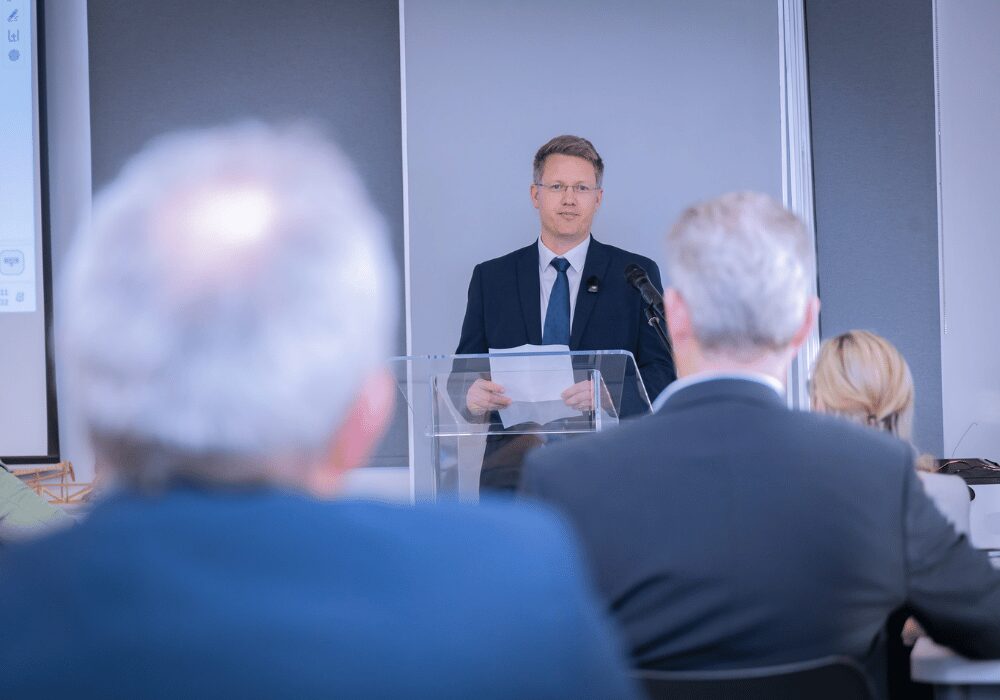
Charl du Plessis, General Manager Power at Energy Partners
Charl du Plessis, General Manager: Power at
Energy Partners, oversees a team of approximately 80 people, including around 50 engineers. Speaking at the recent launch of STADIO’s new Bachelor of Engineering Technology in Electrical Engineering, he emphasised the importance of understanding the commercial and practical implications of engineering decisions.
He recalled questioning an engineer who had used a telehandler to lift solar panels onto a roof, despite the project budget allowing for a much cheaper solar hoist. The engineer had chosen the telehandler because it was the easiest solution, without considering that it cost approximately 100 times more than the budgeted equipment.
For du Plessis, this simple example illustrates why technical competence alone is insufficient. Engineers must understand budgets, contracts and project deadlines, and recognise how their decisions affect the commercial viability of the work they do.
He identifies five capabilities that employers value: problem-solving, project management, people skills, ethics and integrity, and a commitment to continuous innovation. For du Plessis, practical experience is particularly important. Engineers need to understand what happens on site, including the work of electricians, artisans and technologists, if they are to design solutions that work in practice.
Rethinking work readiness
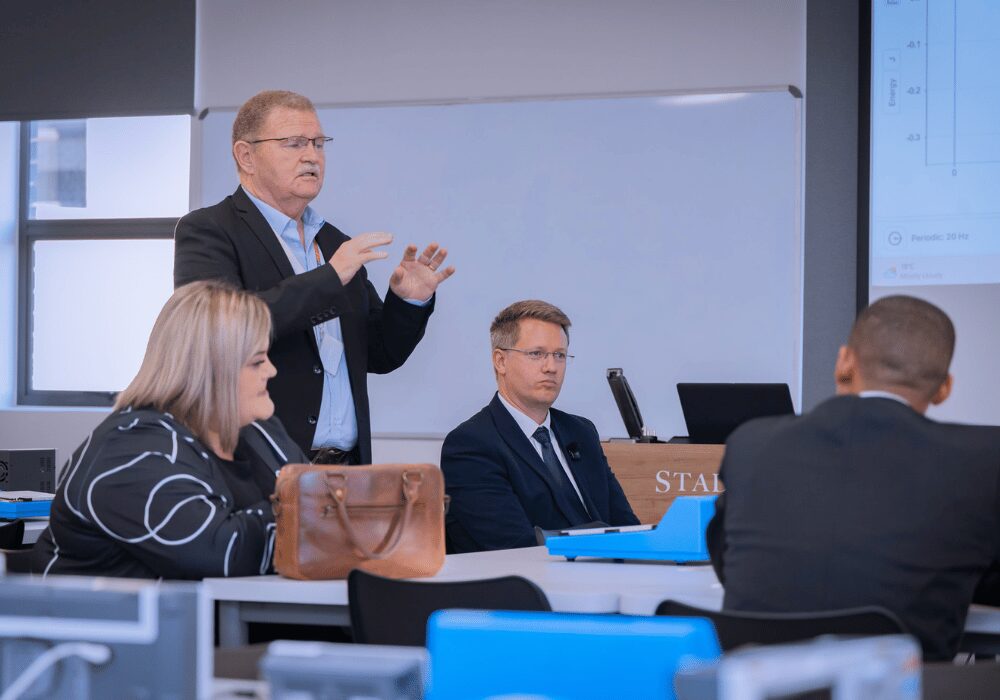
Prof Herman Vermaak, Head of STADIO’s School of Engineering & Architecture
Vermaak, himself a qualified artisan, believes practical competence must develop alongside theoretical understanding. Students should be able to work with equipment, diagnose faults and understand how engineering systems operate, rather than simply design solutions for others to implement.
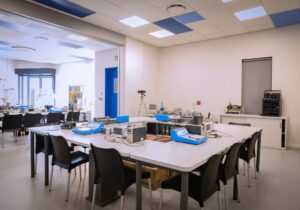
At STADIO, he says, this philosophy is reflected in practical learning activities. For example, students enrolled in its engineering Higher Certificate programmes have designed and manufactured small vehicles using engineering software and 3D printing and worked with equipment representing industrial applications.
These activities encourage students to apply engineering principles, troubleshoot problems and develop their own solutions within defined technical requirements.
Renewables and emerging technologies
While this combination of theoretical and practical skills has always been important in engineering, Vermaak says it’s particularly evident in renewable energy.
South Africa will need thousands of technicians, artisans, technologists and engineers to install, operate and maintain the systems that will power its future. As renewable energy projects become more widespread and sophisticated, demand is growing for a wide range of specialised skills. The industry’s talent shortage is no longer confined to engineers. It spans everything from installation and maintenance to grid integration, monitoring and energy storage.
Emerging technologies add another dimension to the skills requirement. Artificial intelligence, automation, robotics and intelligent energy systems are changing the tools engineers use and the problems they are expected to solve.
But, Vermaak says, the ability to adapt still depends on a foundation of engineering knowledge, practical competence and professional judgement.
This thinking has informed STADIO’s new three-year Bachelor of Engineering Technology in Electrical Engineering, which will welcome its first students at the Durbanville campus in 2027.
Alongside engineering fundamentals, the curriculum includes renewable energy technologies, machine learning applications, industrial process automation, control systems and energy management. Practical laboratory work and workplace-integrated learning are intended to connect academic knowledge with industry applications.
The degree also creates a progression opportunity for qualifying students from STADIO’s Higher Certificates in Renewable Energy Engineering and Mechatronic Engineering.
Ultimately, South Africa doesn’t simply need more engineers. It needs engineers who can think critically, solve practical problems, understand commercial realities of their decisions and adapt as technology evolves. For Vermaak, developing these capabilities will be essential to building an engineering workforce equipped for the country’s future.