
Learn what the seven plastic identification codes mean, which everyday products they identify and how easily each type of plastic can be recycled.
There are persistent myths around the numbers on plastic items. Some start in childhood, a popular one being the number shows how many times it can be reused before it is poisonous.
Some of these myths persist long past childhood because there are a lot of odd stories about those numbers, some of them are true, like when the early plastics industry purposely used the arrows around their number system which led to consumers thinking it as recyclable as it looked similar to the universal recycling symbol. Plastic is an everyday item, and people are still not too sure what those numbers mean, but thankfully it is rather simple: The numbers tell us what type of plastic it is.
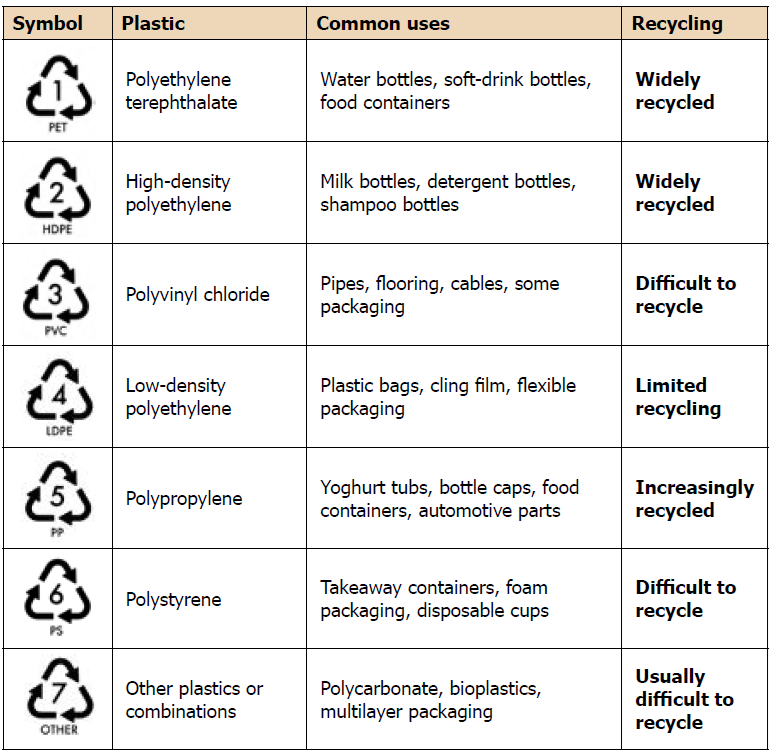
Plastic type and definition
- PET / PETE – Polyethylene terephthalate. A strong, lightweight and transparent plastic commonly used for packaging.
- HDPE – High-density polyethylene. A durable, rigid plastic known for its strength and resistance to moisture and many chemicals.
- PVC – Polyvinyl chloride. A versatile plastic that can be manufactured in rigid or flexible forms, depending on its formulation.
- LDPE – Low-density polyethylene. A lightweight, flexible plastic with good moisture-resistant properties.
- PP – Polypropylene. A lightweight, tough plastic with good heat resistance and chemical resistance.
- PS – Polystyrene. A plastic that can be manufactured as a rigid material or expanded into lightweight foam.
- Other – Other plastics or combinations. This category covers materials that do not fall into the first six classifications, including certain specialist plastics, bioplastics and multilayer materials.