
Community developers make a complicated state easier for citizens to navigate – and community experiences harder for government to overlook.
South Africans – like many citizens across the world – don’t experience their government as a single entity.
Responsibility for water, housing, social grants, clinics and waste collection is distributed across different spheres, departments, municipalities and public offices. A resident can know exactly what has gone wrong without knowing who has the authority to fix it, where to report it or what to do when nobody responds. In these situations, the role of community developers can be crucial. They help residents organise, understand government procedures and raise concerns with the relevant authorities. Their work is recognised internationally through community development practice standards. In South Africa, community development practitioners form part of a wider social service workforce. Their professional registration framework is still being developed, but in 2024, the government reported employing 23,561 social service professionals. I am a public policy expert focusing on monitoring, evaluation and citizen participation. In a recent study, I set out to gain insights into what community developers actually do to help communities navigate government bureaucracy. And how they raise concerns about public services. I interviewed 12 community developers working in government, non-governmental organisations and civil society in six of South Africa’s nine provinces. They included:- community development practitioners who support local development projects and participation
- community mobilisers who bring residents together around shared concerns
- programme coordinators and monitoring facilitators who organise community activities and follow up on their progress.
Navigating a complicated state
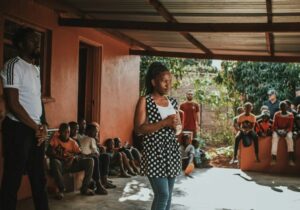
My research identified five roles that community developers play. First, they mobilise residents. For example, in the Sondela informal settlement in Rustenburg, a city in the North West province, one community development worker helped support the Phepafatso Project. This is an initiative to address waste and sanitation problems. The initiative got residents together around clean-ups and waste separation through community and school-based awareness activities. They converted illegal dumping areas into vegetable gardens and developed sanitation solutions to improve basic hygiene. Supported at first by Doctors Without Borders, the project later received support through the provincial government’s community development programme. Second, community developers explain government systems to residents. Community developers were able to “translate” between these two worlds. As one respondent explained:
Many people know that services are not working properly, but they do not know where to report or how the system works. Our job is to explain how the process works and who is responsible.Third, they communicate community concerns to officials. They help residents understand which institution is responsible and how government processes work. They also help officials understand what service failure looks like from the community’s perspective. Fourth, they help manage interactions between citizens and public institutions. Once participant described the difficulty of making official information usable:
The documents from the government are often complicated. We have to break them down and explain what they mean so that people can understand what services they are supposed to receive.Another described helping communities document issues so they could be followed up with the responsible department. Without this process, they explained, complaints could easily be forgotten. This translation also works in the opposite direction. Communities don’t always use the administrative language of government. They describe what they experience, often after living with a problem for some time. One practitioner explained:
People sometimes express their frustrations emotionally because they are affected by service delivery problems. Part of our work is to organise those concerns in a way that government officials can understand and respond to.Fifth, they follow up on issues that residents have raised and referred to officials.