
The Water Institute of Southern Africa (WISA) acknowledges the release of the independent Water Research Commission report on the water quality challenges and gastrointestinal illness reported in Bronkhorstspruit and surrounding communities.
The findings highlight the importance of consistently maintaining drinking water quality standards, effective treatment processes, competent operational personnel, appropriate supervision and strong institutional accountability. They also reinforce the need for proactive monitoring, sound governance and timely interventions to safeguard public health. As the professional body representing water professionals, WISA recognises its responsibility to contribute constructively to addressing these challenges. The organisation will engage with relevant authorities and sector stakeholders to support efforts aimed at strengthening compliance with applicable standards, promoting accountability and driving sustained improvements in operational performance and service delivery. In particular, WISA believes that professionalisation, the appropriate classification and deployment of Process Controllers, continuous skills development and effective operational oversight must remain central to improving the reliability and performance of water services institutions. WISA’s approach will be collaborative and solutions-oriented, while firmly advocating for the standards, professional conduct and accountability required to protect communities and restore public confidence in the water sector. Safe drinking water is fundamental to public health, and ensuring its consistent delivery must remain a shared priority across the sector.
Introduction to Report
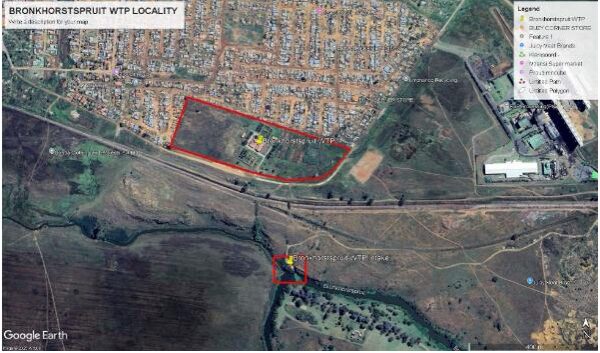
Location of the Bronkhorstspruit Water Treatment Works