The rate, at which existing senior engineers at the Department of Water and Sanitation (DWS) are retiring, is alarming as it cuts to the very head of the water sector, threatening paralysis of the body.
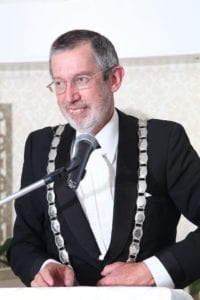
This is according to Dr Chris Herold, who was recently inaugurated as the 113th president of The South African Institution of Civil Engineering (SAICE). Attending the event, various high-profile guests, including champions of the infrastructure industry, government officials, engineering clients from both the private and public sectors, as well as SAICE members were challenged by the fact that in 2008 it was expected that 47% of the existing senior engineers in the DWS would retire within the next ten years.
This figure was exceeded in just three years with more heading in the same direction.
In his address titled A long haul, but we can do it together, Dr Herold looked at reasons why the DWS could not retain the services of young professional engineers who were expected to move onto the lower managerial ranks in the civil service.Some of his findings were:
- In the first instance there was no-one to mentor the Candidate Engineers. The remaining experienced engineers were in senior positions working feverishly to hold the line and deliver the DWS’s core services. They also had little contact with the raw recruits, who should have been mentored by the missing middle managers.
- They were too poorly paid to afford to raise families. So why stick around if they could earn twice as much elsewhere?
- State policies provided for OCD (Occupational Specific Dispensation) posts that allow professional engineers and others with scarce technical skills to be paid better. However, unwise HR implementation has placed the OCD posts in staff positions, which means that engineers wanting to enter line management positions are penalised with a sharp drop in salary. As a result most of the key technical decision-making was in the hands of technically ill-prepared or inexperienced managers.
- The insecurity of poorly qualified senior technical managers was stalling key decisions, sometimes by years, causing frustration amongst their own engineers, and starving the private sector of much needed work.
Dr Herold suggested short-term actions which include:
- getting experienced engineers back into key management positions
- revitalising organisational structures and removing impediments that drove engineers away in the first place, so that engineers can participate fully in decision-making
- improving engineering employment scales, especially at the lower end of the spectrum
- using the limited available engineering expertise to the full by putting aside all the ‘nice-to-haves’ that are diluting the efforts of the limited pool of expertise, and rather focusing on the really critical core functions
- Mentoring candidate engineers and passing on institutional knowledge.
- He also mentioned the secondment of skilled engineers from the private sector to the public sector, instead of companies having to retrench these engineers because of a lack of work, and losing them.