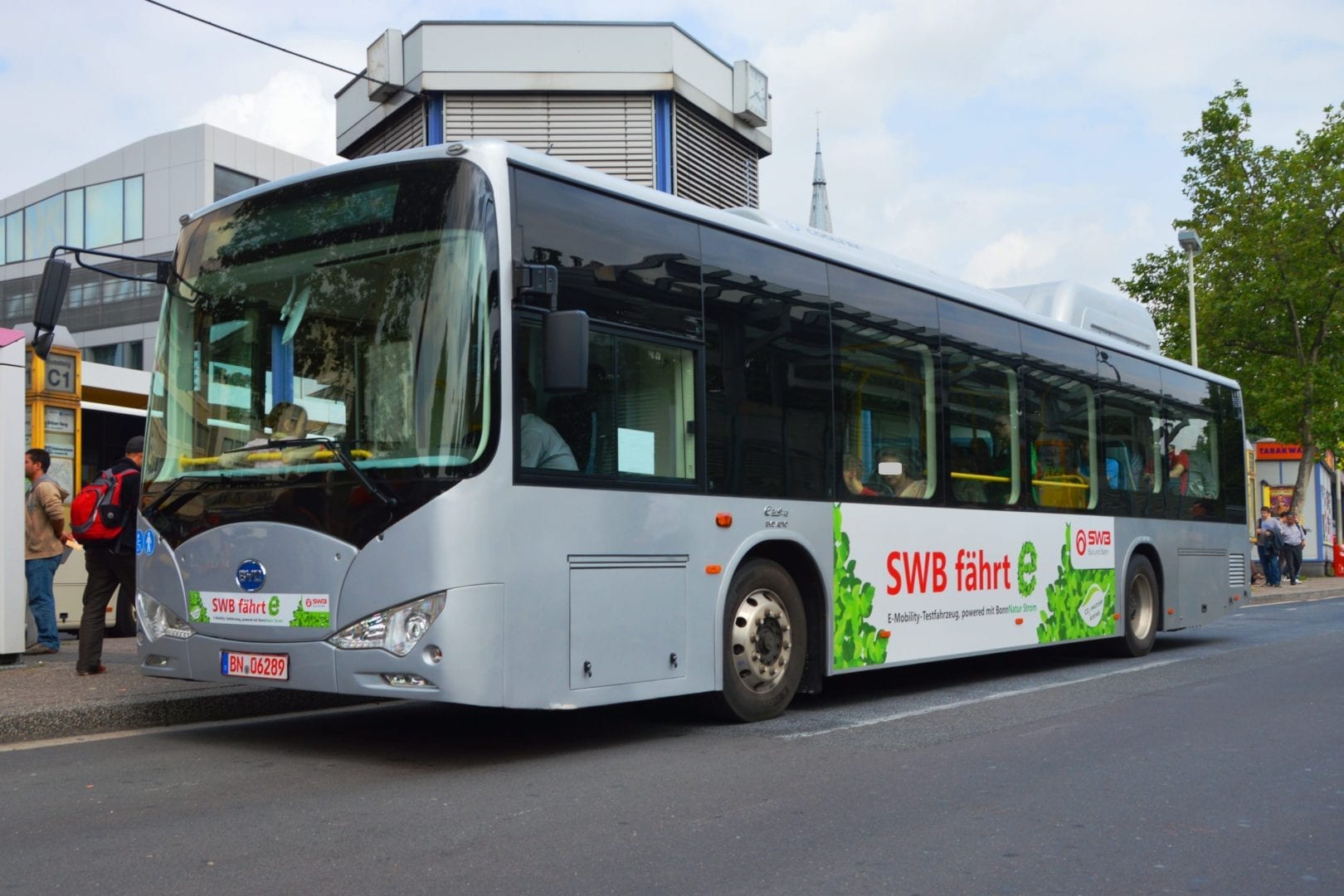
An example of an electric bus.
Volvo has recently supplied 3,000 hybrid and electric buses globally, with the highest number of vehicles circulating in the United Kingdom, Colombia, Sweden, Spain and Germany.
Volvo also recently unveiled the world’s largest bus at FetransRio which has the capacity to carry up to 300 people. The vehicle is 30 meters in length and was designed to cater for the needs of Bus Rapid Transit systems and provide more efficient transportation in addition to reducing fleet sizes and emissions.
The number of expected bus journeys taken in cities is expected to grow by nearly 50% by 2030 and as a result, is aimed at reducing the number of private cars on the roads.
However, buses travel up to 10 times further than the average passenger vehicle making their emissions impact greater, Vovlo said, particularly those that are poorly maintained and in need of renewal.
Transition towards “clean” vehicles
Last year, 26 global cities signed the C40 Clean Bus Declaration in order to transition part of their fleets to “clean” vehicles. If all 26 cities switched their entire fleet to Low Emission Vehicles, 2,8 million tonnes of greenhouse gas emissions could be saved each year. This is the equivalent of taking almost 590,000 cars off the road.
These initiatives have become increasingly adopted across the world as outdoor air pollution levels rose dramatically in March this year. The World Health Organisation (WHO) also highlighted that global levels have risen 8% in the past 5 years.
Billions of people are exposed to dangerous air on a daily basis. The WHO said that outdoor air pollution now causes more than 3 million deaths a year – more than malaria and HIV/Aids.
Håkan Agnevall, President of the Volvo Bus Corporation said: “Cities around the world are taking positive steps in addressing the global transport issues by initiating LEV systems. As both environmentally clean and comfortable, we believe electric bus systems are the future of urban public transport.”
Volvo also highlighted that modern electrical buses were also quiet and equipped with other services including Wi-Fi.
The latest in electric bus innovation also allows for ground-breaking applications for city planners, including indoor libraries or leisure centre bus stops.