Charting the journey of Rea Vaya and fast-tracking the future of public transport in Joburg.
When the City of Johannesburg launched Rea Vaya in August 2009, it marked a historic moment – not just for the city, but for the entire continent. As the first full Bus Rapid Transit (BRT) system in Africa, Rea Vaya was a bold, visionary step toward transforming public transport into a modern, inclusive, and efficient service for all.
Since then, Rea Vaya has grown from a single trunk route into a vital public transport artery that connects thousands of Joburg commuters to work, school, and opportunity. It has stood as a flagship of the City’s commitment to spatial transformation, economic empowerment, and climate-conscious development.From 2009 to Now: The Road So Far
The awarding of the 2010 FIFA World Cup event to Johannesburg stimulated an intense interest in improving the transport system. Phase 1A, launched in 2009, introduced 25 km of dedicated trunk route for 18-meter articulated buses and served areas between Thokoza Park in Soweto and Ellis Park in Doornfontein. The phase included 30 stations, three complementary and five feeder routes, and deployed 143 Euro IV buses. It created over 6,000 short-term jobs and 830 permanent employment opportunities, setting the stage for a reimagined public mobility experience. In October 2013, Phase 1B expanded the system with 18 km of dedicated trunk route, 18 more stations, and 134 cleaner Euro V buses. It introduced routes stretching from Thokoza Park through Noordgesig, Westbury, and Auckland Park, eventually reaching Library Gardens in the CBD, and delivered over 9,200 construction jobs. Today, Rea Vaya has grown to include 48 stations across Phases 1A and 1B. And now, with Phase 1C (a), the City is once again scaling up – faster and smarter.Fast-Tracking Phase 1C: A New Era for Joburg Commuters
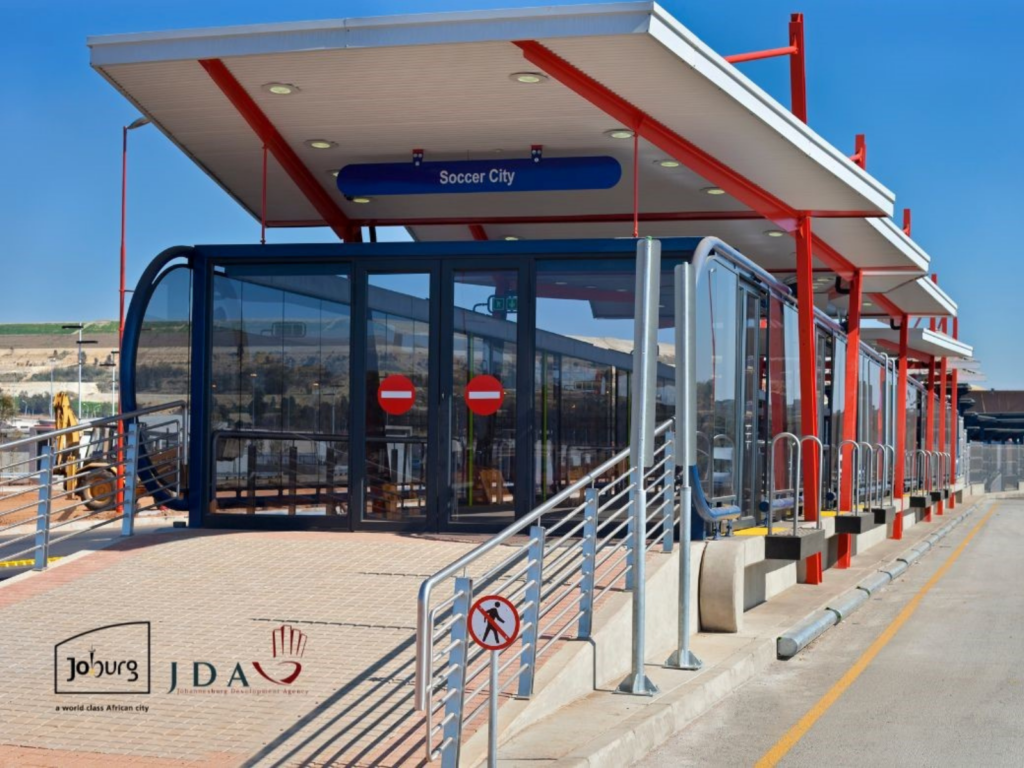 The Johannesburg Development Agency (JDA) is actively fast-tracking the delivery of Phase 1C (a) – the third trunk route in the Rea Vaya network. This phase promises to bring 141 low-entry buses, 13 new stations, and safe, affordable public transport to more than 40,000 passengers across areas like Hillbrow, Yeoville, Orange Grove, Wynberg, Marlboro, Sandton, and Greenstone.
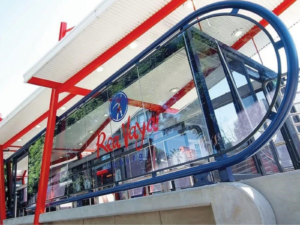
Work is already visible across the city. “The Sandton and Gandhi stations are each 55% complete, while Katherine Street station, a prototype inspired by the low-floor design of the Johannesburg Art Gallery station, showcases the innovation behind this rollout, said JDA CEO Mr Themba Mathibe.
The Johannesburg Development Agency (JDA) is actively fast-tracking the delivery of Phase 1C (a) – the third trunk route in the Rea Vaya network. This phase promises to bring 141 low-entry buses, 13 new stations, and safe, affordable public transport to more than 40,000 passengers across areas like Hillbrow, Yeoville, Orange Grove, Wynberg, Marlboro, Sandton, and Greenstone.
Work is already visible across the city. “The Sandton and Gandhi stations are each 55% complete, while Katherine Street station, a prototype inspired by the low-floor design of the Johannesburg Art Gallery station, showcases the innovation behind this rollout, said JDA CEO Mr Themba Mathibe.
“Road construction is also advancing: Edith Cavell Street (15%), Rivonia Road (5%), and Katherine Street (30%) are all undergoing upgrades to support dedicated BRT lanes,” he added.Two bus depots – one in Alexandra and another in Selby – are being developed to house and maintain the growing fleet. The newly established Alexandra Bus Company will operate services for Phase 1C (a), ushering in a new era of community-driven transit enterprise.
Technology Meets Convenience
Phase 1C isn’t just about hardware – it’s about smart systems too. The City is transitioning to an account-based ticketing (ABT) system, replacing the old automated fare collection model. Rolled out through the Metropolitan Trading Company (MTC), this digital leap will simplify how commuters access and pay for services. Adding to this modernisation is the launch of “Joburg Free WIFI” across Rea Vaya stations, also powered by MTC.“With this initiative, introduced on 31 March 2025, commuters can connect, plan trips via the Rea Vaya app, and even load funds onto their ABT travel cards – all while waiting for their next bus,” said MTC CEO Thedi Moropa.
Why Rea Vaya Still Matters
At its core, Rea Vaya is about more than buses. It’s about a vision of inclusive, connected, and climate-smart cities. The system plays a critical role in:- Reducing traffic congestion and vehicle emissions.
- Making public transport accessible, safe, and affordable.
- Supporting economic growth and job creation.
- And transforming the minibus taxi industry into formal, prosperous transport businesses.
- A Future in Motion.
Key features that distinguish BRT from regular bus services
Dedicated Lanes: BRT systems often have dedicated lanes that are separate from regular traffic, allowing buses to avoid congestion and maintain consistent speeds Priority at Intersections: BRT buses are given priority at traffic signals, reducing delays caused by other vehicles. Off-Board Fare Collection: Passengers pay their fares at the station before boarding, which speeds up the boarding process and reduces delays.
Platform-Level Boarding: Stations are designed with platforms at the same height as the bus floor, making it easier and faster for passengers to board and alight, including those with disabilities.
Enhanced Stations: BRT stations are often more substantial than regular bus stops, providing amenities such as seating, lighting, and real-time information displays.