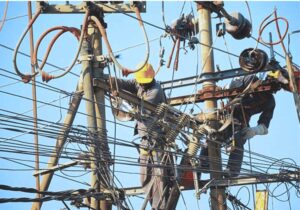
With local government elections taking place in South Africa this year, public discussion around service delivery has intensified. Residents and communities are increasingly frustrated by water shortages, failing roads and broken infrastructure. The Institute of Municipal Engineering of Southern Africa (IMESA) has emphasised that technical capacity within municipalities plays a central role in addressing these challenges and echoes the widespread calls for the appointment of more engineers.
The institute says that it is heartened by President Cyril Ramaphosa’s acknowledgement in this year’s State of the Nation Address that it is patronage, not technical capacity and merit, that is weakening local government administrations in many places.“It is important to understand the actual ratio of technical to support staff necessary for a municipality to operate professionally and efficiently,” says IMESA president Geoff Tooley, noting that this is legislated but most municipalities are not compliant.“The Municipal Staff Regulations (MSRs) in South Africa, issued by the Minister of Cooperative Governance and Traditional Affairs (CoGTA) under the authority of the Local Government: Municipal Systems Act, 2000, were formally introduced in 2021 to professionalise local government and standardise human resource practices across municipalities,” he explains. “COGTA, through these regulations, calls for a ratio of three technical service delivery staff members (like engineers, planners and artisans) for every one support staff member (such as human resources, finance and supply chain management). “I do not believe that there is a single municipality in the country that meets this requirement,” Tooley states, adding that some of the better run municipalities sit at a one-to-one ratio at present. “When service delivery does not meet the required standard, all municipal employees are often painted with the same brush. The competency of the technical staff is brought into question when there is, in fact, good work that is being done by a limited number of efficient staff under very trying conditions. This has a demoralising impact on the technical staff.

“It is critical that municipalities work to rectify the imbalance and meet the requirements of COGTA and the Municipal Staff Regulations. That is how we can start to turn the tide in service delivery,” Tooley stresses.
IMESA urges residents and communities to recognise and support the pockets of excellence that exist in their municipalities and to participate in local government wherever possible to help ensure that technical capacity shortfalls are addressed. “Commend good work when warranted – on social media platforms and in letters to local newspapers. Acknowledge completed projects, provide constructive feedback and advocate for the necessary resources. The public can participate in local government through formal structures like ward committees, attending municipal meetings, submitting comments on Integrated Development Plans (IDPs) and budgets, and supporting petitions.” IMESA is encouraged that Government is currently busy rewriting the Local Government White Paper with a view to improving professionalism and service delivery in municipalities but notes that it is essential that municipal engineers are involved in writing the final document.“Strengthening technical capacity, aligning staffing structures with regulatory guidelines and ensuring that the expertise of professional engineers informs policy development are all important components of sustainable municipal service delivery,” Tooley concludes.