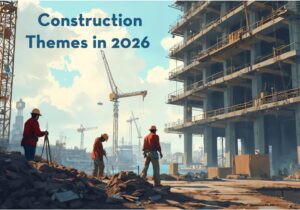
In a recent webinar on South Africa’s construction sector, I was struck by how familiar the themes were, and how urgent they have become. The panel covered everything from interest rates and infrastructure backlogs to contractual disputes and green lubricants. While construction remains one of the most powerful levers for growth and jobs in South Africa, it is not being leveraged to its full potential.
Our clients are trying to keep teams employed, price projects appropriately, and plan capacity in an environment where policy, capital, and delivery are often out of sync. The webinar highlighted several trends that anyone in the built environment should pay attention to.1. The cost of capital is choking construction
From an economic perspective, South Africa’s real prime interest rate has climbed to about 7%, which is roughly double the level during former Reserve Bank Governor Gill Marcus’s tenure. Over the same period, GDP growth slowed, and construction indicators weakened across building plans passed and the volume of building materials produced. For a sector that relies on long-term investment, the cost of capital is one of the main reasons so many projects stall before they reach the site. The same data set showed that gross fixed capital formation in South Africa sits at just over 14% of GDP, roughly half the global average of around 28%. This suggests that the country is investing far too little in new productive assets, and the construction economy is feeling it first.2. Fixing the basics before chasing big visions
The panellists agreed that there is nothing wrong with talking about smart cities and flagship projects. The problem is that many municipalities are struggling to keep basic systems working. Water availability, local substations, aged distribution networks, and failing municipal and provincial roads were all flagged as immediate risks. In some areas, the conversation is shifting from load shedding and water scarcity to the prospect of localised outages because of neglected infrastructure. Before South Africa pursues ambitious new infrastructure, it has to repair and maintain what already exists, particularly water, electricity distribution, sewage systems, and local roads. That is where the most immediate construction work lies, and where communities feel the impact first. This echoes what we see in our project data. The most resilient pipelines are often those linked to essential services and maintenance, not only new builds.3. Capital is available, but projects are not getting through the system
South Africa has deep financial markets, development finance institutions and access to blended finance. The constraint is not a lack of money, but the slow movement from concept to bankable project and financial close. Weak project preparation, opaque procurement processes and uncertainty about the “rules of the game” were all highlighted as barriers. There was also an important clarification around public-private partnerships (PPPs). Properly structured PPPs and private-sector participation models are not the same as privatisation, but are tools for bringing in capital and skills where the state cannot deliver on its own, while still protecting public ownership. The problem is the lack of shared understanding and consistent execution. For contractors, consultants, and manufacturers, this translates into a familiar frustration where projects are announced, but actual work is slow to reach the market.
4. Contracts, risk, and disputes are becoming more complex
Additionally, standard form contracts are increasingly being amended with particular conditions that shift more risk onto contractors, rather than allocating it to the party best placed to manage it. That can make serious players wary of specific opportunities and can undermine project delivery before it begins. At the same time, adjudication and arbitration processes designed to be faster and more practical than court proceedings are becoming more legalistic and expensive. Instead of “quick and dirty” adjudication on the papers, some matters are turning into mini arbitrations with senior counsel, extended timelines and rising costs. The call was to appoint bodies, adjudicators, and arbitrators to restore the original intent and introduce simplified processes for lower-value disputes.5. Technology, decarbonisation, and skills will shape the next cycle
Two other trends stood out. The first is the growing use of data and digital tools to monitor equipment uptime and improve site efficiency. Using analytics and digital “construction site” solutions is already helping reduce unplanned downtime, which is often far more expensive than routine maintenance items such as lubricants. Sustainability is becoming a bigger priority. Cleaner, plant-based lubricants, and decarbonisation strategies are also gaining traction as government and private clients push for lower emissions and more environmentally responsible construction practices. The second is the skills mix. Engineering capacity in the public sector has been hollowed out over time, while private-sector firms are losing experienced professionals to markets with more predictable project pipelines. The panel argued strongly for better procurement of intellectual services, with a focus on total cost of ownership rather than bargain prices for design and consulting work. If the country wants safe, durable infrastructure, it has to value the skills that make it possible.Where to from here?

Morag Evans, CEO of Databuild