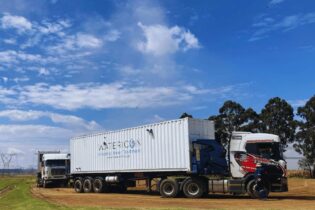
Founded a decade ago, Rotocarb pioneered the manufacture of virgin steam-activated carbon from macadamia nut shells in South Africa. Now producing over 1 000 tonnes annually, it is the continent’s largest locally owned producer and is expanding capacity to cement its position as Africa’s leading premium activated carbon manufacturer.
Activated carbon is made by pyrolysing a carbon-rich material and then activating it with steam or chemicals to develop a highly porous structure. This activation process significantly increases surface area and develops a highly porous structure, enabling effective adsorption of contaminants from liquid and air streams.
In water treatment, activated carbon is widely used to remove dissolved organic compounds, taste-, colour- and odour-causing substances such as geosmin and 2-MIB, residual disinfectants including chlorine, and emerging contaminants such as pharmaceuticals, pesticides and industrial chemicals.
Activated carbons are produced from various raw materials — including coal, coconut shell, wood and other agricultural feedstocks — each offering distinct pore size distributions and adsorption characteristics. The choice of carbon is therefore application-specific and dependent on the target contaminant and performance requirements.
Macadamia nut shells
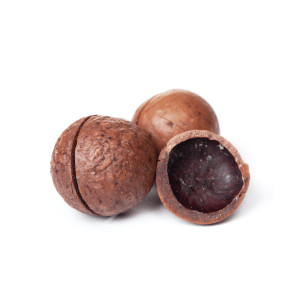
As South Africa is the world’s largest producer
of macadamia nuts, Rotocarb saw an opportunity to beneficiate macadamia shells into
high-grade activated carbon
Founded in 2016, Rotocarb was established to serve South Africa’s growing demand for carbon-based water purification solutions.
“Recognising that South Africa is the world’s largest producer of macadamia nuts, the company identified an opportunity to beneficiate this agricultural by-product, macadamia shells, into high-grade activated carbon,” explains Richard Oldnall, Business Development Manager at Rotocarb.
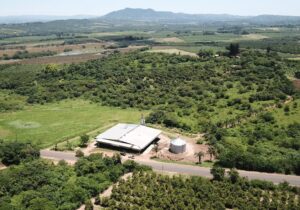
In partnership with Thermopower Furnaces, Rotocarb commissioned its first production facility in Levubu. The company now operates two core production sites, supported by a dedicated crushing, sizing and packaging facility in Midrand. Today, Rotocarb is South Africa’s largest locally owned activated carbon manufacturer, primarily serving the water sector alongside a range of industrial applications.
The performance of these products is underpinned by the unique characteristics of macadamia nut shells.
“Macadamia shells develop both high microporosity and mesoporosity during steam activation,” says Oldnall. “Micropores are highly effective at adsorbing smaller contaminants, while mesopores accommodate medium-sized compounds, resulting in a broader adsorption spectrum than many conventional coal- or coconut-based carbons.”
In effect, this delivers a dual-function material capable of targeting a wider range of contaminants within a single product.
Misconceptions

Richard Oldnall, business development manager, Rotocarb
“There is a common misconception that a single type of activated carbon can remove all contaminants. In reality, different carbons have distinct pore structures, surface chemistries, grades and activity levels. Each is optimised for specific contaminants, water qualities and operating conditions, and effective treatment depends on selecting the right carbon for the right application,” adds Oldnall.
Rotocarb offers more than 20 granular and powdered activated carbon products, all compliant with the Food Chemicals Codex (FCC) and SANS 52903 and SANS 52915 standards. Compliance with these standards ensures consistent, independently verified product quality, with defined performance characteristics, purity criteria and safety requirements. This consistency is critical in purification applications, where even minor variations in activated carbon quality can affect treatment efficiency, regulatory compliance and operational reliability.
“Our emphasis on quality is non-negotiable. It is essential that customers trust our locally produced activated carbons,” says Oldnall. “We maintain full control of the entire process, from raw material selection through to the finished product.”
Another misconception is that biochar is equivalent to activated carbon. “There’s a growing narrative that you can produce char, label it as activated carbon and somehow earn carbon credits in the process,” says Oldnall.
“From a technical standpoint, that simply does not make sense — but that is perhaps a discussion for another day.”
He continues: “Char is not activated and therefore has an undeveloped pore structure. High quality activated carbons typically have surface areas in the region of 1 000 m²/g, whereas biochar generally ranges between 200 and 400 m²/g. This performance difference is substantial. As a company, we believe it is important to distinguish clearly between the two — particularly in regulated water treatment applications where performance, safety and compliance are critical.”
Growth
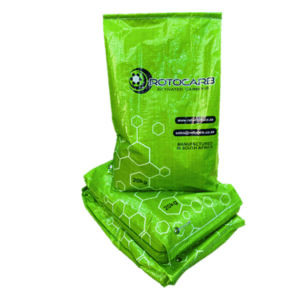
Rotocarb offers more than 20 granular and powdered activated carbon products
At the time Rotocarb was established, virtually all activated carbon used in South Africa was imported and often subject to long lead times, minimum order quantities and volatile pricing linked to forex rates.
“The core purpose behind Rotocarb’s establishment was to provide the water sector with a reliable and sustainable local alternative to imported carbon,” says Oldnall. Over the past decade, our active client base has grown from approximately 40 customers to more than 300.”
He adds that the industry is seeing encouraging growth in the adoption of locally manufactured activated carbon, driven by increased awareness of supply chain resilience, quality consistency and the benefits of supporting local beneficiation momentum. “As water quality challenges intensify, there is a growing interest from the private sector in activated carbon from smaller water treatment companies, while in the public sector, there is a stronger push from government to execute and fulfil activated carbon tenders.”
As a privately controlled South African manufacturer, built on internally developed thermal processing technology, Rotocarb has embedded sustainability at the core of its operating model. Macadamia nut shells that were once an agricultural waste stream are converted into high-value filtration media used to purify drinking water for communities and industry, before ultimately returning to the environment in a benign form. The model reflects genuine industrial symbiosis rather than incremental environmental optimisation.
Equally significant is how the carbon is manufactured. Rotocarb employs a proprietary, autogenous thermal process that combines charring and activation into a single facility. This unique approach dramatically reduces energy demand, with most of the process energy generated internally rather than drawn from the grid. Facilities are further supported by solar power and rainwater harvesting, resulting in exceptionally low to almost non-existent emissions compared with conventional activated carbon production routes.
Through the consistent local production of high-quality, standards-compliant activated carbon derived from an agricultural by-product, Rotocarb reduces import dependence and reinforces supply resilience for municipalities and industry amid escalating water quality pressures.