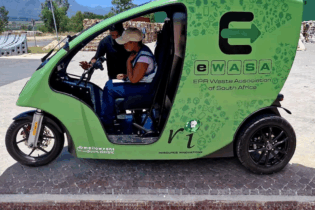

Keith Anderson, CEO of eWASA
“When EPR was first introduced, there was some confusion regarding the mandatory nature of the regulations. Five years on, producers are far more aware of their obligations, and PROs have played a critical role in that awareness. Education formed a key part of our early mandate, ensuring producers understood what was required, why fees applied, and how those funds were utilised.”
Challenges to Be Overcome

> PROs aid in enabling the circular economy through practical examples, like this project with ITB Plastics. Chairs and desks made of recycled material were donated to Isithebe ECD Centre in Kwa-Zulu Natal
“The entire premise of EPR functions only if participation is universal. Although the regulations provide for penalties against free-riders, there has not yet been a notable instance of enforcement against producers who have failed to comply.”Non-compliant producers, commonly referred to as ‘free-riders’, benefit from the EPR framework without contributing financially. By avoiding compliance costs, they are able to offer lower prices, creating unfair market advantages while contributing to environmental harm. Free-riding is not unique to South Africa. It is a global issue, particularly in relation to cheap online imports that bypass regulatory frameworks. PROs face the challenge of securing industry buy-in, while compliant producers question why they should effectively subsidise non-compliant competitors. Another challenge has been inconsistent fee structures across PROs. Artificially low fees may attract members but can undermine the sustainability of recycling outcomes. Anderson clarifies:
“Technically, PROs are not competitive entities in the traditional sense. We are not-for-profit organisations. When fees are lowered outside reasonable norms, it disrupts the entire value chain.”Misinformation has also presented difficulties, particularly where producers receive incorrect legal advice regarding their EPR obligations. While self-managed schemes are permitted, many producers underestimate the complexity, cost and audit requirements involved.
Growth of the Sector and the Country
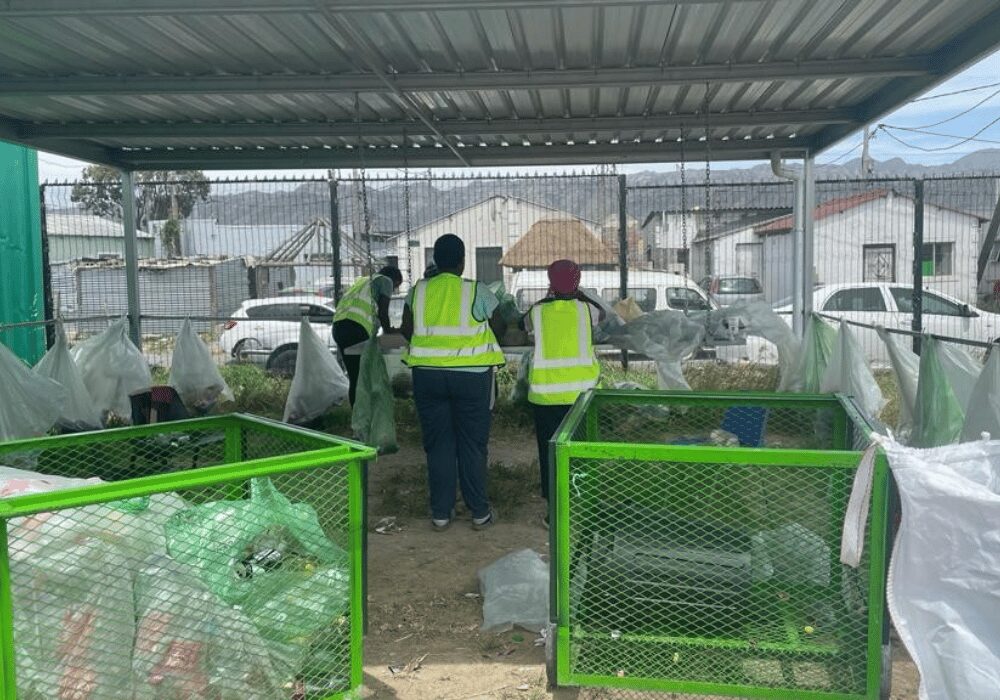
One of EPR’s biggest successes is facilitating waste picker integration
Has EPR Moved the Needle on Recycling?
According to Anderson, measurable environmental outcomes have been achieved. In the electronics sector alone, recycling rates of approximately 40% are being achieved, with figures independently audited. Beyond financial audits, verification extends to recycling claims, training initiatives and waste picker support programmes. In 2025 alone, eWASA invested millions of rand in safety equipment, infrastructure and downstream processing capacity, investments made possible through EPR funding.Shifting Design, Operations and Mindsets
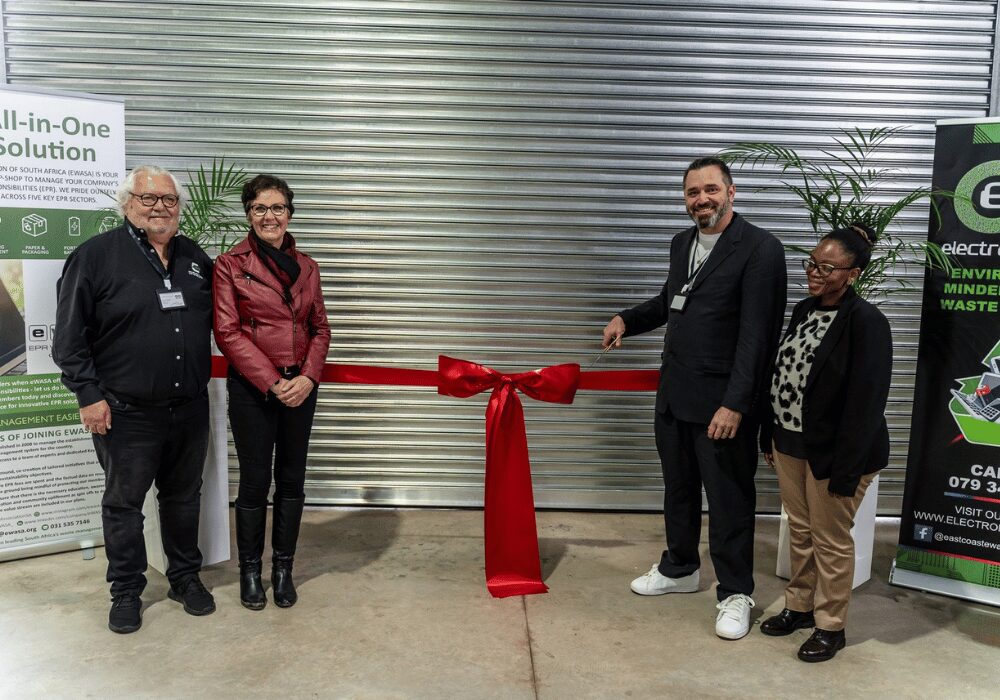
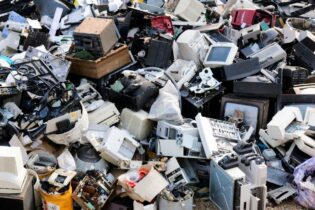
eWASA was a large contributor to the scaling up of Electronic Cemetery, an e-waste recycler, a major project that shows off the power of EPR fees
Lessons for EPR 2.0
As South Africa prepares for the next phase of EPR, several lessons are clear: enforcement must be strengthened to ensure a level playing field; fee structures must reflect realistic operational costs; and collaboration between PROs, government and industry must be enhanced within competition law parameters.“EPR is not a tax,” Anderson concludes. “It is an investment in infrastructure, compliance, employment and long-term sustainability. If properly enforced and intelligently refined, the next five years can deliver even greater impact than the first.”