Dr. Azar Jammine
While South Africa’s economic growth remains modest, several encouraging signals suggest the economy may be stabilising. Speaking at the
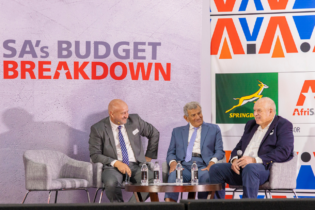
AfriSam Budget Breakdown, economist Dr. Azar Jammine outlined a number of developments that point to improving conditions and renewed investor confidence
.
1. GDP growth showing signs of recovery
The South African economy recorded its fifth consecutive quarter of growth, expanding by 0.4% in the fourth quarter (October–December) of 2025. The positive showing in the fourth quarter helped push annual gross domestic product (GDP) up by 1.1% in 2025. This is the highest annual growth rate since 2022, when GDP increased by 2.1%.
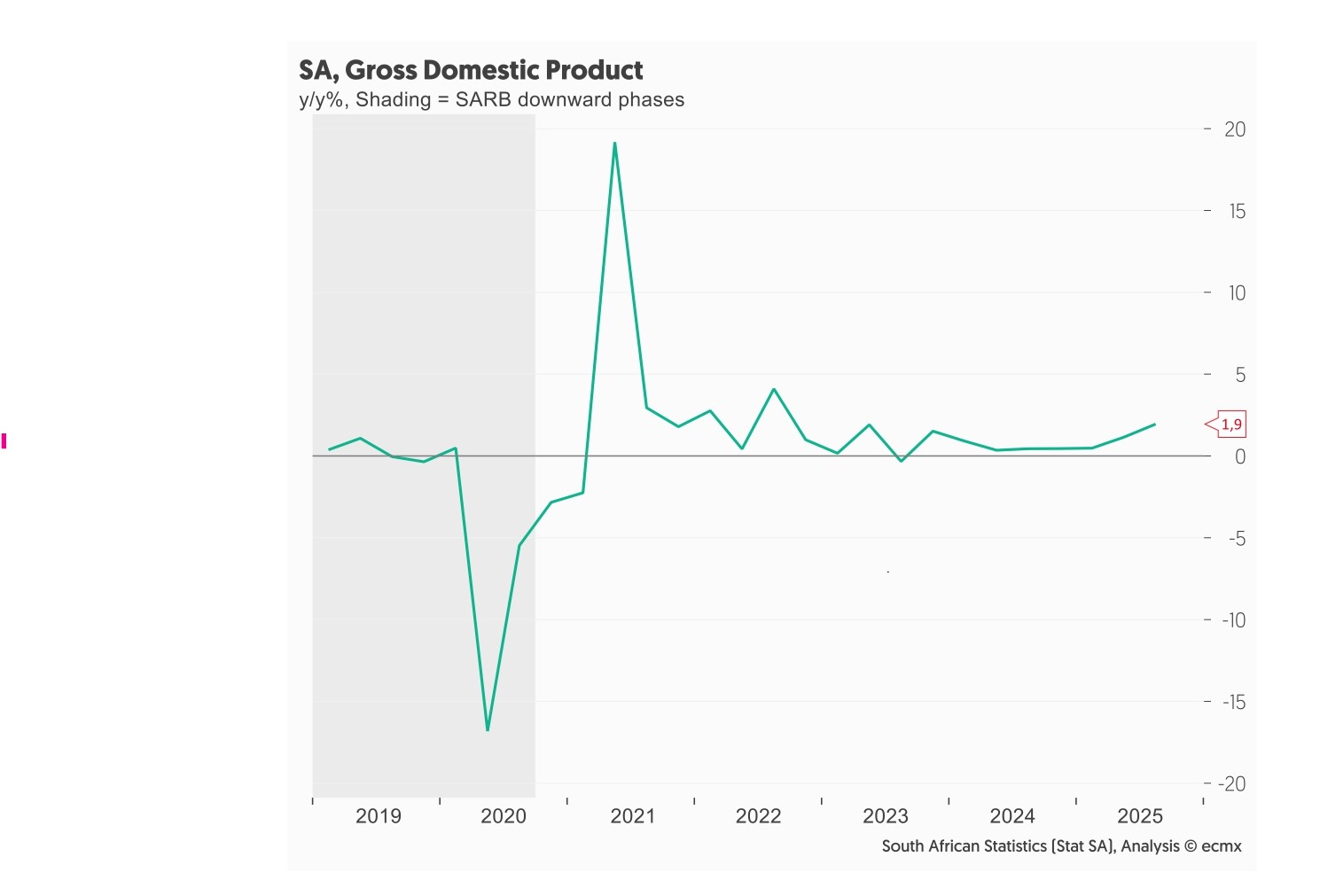
Gross domestic product performance since 2019
The positive turning point coincides with the tabling of the medium term budget policy statement in November 2025 where there was a lower than expected budget deficit. This signalled that the government of national unity is producing positive results in terms of its commitment to fiscal discipline. The Minister of Finance, Enoch Godongwana, emphasised that government would maintain a restrained fiscal stance. Rather than significantly expanding expenditure, Treasury signalled plans to raise an additional R20 billion in taxes in February 2026 to help balance the books and maintain a primary budget surplus. There was therefore no need to raise taxes.
3. Credit rating upgrade from S&P Global
Improved fiscal discipline has helped restore international confidence. South Africa recently received a credit rating upgrade from S&P Global, the first improvement in the country’s sovereign rating outlook in around 16 years.
4. Removal from the FATF grey list
South Africa’s removal from the Financial Action Task Force grey list has also boosted investor sentiment. The move signals improvements in financial regulation and anti money laundering controls, which strengthens the country’s standing in global financial markets.
5. Easing of loadshedding
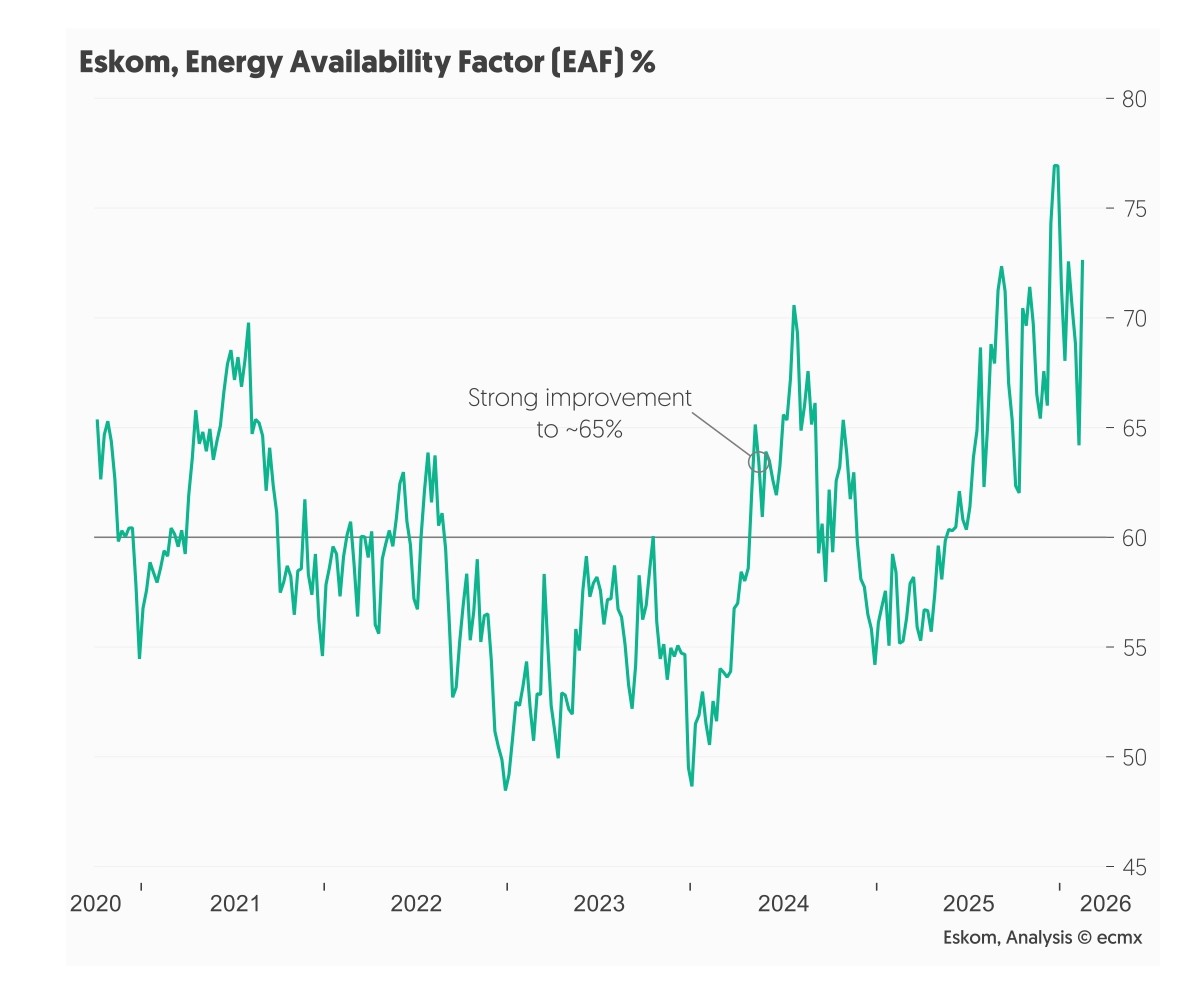
Energy availability factor
Eskom’s energy availability factor has improved markedly, rising from below 50% at its worst point to above 75% as maintenance programmes and operational improvements have taken effect. At the same time, the rapid expansion of private renewable energy projects has added new generation capacity to the grid. Together, these developments have stabilised electricity supply, reducing the frequency of power cuts and improving confidence among businesses and investors who rely on reliable energy to operate and expand.
6. Improved logistics
Greater investment has also been directed towards improving the rail transport network, particularly through efforts to restore freight corridors and increase capacity on key export routes. Transnet has prioritised upgrades to the coal, iron ore and manganese lines, which are critical for South Africa’s mining exports, while also investing in locomotive maintenance, signalling systems and port infrastructure. Government has also announced plans to open sections of the freight rail network to private operators, allowing mining and logistics companies to run trains on the network. These reforms are aimed at improving efficiency, increasing volumes transported by rail and reducing congestion on the country’s road network, while helping to unlock export growth and improve the overall performance of the logistics sector.
7. Rising precious metal prices boosting revenue
| Precious metal |
Price beginning 2025
(US$/ounce) |
Current price (US$/ounce) |
Change in price (%) |
Production (million ounces) |
Increase revenue (billion US$) |
Increase revenue (billion R) |
Increase revenue precious metals (billion R) |
| Gold |
2705 |
5222 |
70 |
3.5 |
2517.00 |
31079.08 |
108,766.78 |
| Platinum |
948 |
2366 |
143 |
4.3 |
1418.35 |
22184.54 |
95,393.52 |
| Palladium |
964 |
1793 |
87 |
2.5 |
828.86 |
13714.10 |
34,285.25 |
| Rhodium |
4650 |
11950 |
115 |
0.7 |
7300.00 |
87740.00 |
61,418.00 |
| Total |
|
|
|
|
12064.21 |
154717.72 |
299,873.55 |
Rising precious metal prices could also play a significant role in boosting the economy. Gold and platinum group metals have experienced dramatic price increases, which could inject substantial additional revenue into South Africa. Estimates presented at the breakfast suggest that higher gold, platinum, palladium and rhodium prices could generate roughly R300 billion in additional revenue for the country.
8. Strong performance of financial markets
Global financial markets have experienced strong asset price growth, and the Johannesburg Stock Exchange has performed particularly well. The FTSE/JSE All Share Index reached the milestone of 100 000 points in 2025, reflecting strong investor confidence and a rally in large capitalisation shares. Long term interest rates have also declined from around 11% to roughly 8%, creating significant capital gains for investors holding government bonds. This has helped to improve business sentiment and provide a boost to consumption activity.
9. Debt servicing costs are starting to drop
Debt servicing costs are starting to ease as lower inflation and declining long term interest rates reduce government borrowing costs and improve confidence in South Africa’s fiscal outlook.
Over the past few years, the Reserve Bank has made capital gains on the depreciation of the rand. Gold and foreign exchange reserves have shot up from US$50 billion to US$80 billion, with some of this profit used to paying off government debt.
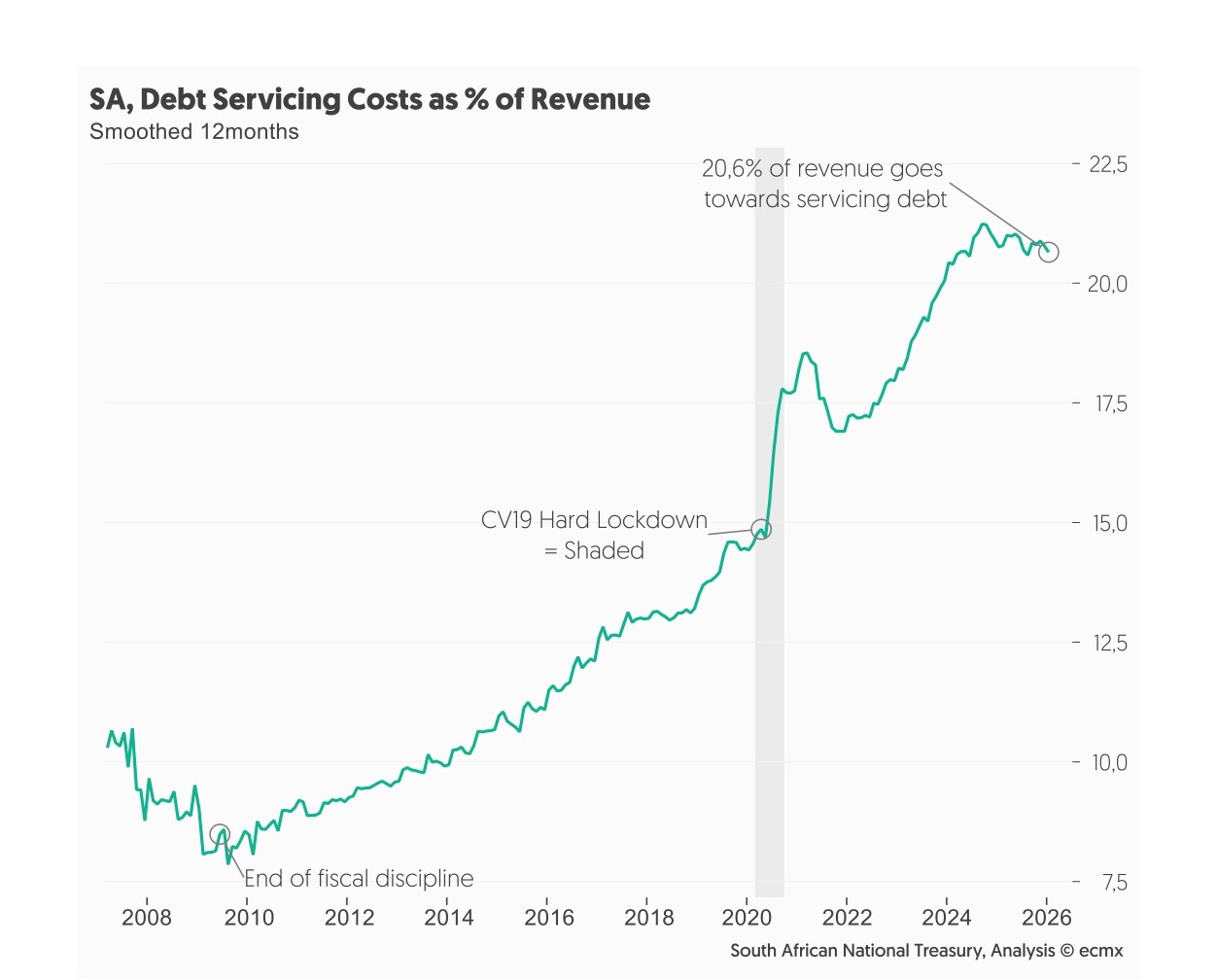
Debt servicing costs are starting to drop
Overall, Jammine believes that the revenue projections in the budget are conservative. The budget speech has been well received by financial markets, largely due to government’s commitment to maintaining a primary budget surplus, where tax revenue exceeds spending before interest payments. This commitment to fiscal discipline has helped strengthen both the rand and government bonds, signalling improved investor confidence in South Africa’s economic outlook.