With International Zero Waste Day on 30 March 2026, consumers and businesses will be using this opportunity to explore how they can open up more resource recovery from their waste streams, to ultimately divert waste from landfill. When most people think about zero waste, they think about recycling plastics or composting food scraps. These are important conversations. But they overlook one of the most problematic and least discussed waste streams in South Africa’s economy: hazardous waste.
For most waste generators, hazardous waste is treated as a dead end. Toxic volumes that are non-recyclable, destined for hazardous waste landfill sites. Oricol Environmental Services are actively challenging this view with three facilities, in KwaZulu-Natal, Eastern Cape and Gauteng. Each of these facilities are designed to treat and process hazardous waste streams to recover important secondary resources. This also includes the treatment of contaminated water through liquid treatment plants so that the treated water can be safely recycled back into the municipal system and any recovered oils can be used as alternative energy sources. Through these sites, Oricol has diverted more than 50,000 tons of hazardous waste from landfill in the past year.“The technology exists to treat, recover and repurpose hazardous waste at real scale, keeping it out of the ground and back into productive use,” says Peter Allen, Technical Manager at Oricol Environmental Services.“If we really want to take the pressure off our country’s landfill sites, we need to be looking at every possible waste stream for its secondary resource potential, not only the easily recycled waste streams like packaging.”
A closer look into their hazardous waste repurposing model
At Cato Ridge in KwaZulu-Natal, Oricol operates a licensed hazardous waste blending plant. The facility receives hazardous liquid and solid waste streams and blends them with high calorific materials to produce alternative fuel for cement kilns. It is waste treatment and energy recovery in a single process, replacing a portion of the coal used to fire cement kilns, which is one of the most energy intensive industrial processes in South Africa. For industrial generators in KZN, it offers something that has been in short supply: A viable, non-landfill pathway for their hazardous waste. In Gauteng, Oricol’s hazardous waste facility takes a multi-pathway approach to keeping material out of landfill. Hazardous liquids and solids are received and assessed, then routed to the most appropriate treatment stream. Chemical waste is depackaged and treated for safe destruction. Waste oils, solvents and hydrocarbons are reclaimed for reuse. Recyclable hazardous materials are recovered through specialist downstream partners. Where direct recycling isn’t viable, physical and chemical treatment processes reduce toxicity so that residual material meets safe handling thresholds. Both the Gauteng and Cato Ridge facilities operate under ISO 14001, ISO 45001 and ISO 9001 certification. In Cape Town, Oricol also provides hazardous waste treatment pathways through a network of recycling partners, or by directing incoming hazardous waste volumes to one of their three specialised sites.
Why this matters now
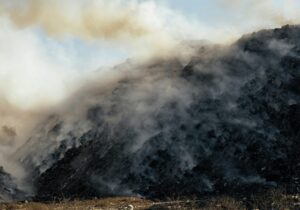
South Africa’s Draft National Waste Management Strategy 2026, published for comment in December 2025, explicitly prioritises hazardous waste streams for intervention based on their volume, toxicity and environmental risk. The new strategy calls for treatment and recovery ahead of disposal, in line with the waste management hierarchy enshrined in the Waste Act since 2008. The gap between that policy intent and current reality is stark. According to The Department of Forestry, Fisheries and Environment (DFFE) data presented to Parliament’s Portfolio Committee, 92.7% of South Africa’s hazardous waste is still being landfilled1. And the landfill infrastructure absorbing those volumes is under enormous pressure. Johannesburg’s municipal landfill sites were between 95% and 98% full by December 20252.A compliance question, not just an environmental one
“The regulatory direction is unmistakable,” says Allen.“Generators who are still defaulting to landfill for hazardous waste need to ask how long that option remains available, and at what cost. The question for the sector is why resource recovery from hazardous waste is not happening at scale, even with the technology and treatment processes available.”On International Zero Waste Day, the spotlight rightly falls on waste reduction and recycling. But zero waste will remain an incomplete ambition until the country confronts its hazardous waste challenge with the same urgency. For more information, please visit: https://www.oricoles.co.za/