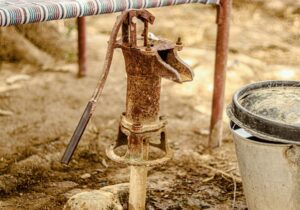
In rural sub-Saharan Africa, access to clean drinking water often depends on a simple technology: the handpump.
These manually operated systems pump water out of the ground for more than 184 million people. Yet despite their importance, research has found that at least 100,000 handpumps out of the 500,000 to 1.3 million in use in sub-Saharan Africa are not functioning. This is a hidden crisis. It means rural people are not getting water, not because new infrastructure is needed and not being built, but because existing water systems aren’t working. We are a team of operations management researchers who look at how organisations make decisions when they don’t have the time, the money, or the staff to do everything at once. Our research focuses on how nongovernmental organisations (NGOs) manage and maintain rural water systems. Our latest research investigated how maintenance can be designed to keep water flowing more reliably when resources and information are limited. We worked closely with three NGOs in Ethiopia, Malawi and the Central African Republic to find out how they maintain their water pump systems. In total, we looked at 3,584 handpumps across the three countries and found that each NGO had a different way of maintaining its water pumps. In Malawi, the NGO regularly calls communities to check if water pumps are working. It goes out to fix breakdowns. In Ethiopia, communities report water pump problems to a call centre, but many broken pumps go unreported by people who don’t have phones. In the Central African Republic, pumps are serviced on a fixed schedule, whether they are broken or not. Using this information, we used a dynamic mathematical optimisation model which figures out ways to make the best decision under constraints, and over time, considering how choices now affect future outcomes. This model allowed us to come up with a plan for regular maintenance visits and see how much this would cost. Our research found that maintaining each pump on a regular timetable would not cost the NGOs any more money than not carrying out maintenance, because regular maintenance prevents future major breakdowns that are difficult and more expensive to repair. Our model also came up with a balanced maintenance plan after finding that some water points were serviced three times a year, when twice would have been enough. Others were barely serviced at all. The NGOs now plan to include this model in their handpump maintenance schedules. Building new water points often receives the most attention and funding. But our model shows that keeping these water systems functional over time is an equally critical challenge.Regular maintenance is not more expensive
These strategies reflect different approaches to maintenance planning: should organisations react and only fix things when they break? Or perform regular check-ups to prevent breakdowns?
Preventive maintenance is often seen as too expensive, especially with tight budgets. As a result, many NGOs adopt reactive strategies. But this leads to more costly, longer breakdowns, leaving people without safe water or forcing them to use unsafe sources or travel farther.
We used 47,000 records from NGOs on pump functionality over a decade to build a model to help decide where and when to send maintenance teams. Our model used past pump breakdown data to estimate when pumps are likely to fail. It then guided the NGOs to carry out regular preventive maintenance and repairs while keeping pumps working. What we found was encouraging and nuanced. Scheduled maintenance can reduce downtime by as much as 60% in some settings. What works best can be decided locally. For example, in Malawi our NGO partner trained communities to carry out basic preventive maintenance themselves, reducing the organisation’s workload.