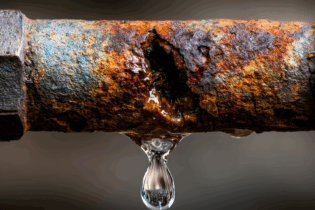
The battle against atmospheric corrosion has cost global industries billions in maintenance and premature structural failure. While carbon steel is the traditional workhorse of infrastructure, its tendency to revert to a natural state of iron oxide (rust) creates a cycle of exfoliation and thinning that inevitably leads to perforation.
However, a long-term case study on South Africa’s rail electrification masts is proving that “conventional wisdom” in material selection might be costing us more than we think and why stainless steel might be the answer to this decades-long problem. Stainless steel’s longevity lies within its chemistry. When a steel alloy contains at least 10.5% chromium, it forms a microscopic, self-repairing passive layer of chromium oxide. Unlike the brittle rust on carbon steel, this layer is tenacious and prevents further oxygen from reaching the metal underneath. While the initial cost of stainless steel is often higher than that of carbon steel, engineers are increasingly looking at Life Cycle Costing (LCC). This metric accounts for:- Initial fabrication and material costs.
- Maintenance and refurbishment cycles.
- Cost of lost production during downtime.
- Recyclability and environmental sustainability.
Redefining material selection: 3CR12 vs. The World
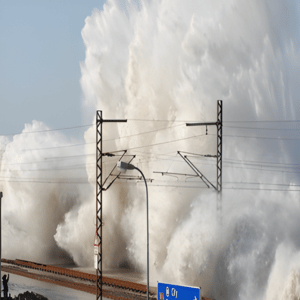
30-year inspection – taking note of the sea spray on the structures.
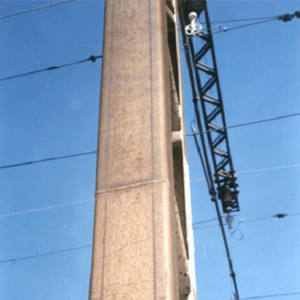
Note: The original forming marks can still be seen on the metal surface, signifying the negligible metal loss

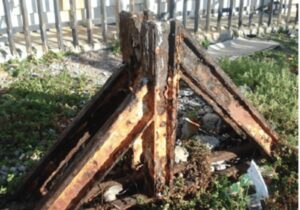
Traditional standards (like SANS 10400-L) suggest high-alloy grades like 316 or 2205 for severe marine environments to maintain a pristine, shiny appearance. But what if aesthetics are secondary to structural integrity? This is where 3CR12, a 12% chromium utility ferritic stainless steel, disrupts the market. While it may develop a brownish surface patina (discolouration) over time, research shows that this is merely aesthetic and does not signal structural decay. In 1982, 3CR12 electrification masts were installed along the 30km rail line from Gqeberha (Port Elizabeth at the time) harbour to Barkley Bridge. This environment is punishing; the masts are frequently doused in sea spray during high tides and windy conditions. Inspections at the 14, 30, and 40-year marks revealed a stunning success. While nearby carbon steel buffers showed excessive corrosion and loss of integrity, the 3CR12 masts remained structurally sound. In fact, original forming marks from 1982 are still visible on the metal surface today, signifying almost zero metal loss.
“If the material selection criteria are structural integrity and low cost rather than perfect aesthetics, 3CR12 is the proven solution with an almost 50-year track record.”For applications where the brownish patina is undesirable, 3CR12 offers another hidden benefit: it is a superior substrate for coatings. When galvanised or mild steel is painted, any damage to the coating leads to underfilm creep, where rust spreads beneath the paint and lifts it off. 3CR12 does not suffer from this. Because the substrate itself is corrosion-resistant, a coating system on 3CR12 lasts significantly longer and prevents the “spreading stain” effect seen on carbon steel.