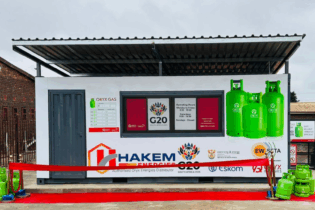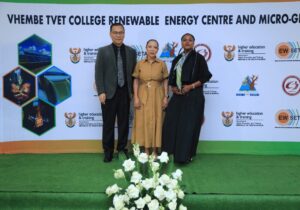
The Energy and Water Sector Education and Training Authority (EWSETA), in partnership with Vhembe TVET College and the Chinese Culture and International Education Exchange Centre (CCIEEC), officially launched a state-of-the-art Renewable Energy Training Centre and Microgrid at the Makwarela Campus in Thohoyandou. The launch marks a major milestone in strengthening South Africa’s renewable energy skills pipeline and supporting the country’s transition to a low-carbon economy.
The initiative forms part of the broader South Africa–China Just Energy Transition TVET Infrastructure and Skills Development Programme, a flagship EWSETA-led intervention designed to modernise the TVET system through infrastructure investment, industry-aligned training, and international collaboration. The programme directly addresses critical challenges in the skills ecosystem, including limited access to practical training facilities, gaps in lecturer capacity, and misalignment between training and labour market demand. The event was attended by distinguished guests, including the Honourable Director General of Higher Education and Training, Dr. Nkosinathi Sishi; Executive Mayor Ms Freda Nkondo; traditional leader Thovhele Gole Mphaphuli; representatives from the Chinese Culture and International Education Exchange Centre; and key stakeholders from government, industry, and the post-school education and training sector. EWSETA extends its sincere appreciation to all dignitaries and partners for their presence and continued support in advancing skills development and the Just Energy Transition. Speaking at the launch, EWSETA Accounting Authority Chairperson, Ms Morwesi Ramonyai Thonga, emphasised the strategic importance of the initiative.“This programme represents a bold step in repositioning the TVET college system as a central driver of South Africa’s skills revolution. By investing in modern infrastructure, strengthening partnerships, and aligning training to industry needs, we are building a scalable model that responds directly to the country’s Just Energy Transition priorities while creating meaningful opportunities for young people,” said Ramonyai.The newly launched facility includes a fully equipped renewable energy training centre and an operational microgrid system that will serve both as a sustainable energy source for the campus and as a live, hands-on training platform. This enables learners to gain practical experience in solar photovoltaic systems, battery storage technologies, and energy management systems, effectively bridging the gap between theory and workplace readiness.
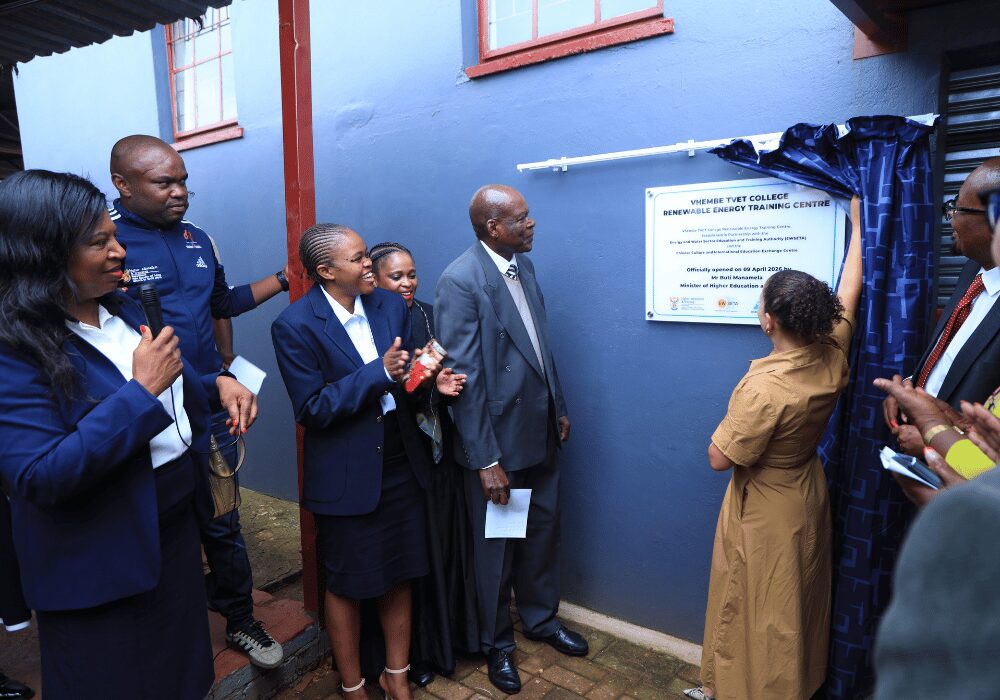

EWSETA Acting Chief Executive Officer (ACEO) Ms. Robyn Vilakazi highlighted the broader impact of the programme. “What we are launching today is more than infrastructure; it is a fully integrated skills development solution that links training, technology, and industry. Through this initiative, EWSETA is demonstrating its role as a catalyst for partnerships and an enabler of impact, ensuring that skills development translates into real economic participation in the energy economy, particularly for young people in rural communities.”
Adding a national policy perspective, the Director-General of the Department of Higher Education and Training underscored the programme’s alignment with government priorities. “The President has consistently called for a skills revolution that fundamentally reshapes our economy. Initiatives such as this respond directly to that call by ensuring that skills development is not abstract but rooted in real industry demand and technological advancement. Importantly, the end goal must be the development of local manufacturing capabilities within the renewable energy value chain. This is how we move from skills development to true economic transformation, by enabling South Africans not only to participate in the economy, but to produce, innovate, and industrialise,” said Dr Sishi. Phase One of the programme has already seen renewable energy infrastructure rolled out across five TVET colleges in Limpopo, Gauteng, Eastern Cape, and KwaZulu-Natal, alongside the international training of 50 learners and lecturers in China. Early results indicate positive employment outcomes, validating the programme’s focus on aligning skills provision with industry demand. In reflecting on the broader role of TVET colleges, Ms. Basani Hlekane the Principal of Vhembe TVET College challenged stakeholders to deepen the nature of support provided to institutions, stating that TVET colleges must be supported beyond traditional funding models. What is required are impactful, integrated interventions that transform the institutions into centres of excellence for future skills. She called on SETAs and partners to work with them in building capacity, strengthening infrastructure, and ensuring that their colleges are fully equipped to deliver high-quality, industry-relevant training. The Vhembe launch signifies the first fully completed site and serves as a model for national replication. Phase Two of the programme is set to expand the initiative across all nine provinces, with increased collaboration among SETAs and industry partners to build a coordinated, demand-led skills system that supports South Africa’s long-term energy and economic goals. This initiative contributes directly to national priorities, including the National Development Plan (NDP 2030), the National Skills Development Plan (NSDP 2030), and South Africa’s Just Energy Transition Investment Plan. It also reinforces the role of TVET colleges as key institutions in driving inclusive growth, industrialisation, and sustainable development.