
Dr Pontsho Twala, Director of the Wits Mining Institute (WMI)
“Since 2023, we rolled out the programme exclusively to Sibanye-Stillwater operations,” said Dr Twala. “The success of the programme in the last three years has led to us opening it up to the wider mining industry.”At the core of the 2026 offering are two structured pathways: a foundational course comprising three modules, and an advanced certificate in OHS practice. The first builds a baseline understanding of the mining environment, legislation and risk management, while the second develops higher-order analytical capability over a five- to six-month period.
Integrating theory, practice
“What distinguishes the WMI’s training approach is its deliberate integration of theory, practice and systems thinking,” explained Dr Twala. “The programme content explicitly links OHS to the mineral value chain, ESG considerations and operational decision-making. This ensures that safety is not treated as a function within a silo, but as part of a broader production system.”Another defining feature of the courses is the emphasis on critical thinking – particularly within the Advanced OHS certificate course. Instead of relying on prescriptive rules, participants are trained to interrogate safety challenges within their own operations.
“We give the participants tools that enable them to look at OHS as a system that is connected to other components within a mining operation,” she said. “This is important because it enables them to look beyond the obvious.”
Real-world issues
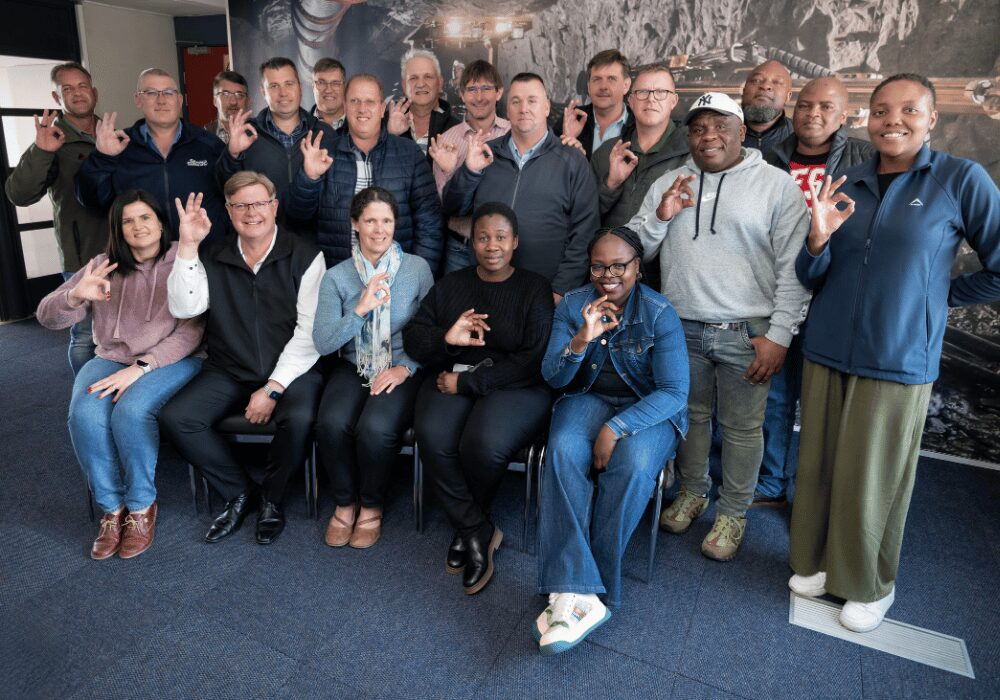
This is operationalised through a strong applied research component. Participants are required to identify a real-world issue within their workplace and work through a structured process of problem definition, data collection, analysis and communication. “We take them through the process of defining the issue, investigating it and collecting the necessary data,” she explained. This approach aligns with the programme’s broader goal of cultivating a proactive safety culture – where risks can be interrogated before incidents occur, and system weaknesses can be addressed. The WMI also uses an innovative delivery model for its programmes. Unlike traditional classroom-based instruction, its courses are highly interactive and draw heavily on industry expertise.Learning with practitioners
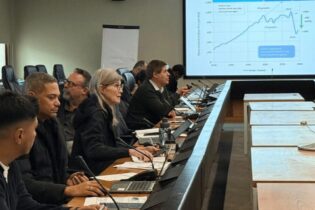
“We get beyond the theory by inviting practitioners who understand the environment and the challenges,” she said. “Participants do not just listen; they engage, exchange experiences and discuss what is working on the ground and what is not.”Being able to work with a major mining house, she says, adds valuable practical relevance, while supporting the WMI’s ambition to establish an industry-wide benchmark for OHS training.
Working professionals
The courses are structured to suit the needs of working professionals, with modules delivered in a hybrid format to combine online learning with face-to-face sessions. Continuous assessment is done through assignments and applied tasks. Participants who have completed the programme have said that this approach fits well with their work commitments and helps them apply what they learn at work.2026 schedule
The WMI runs its the OHS courses in three different cycles during 2026. While Course 1 – on the Mineral Value Chain for OHS – has already been run once, it will be offered again in June and September. Course 2, focusing on Fundamentals of OHS in Mining, runs in May, August and October 2026. Course 3 on OHS Practice in Mining will run in July and October this year, and again in February 2027. In addition to its training courses, the WMI will be hosting stakeholder dialogues under the theme “Beyond the Fence: How Community Environments Shape Health and Safety Performance in Mining” with the first dialogue taking place on 27 May 2026. As the sector works to meet the milestones agreed to in 2024, there is a need to better understand the external factors that influence workplace health and safety performance. This dialogue series will provide a platform for stakeholders to explore the links between social, economic, and community conditions and health and safety outcomes in mining – a topic that has not received much attention.WMI will also deliver Executive Training on OHS in 10-11 September 2026, targeted at senior leaders and decision-makers in the mining sector.“Health and safety responsibility sits at all levels, and senior leaders play a key role in setting priorities, culture and accountability across the organisation”, she said.More information on training and other events is available from the WMI at 011 717 4208, and the OHS course calendar and registration are available at www.witsplus.ac.za.