When I first entered the water and sanitation sector after many years in the software industry, I had thought that the main challenges would be engineering; pipes, pumps, treatment plants, or politics, financing, budgets, and governance. Big, complex, important things.
I did not expect the first big challenge to be acronyms. Open almost any water report, and you drown in letters. WASH, IWRM, FSM, NSS, SDG, NRW, BOD, COD, and now WESS.
I feel like we’re trying to solve sanitation with PowerPoint presentations, and all we need is the right abbreviation, rather than focusing on practical solutions.
A real shift
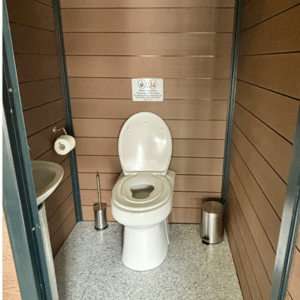
Sometimes a system fix requires simple solutions
But, every now and then, a new acronym actually represents a genuine shift in thinking. WESS is one of those.
WESS stands for
Water Efficient Sanitation Systems. Behind the technical name is a very simple idea, and it starts with looking at the system we have built over the last 100 years.
The dominant model has been simple: Flush toilet, pipes, treatment plants, rivers and oceans. This makes sense in water-rich countries, in big cities, in flat areas where pipes are easier to place, and in places with strong municipalities and big budgets. In those conditions, large centralised sewer systems can work very well.
But the problems started when this model was copied and pasted everywhere.
Trying to use that same approach in water-scarce regions, informal settlements, rural areas, flood-prone areas, small towns with limited budgets, or places with unreliable electricity, and the system starts to fail. Either it is never built, because it is too expensive, or it is built and then slowly stops working because there is no money for maintenance, no spare parts, no electricity for pumps, or no skills to operate the treatment works.
And then we have mountainous areas and high-altitude regions. From an engineering perspective, building traditional sewer systems in mountainous areas often makes very little sense. You need pumping stations, electricity, long pipelines, and constant maintenance just to keep waste and water moving. If a pump stops, the system stops. If electricity is unreliable, the system will fail. The cost per household becomes extremely high.
We are basically building very complicated and very expensive infrastructure just to transport waste somewhere else, when it could often be treated where it is generated. This is not intelligent infrastructure; this is just very expensive infrastructure.
At the same time, we are doing something quite strange as a society – we use clean drinking water to transport waste. We dilute nutrients that could be used in agriculture. We spend a lot of energy and money to clean that water again. And then we discharge nutrients into rivers and oceans, where they cause algae blooms and environmental damage. From a system’s perspective, that is backwards.
Water Efficient Sanitation Solutions
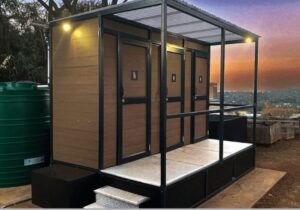
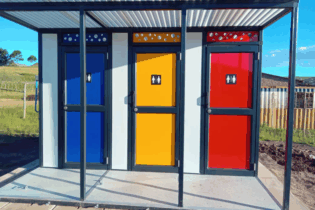
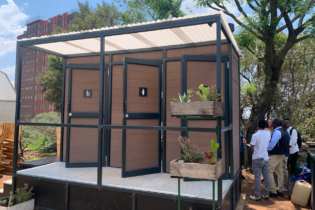
This is where WESS comes in. WESS is not one specific toilet or one specific technology. It is a different way of designing sanitation systems. It simply means using less water, not diluting the problem, treating waste safely, and, where possible, reusing water and nutrients instead of losing them as pollution.
It can include low-flush toilets, urine-diverting toilets, vacuum systems, container-based sanitation, decentralised treatment, and greywater reuse. Different technologies, but the same basic idea: be smart with water and be smart with nutrients.
WESS is not about replacing all sewer systems. Big sewer systems will continue to play an important role in many cities. But WESS is about admitting that a single sanitation model cannot be applied everywhere. Different places need different solutions.
Sanitation is not just about toilets. It is about public health, water security, food security, and whether nutrients end up in the soil where we grow food, or in rivers and oceans where they become pollution.

Birger Lundgren, CEO and founder of Sanitation Ambassadors
So yes, WESS is another acronym. The sector will probably invent ten more next year.
But if you ignore the letters and look at the idea behind it, WESS is something very simple: stop flushing resources away with drinking water and start designing sanitation systems that make sense.
This shift is long overdue. Sanitation is not a pipe problem. It is a system design problem.
Expert insights by Birger Lundgren, CEO and founder of Sanitation Ambassadors