South Africa’s water sector is under growing pressure to deliver efficiency, compliance, and resilience in the face of increasing scarcity and rising costs. Against this backdrop, Xylem’s launch of its Dissolved Air Flotation (DAF) solutions signals a step forward in how wastewater is treated, reused, and valued.
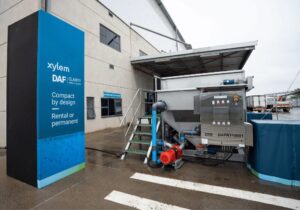
This recently launched technology introduces a compact, modular, and highly efficient pre-treatment system designed to remove suspended solids from wastewater streams across a wide range of industries. DAF is designed to “slot into” existing treatment processes. It can operate as a standalone solids-separation step or complement downstream biological, filtration, or reuse systems to help achieve site-specific compliance and reuse objectives.Broadening the water solutions portfolio
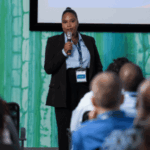
Tshepang Dolamo, business development and industrial solutions engineer at Xylem
How DAF works: Precision through microbubbles
Xylem’s DAF systems use Hellbender™ pumps to release microscopic air bubbles that, following appropriate coagulation and flocculation, attach to suspended and destabilised colloidal particles, facilitating their separation from the water phase, which can be skimmed away. The DAF technique efficiently removes total suspended solids (TSS), fats, oils, and greases (FOG), and particulate-associated biochemical oxygen demand (BOD) from wastewater streams. These systems offer an effective solution for a wide range of applications, including:- Thickening of biosolids
- Product recovery from wastewater
- Treatment of industrial wastewater to meet site discharge limits
- Polishing of biological treatment effluent (algae and phosphorus removal)
- Pretreatment to reduce loading on downstream biological treatment systems
- Clarification of biosolids downstream of aerobic and anaerobic treatment
- Removal of FOG
- Temporary treatment of biosolids during harvest seasons
- Removal of metals and fines
- Recovery of proteins from slaughterhouse wastewater.
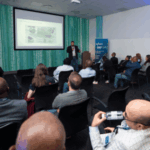
Ruan Nel, lead field engineer at Xylem
Compact design, high impact
One of the most compelling advantages of DAF is its compact footprint. Nel adds, “When designed for the right application, a DAF system can replace or complement traditional gravity clarifiers while typically requiring around 25% of the space.” This is particularly valuable in South Africa, where many treatment plants are space-constrained or operating beyond their original design capacity. The systems are also engineered for stability and consistency, a key factor in water treatment performance. “
In water treatment, hydraulic stability is critical,” he explains. “DAF systems are designed to operate under controlled flow conditions, delivering stable performance and consistent treatment efficiency even under variable loading” he adds.
Globally, DAF technology has already demonstrated its value across multiple sectors, from petrochemicals to food processing and municipal treatment.“In food and beverage, we deal with fats, oils, and grease. In the petrochemical sectors, the removal of emulsified hydrocarbons. In mining heavy metals and suspended solids,” Dolamo explains.Case studies presented during the launch highlighted strong performance outcomes. In one poultry processing application, DAF systems achieved:
- 92% reduction in chemical oxygen demand (COD)
- Up to 94% clarification efficiency
- 92% reduction in total suspended solids (TSS)
Designed for real-world conditions
Importantly, Xylem’s approach goes beyond equipment supply, focusing on full lifecycle support and site-specific optimisation. “When you come to us and say, ‘I need to treat water,’ we then look at water analysis, flow rates, and total suspended solids before tailoring a solution,” Nel explains. This engineering-led approach ensures that systems are correctly sized and configured, avoiding overdesign and unnecessary costs.“Achieving the right surface loading rates and consistent sludge concentration depends on stable operation and correct system control,” he adds.The systems are highly automated, which significantly reduces operational complexity,” Nel explains. “Routine monitoring is still required, but automated controls manage the process continuously, delivering consistent performance without constant manual intervention.

Chetan Mistry, strategy and marketing manager at Xylem Water Solutions and Service (WSS) in Africa, Middle East, Türkiye and India
Enabling water resilience in a constrained environment
As water stress intensifies across South Africa, the ability to treat and reuse water efficiently is becoming a strategic necessity rather than a compliance exercise. DAF’s ability to recover materials, reduce pollutant loads, and enable reuse aligns directly with this shift.Dolamo notes, “If we have a system such as dissolved air flotation, then you stand a better chance of having water that you can reuse.”This is vital to industries attempting to reduce their water footprint and reliance on municipal systems. Mistry adds, “We are very excited to bring cutting-edge DAF solutions to our local customers. Xylem has introduced our DAF solutions to several other markets, where they have become a big hit among companies of diverse sizes. South African organisations in the private and public sectors can now also leverage DAF to expand their choices for wastewater treatment and recycling.”