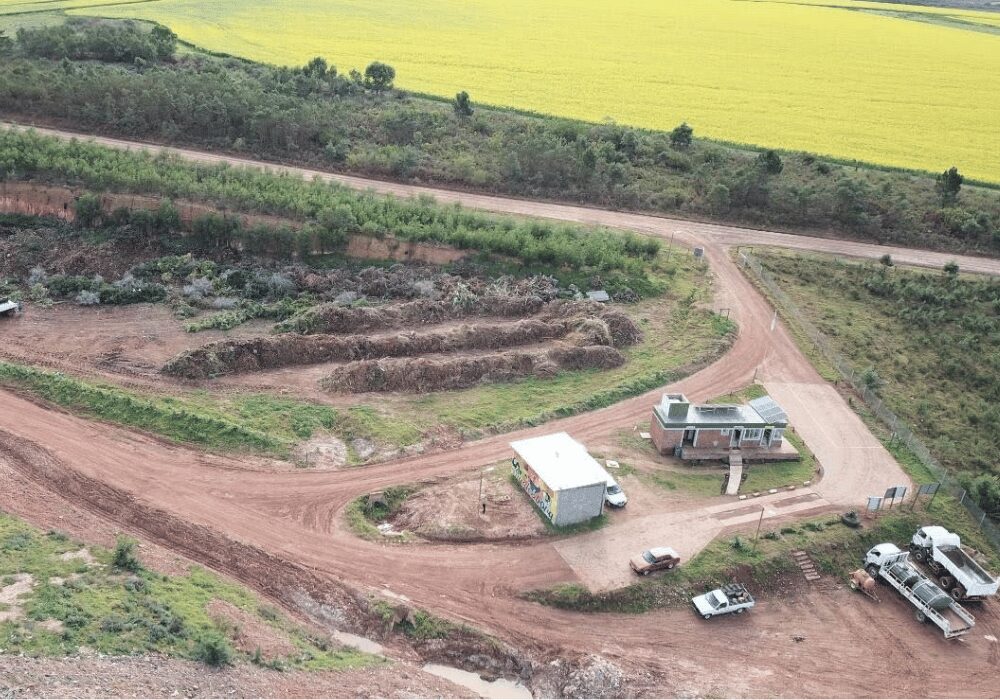
Bontebok Landfill in the Swellendam municipality has undergone an impressive compliance turnaround. What was once a declining landfill that scored low compliance scores and had airspace concerns is now a compliant and environmentally responsible landfill, drastically improving its audit scores.
Bontebok waste disposal facility, before intervention in 2024, had faced significant challenges, from ageing infrastructure and equipment to poor airspace and waste volume practices, all exacerbated by operational inefficiencies such as inconsistently applying the daily cover, and no formal compaction programme, along with uncontrolled waste collecting on site. In 2021, when the current Waste Manager was appointed, the site scored 44.14% on its external compliance score, indicating poor performance and marking the site as high risk.
As early as 2018, the Overberg District Integrated Waste Management Plan flagged the Bontebok facility as an “Open dump” with an immanent air space crisis. Reports from the time projected that the site would close by March 2025, leading to a contingency plan that would transport the waste 140km to the regional landfill and cost as much as R42 million per annum.
It is in this context that Swellendam Municipality put out a tender for the management of the Bontebok waste disposal facility and appointed Raalebborg through its supply chain processes to aid them with the management and rehabilitation of the site. This partnership allowed for the fast turnaround and demonstrated the value of intervention and what can happen when efficient and effective contractors work with municipalities.
From low to high
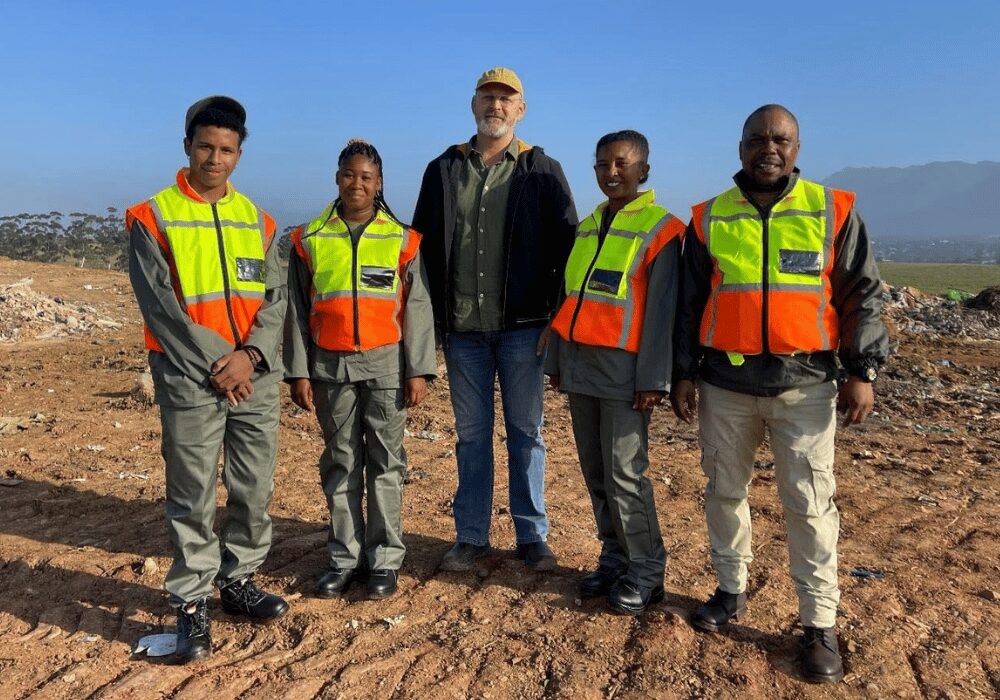
Johan van Niekerk, Senior Manager: Waste and Environmental and Raalebborg staff members
Following the appointment of Raalebborg Environmental in July 2024, the Bontebok landfill underwent a structured and intensive operational turnaround. Initial site assessments revealed severely degraded conditions, including vandalized infrastructure, a working face that was not being managed correctly, and heightened risks of spontaneous combustion. Immediate stabilisation measures focused on rehabilitating essential infrastructure, securing the site perimeter, repairing access roads, and introducing a defined, cell-based disposal system. Critically daily waste compaction and cover were consistently applied, dramatically reducing odours, fire risks, and environmental exposure.
A key shift in the landfill’s performance came through the introduction of a real-time waste tracking system. This enabled hour-by-hour monitoring of incoming waste volumes, improved airspace modelling, and more informed decision-making at both operational and municipal levels. Environmental controls were simultaneously strengthened through dust suppression, stormwater diversion, groundwater monitoring, and reshaping of the waste body to limit infiltration and contamination risks. These interventions marked a transition from reactive management to a data-driven, compliance-focused operation.
By mid-2025, these initiatives had delivered measurable improvements, with compliance scores rising above 80% and reaching 83–87% by early 2026, the highest levels in the facility’s history. The most recent independent audit, done by Afriforum recorded an outstanding audit score of 93%. Governance and oversight have also strengthened considerably, underpinned by rigorous quarterly audits, independent environmental assessments, and proactive regulatory engagement. The landfill is now compliant with the National Environmental Management: Waste Act and all associated landfill regulations.
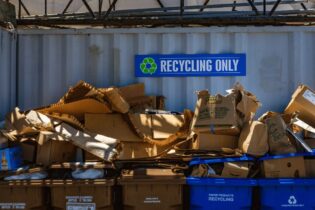
With consultation from Raalebborg, the municipality paused their waste-to-energy initiative. While waste-to-energy is often seen as a cure-all solution to enhancing a landfill and promising green energy, Raalebborg stand by the fact that these schemes can be prohibitively expensive and are highly dependent on incoming waste streams, while not against them, they recommended deep analysis to ensure that it makes sense. For this landfill site, it didn’t and the delays compounded existing problems so Swellendam adopted other diversion strategies such as garden refuse chipping, the recovery of builders’ rubble, diversion of industrial waste to the correct facilities and the launch of a recycling buy-back centre in November 2025.
Waste-to-energy will continue to be explored and implemented once the process reaches the efficiency threshold needed to make it economically and technically viable for medium-sized landfills like Bontebok. Together, these initiatives now divert over 1000 tonnes of waste monthly, while also creating safer and more structured opportunities for local waste reclaimers. The integration of community-based solutions has played a key role in reducing informal waste picking and improving overall site safety.
One of the most significant developments came with the discovery and correction of a decades-old error in the positioning of the site’s boundary fence. For over 30 years, this perimeter fence has limited the available airspace. Its realignment effectively unlocked additional airspace, extending the landfill’s operational lifespan by one to two years. Combined with improved waste management practices, the site is now projected to remain operational until approximately 2034, avoiding the immediate need for costly regional waste transport solutions and allowing other technologies time to mature that might herald a new age for waste management.
Impact
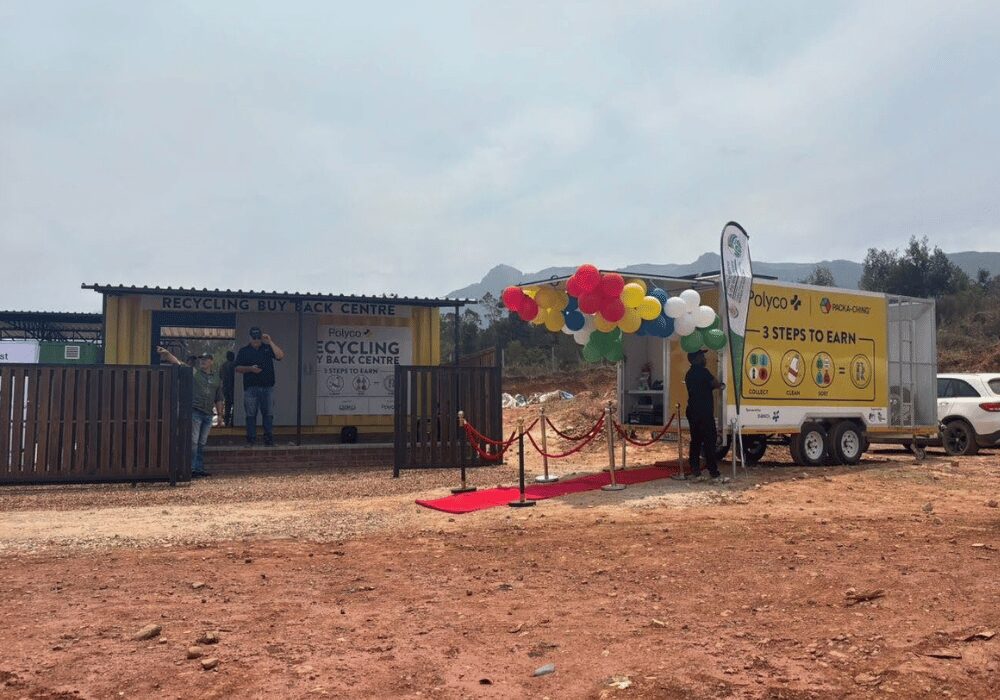
Polyco and Pack-A-Ching recycling buy back centre
The turnaround at Bontebok also underscores the broader social and economic role that well-managed landfill sites can play at a municipal level. Beyond compliance, the site now contributes to local economic activity through structured procurement and enterprise participation, particularly via recycling and diversion initiatives adding to the circular economy of the town. The establishment of the buy-back centre and the integration of local contractors into operational processes demonstrate how landfill rehabilitation can support small business development while reducing environmental pressure.
A key component of the site’s recovery has been structured skills development and capacity building. Training programmes implemented during the turnaround have equipped staff with formalised operational knowledge, supported by certification and on-site mentorship. This has not only improved day-to-day efficiency and safety but has also embedded a level of professionalism that is often lacking in smaller municipal landfill operations.
The Bontebok case must also be understood within the wider national context, where many municipalities face similar legacy challenges. Poorly managed landfill sites across South Africa present risks ranging from groundwater contamination and uncontrolled fires to environmental degradation and safety hazards for informal waste pickers. At the same time, the cost and complexity of developing new compliant landfill facilities, often exceeding tens of millions of rands, make the optimisation of existing sites a critical priority. In this regard, Bontebok serves as a practical benchmark for how intentional, targeted interventions can extend landfill life and delay the need for costly new infrastructure.
Strengthened governance and oversight have been central to sustaining improvements. The introduction of regular internal audits, independent environmental assessments, and structured review processes has created a multi-layered accountability framework. This has ensured that compliance gains are maintained over time, while also improving transparency and alignment with regulatory requirements.
Operationally, the shift to a more controlled and systematic landfill environment has been equally important. The introduction of defined traffic routes, strict management of the working face, and reshaping of the waste body have improved both efficiency and environmental performance. These measures, combined with enhanced stormwater management and groundwater protection systems, have significantly reduced the risk of leachate contamination and other long-term environmental impacts.
In May 2026, the site was awarded a National Waste Management Award for “most improved municipal landfill operation site and management,” proving that the effort goes noticed.