
The City of Johannesburg’s Environment and Infrastructure Services Department (EISD), alongside international and local development partners, officially concluded the Scaling Urban Nature-Based Solutions for Climate Adaptation in Sub-Saharan Africa (SUNCASA) project during a closing ceremony at the Johannesburg Botanical Gardens in Emmarentia on Wednesday, 26 August 2026.
Launched in early 2024, the multi-year initiative targeted climate-fueled flood risks and environmental degradation to enhance resilience for approximately 2.2 million people across three sub-Saharan African cities: Johannesburg, Dire Dawa (Ethiopia), and Kigali (Rwanda). Funded by Global Affairs Canada through its Partnering for Climate Programme for CAD 29 million (R334.38 million), the project was managed by the International Institute for Sustainable Development (IISD) and the Water Research Institute (WRI). In Johannesburg, it focused on the inner city, Alexandra, Soweto, and the Jukskei River catchment, integrating nature-based solutions to mitigate urban heat, reduce flood risks, support local livelihoods, and protect biodiversity. Key outcomes delivered under the project included:
- Employment and Capacity: Creation of 1 500 local jobs across targeted regions, alongside formal capacity building and training for 200 fixed-term workers.
- Ecosystem Restoration: Restoration of 489 hectares along the Jukskei River catchment through the clearing of invasive alien plant species and reintroduction of indigenous vegetation.
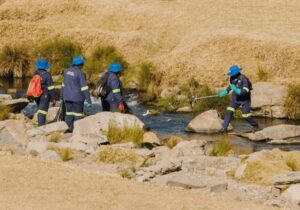
- Urban Forestry & Cleanup: Planting of 47 600 trees and the removal of 664 tonnes of solid waste from the Jukskei River waterway.
- Infrastructure & Policy: Installation of a continuous hydrological monitoring network for flood early-warning systems, and the formulation of two long-term strategies to institutionalise urban nature-based solutions.
Alec Crawford, Director of Nature for Resilience at the IISD, said: “It is astounding to see the degree to which climate, biodiversity, and social risks have been integrated around nature-based solutions in the city and carried forward. Local communities and voices have been driving this forward with tangible action on the ground.”Thanduxolo Mendrew, Managing Director of Johannesburg City Parks and Zoo, emphasised the operational scale achieved through the grant funding. “As custodians of Johannesburg’s green infrastructure, this project aligns intrinsically with our core mandate. The scale of delivery achieved, particularly the tree planting, land restoration, and waste removal would have required more than two financial years to achieve through conventional municipal budgeting alone.”