
Ofentse Nthutang, Chief Executive Officer, Magalies Water
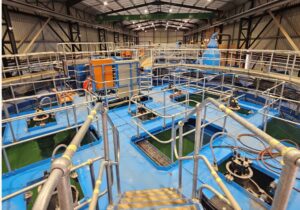
The package plant adds 50 Mℓ/day of treatment capacity
Motivation for a packaged plant
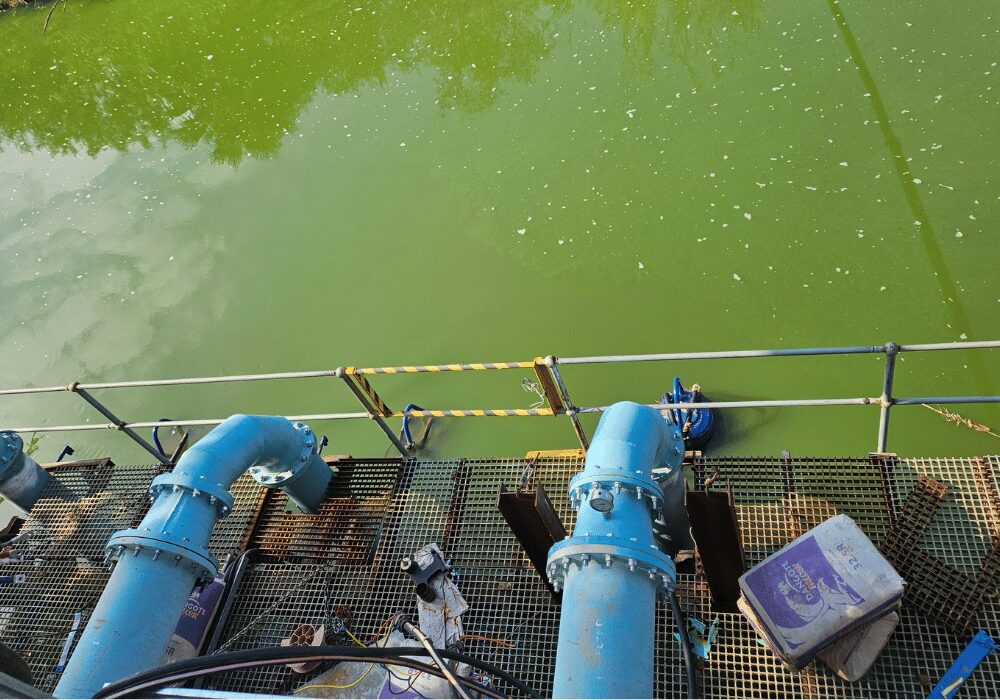
Unlike conventional water treatment projects that may take several years to design and construct, the Klipdrift project was expected to deliver water almost immediately.“Traditional infrastructure timelines were simply not viable under the circumstances,” says Nthutang.In response, the Department of Water and Sanitation (DWS), together with the City of Tshwane and Magalies Water, initiated the construction of Tecroveer’s Klipdrift Modular Treatment Plant adjacent to the existing Klipdrift Water Treatment Plant. DWS allocated R758 million for the project, with Magalies Water as the implementing agent. Tecroveer, a leader in water and resource recovery solutions, was appointed as contractor by Pro-Plan Consulting Engineers to manufacture and commission the package plant. The package plant adds 50 Mℓ/day of treatment capacity, with the combined output of the two plants (Klipdrift Water Treatment Plant and Klipdrift Package plant) from 42 Mℓ/day to 92 Mℓ/day. This has more than doubled capacity. “Without the package plant, it is extremely difficult to treat the poor water quality from the Pienaars River to SANS 241 standards and still consistently send the required output of potable water to the community every day.Treating poor raw water requires a longer retention time for chemicals and processes to work. The package plant will therefore assist the existing Klipdrift Water Treatment Plant with meeting the required demand,” states Nthutang. However, continued population growth in the area is placing increasing pressure on available water resources. The City of Tshwane is currently updating its demand projections, with preliminary estimates indicating a potential shortfall of approximately 15 Mℓ/day. To address this gap, several options are under consideration, including supplying additional water
via the D-line from Soshanguve, which receives water from Rand Water, or further optimising the performance and capacity of the Klipdrift Water Treatment Plant.
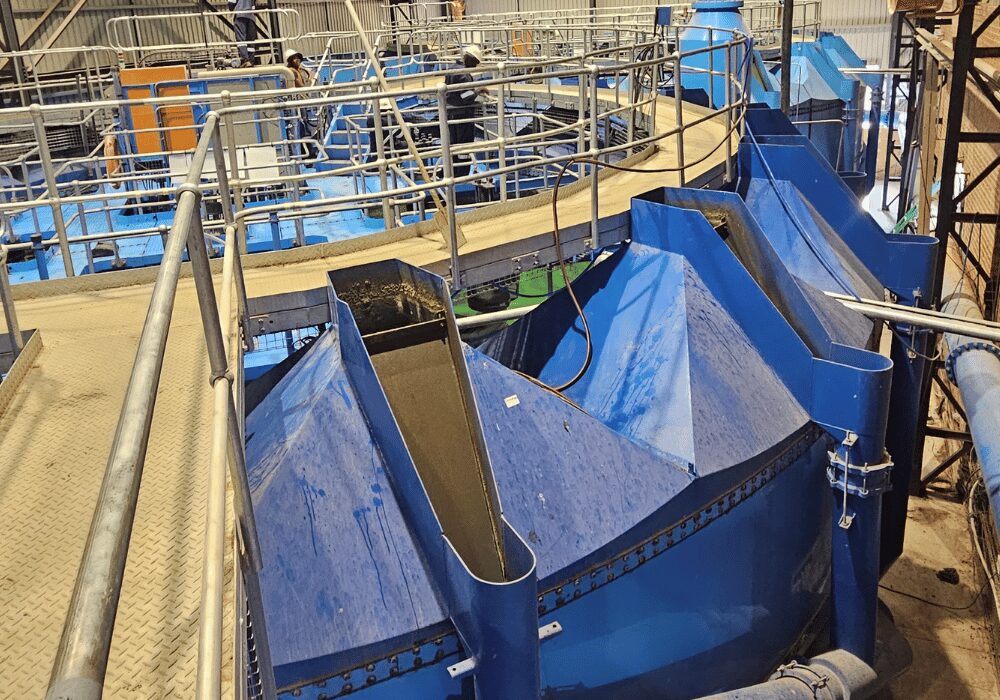
Each treatment unit has a single white-water nozzle external to the DAF, allowing maintenance and replacement without entering the DAF
Leveraging off existing infrastructure
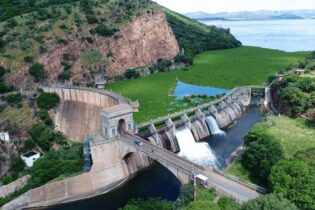
In order to accelerate project delivery, Magalies Water leveraged existing infrastructure at the adjacent Klipdrift Water Treatment Plant wherever possible. Abstraction works, pipelines, reservoirs and chemical dosing systems were upgraded and integrated into the new scheme. Pumps were replaced and upgraded to increase abstraction capacity to 92 Mℓ/day without expanding the footprint of the existing abstraction works. Existing clear water tanks were used for phase 1 and phase 2 of the project. Additional sedimentation tanks were also added to the Klipdrift Water Treatment Plant to cope with high organic and inorganic loads during seasonal rainfall. Water from the Klipdrift Water Treatment Plant and Klipdrift Package Plant is pumped to the Babelegi Reservoirs (East and West) as well as the Temba reservoir. A pump station also had to be upgraded to pump water from Babelegi to Temba. “Two pipelines; a steel pipeline and an asbestos cement pipeline connected the two reservoirs. During investigations, engineers discovered that sections of the existing pipeline network differed from original drawings. A missing section of the steel pipeline across the Apies River had to be constructed, while portions of ageing asbestos cement pipeline were replaced with HDPE pipe to prevent contamination ingress into the system,” explains Nthutang. He adds that other challenges included the discovery of hard rock. This bedrock needed to be excavated for construction to take place. A process of chemical blasting was used to crack the rock, which was then broken into pieces with rock breakers and removed. Faster, traditional blasting methods were not used as they posed a risk of damaging existing infrastructure. A malfunctioning substation and Eskom’s unreliable electricity supply caused some delays in the production of the units for the package plant.Flying an aeroplane while building it
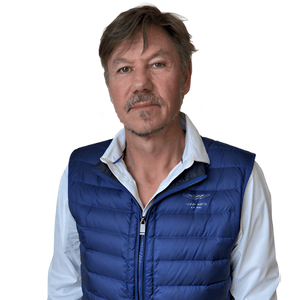
Izak Cronje, CEO, Tecroveer
“We started with module 1 and changed it as we went along to optimise everything and make sure it worked. Before we started module 2, we had already changed module 1 about three times,” explains Izak Cronje, co-founder and CEO at Tecroveer.Rather than replicating a fixed design across all four treatment modules, lessons learnt during commissioning were incorporated into subsequent modules. Equipment layouts were adjusted, operational processes refined and treatment performance optimised while construction crews continued building the remaining phases.

Any design modifications had to be implemented without disrupting production from units already supplying water to communities.
At the same time, operators were learning how to manage an entirely new treatment process that combined dissolved air flotation and continuous filtration technologies at a scale not previously implemented for potable water treatment in South Africa. The result was a plant that evolved during construction. By the time the final modules were commissioned, the treatment process had already undergone multiple rounds of optimisation informed by actual operating data rather than theoretical design assumptions. The modular design itself became central to overcoming time pressures. Because the units were pre-engineered and largely manufactured off-site, construction and fabrication could happen simultaneously. This allowed the project team to compress implementation timelines dramatically, with the first phase completed in approximately seven months.A world first
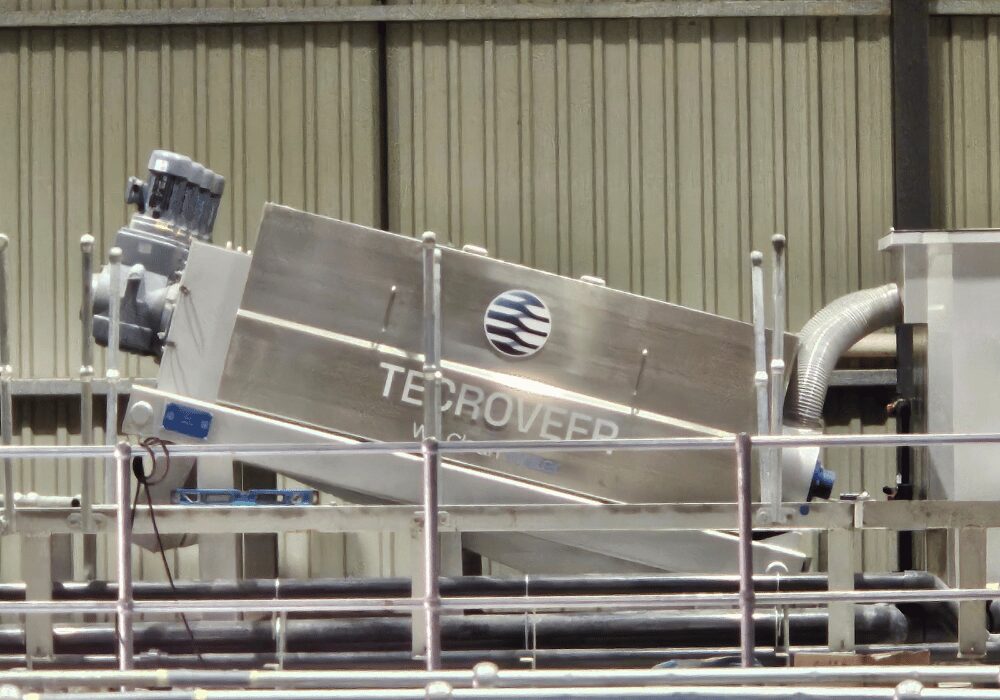
Sludge thickening technology has also been included into the package plant, with plans (pending environmental compliance) to eventually beneficiate the sludge and sell it to the local agricultural market
Flocculation
Flocculation is initiated by introducing a coagulant that neutralises the electrical charges and keeps fine particles suspended in water. This causes small particles that would otherwise remain suspended to form larger particles (flocs). The flocs can then settle out in a sedimentation tank or be trapped in a filtration system. The Calabash incorporates a circular tank that allows for the introduction of a coagulant before entering the flocculator, where gentle mixing facilitates floc formation.Degritting
While the final solution includes sedimentation tanks to remove grit and sediment, the Calabash was required to operate for two summer seasons without any upfront solids removal. A degritting feature was included as part of the flocculation compartment with all velocities prior to flocculation being maintained high enough to ensure no settlement in the feed network.Flotation
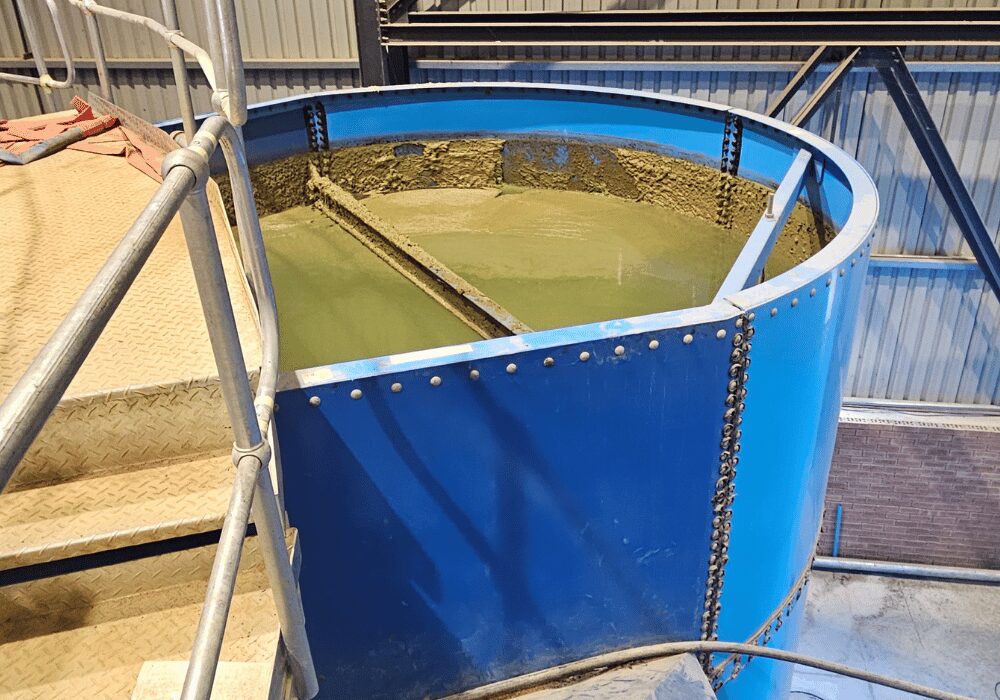
Dissolved air flotation (DAF) is used in water treatment to effectively remove suspended solids, algae, oils, and other fine particles that are difficult to settle by gravity. Instead of allowing these impurities to sink, DAF systems lift them to the surface for removal, resulting in clearer, cleaner water for further treatment. DAF operates by introducing microbubbles into the tank, which attach to the flocs. Due to the combined specific density of the flocs and microbubbles, they rise to the surface, forming a scum/float layer of algae and impurities. These are then removed through a process called descumming or defloating. This process is especially useful for water sources that are heavily polluted or contain large volumes of light, buoyant contaminants. By incorporating DAF into the treatment train, the system significantly improves overall water clarity and reduces the burden on downstream filtration systems. An innovative approach was developed to enhance microbubble generation in the white-water stream exiting the saturator. Rather than relying on multiple precision engineered nozzles, this solution uses a purpose-designed internal restriction that produces a sharp drop in the water pressure, promoting fineair dispersion. The result is consistent microbubble formation and effective saturation, offering a significantly more cost-effective and low-maintenance alternative to traditional multi-nozzle systems. The travel distance in the DAF was optimised to ensure float formation and settlement. Removal of float and silt in the DAF was researched and improved by experimenting with existing float formation systems. Separation of the DAF and filter, with silt collection at the bottom of the DAF, eliminated media blinding caused by settlement.
Filtration
After coagulation, flocculation, and sedimentation, water still contains fine particles and micro-organisms. This water is directed into the MBF. Filtration occurs as water flows upward through the media bed. Particles are removed through two primary mechanisms. Larger particles are physically trapped between the media grains in a process known as straining, while heavier particles settle within the spaces between the media grains through sedimentation. Backwashing is achieved through a continuous process in which an airlift pump removes a small quantity of media from the bottom of each filter cell and transfers it to a sand washerlocated above the media bed. In the sand washer, accumulated solids are removed from the media before the cleaned media is returned to the top of the filter bed, allowing filtration and media cleaning to occur simultaneously. The Calabash holds the following advantages:
- Utilises only 50% of the coagulant required by the existing plant
- Enables automatic, continuous removal of float in the DAF, without moving mechanical components or labour-intensive methods.
- Results in an average water loss of just 3.5% during the continuous backwash process, with no system downtime.
- Reduces water loss during DAF float removal, improving the dewatering efficiency of the float.
- The continuous, gentle washing of the filter media doubles the lifespan of media in the sand filter.
- Each treatment unit has a single white-water nozzle external to the DAF, allowing maintenance and replacement without entering the DAF.
- Compared with a conventional plant, it is much less expensive to operate.
- Constructed in less than half the time of a conventional treatment plant.
- Consumes less energy than a conventional plant.
- Modular units are scalable and reconfigurable.
- Allows rapid deployment in emergency situations.
- Achieves 33% higher throughput compared to conventional plants.
- Requires less than half the space of conventional plants.
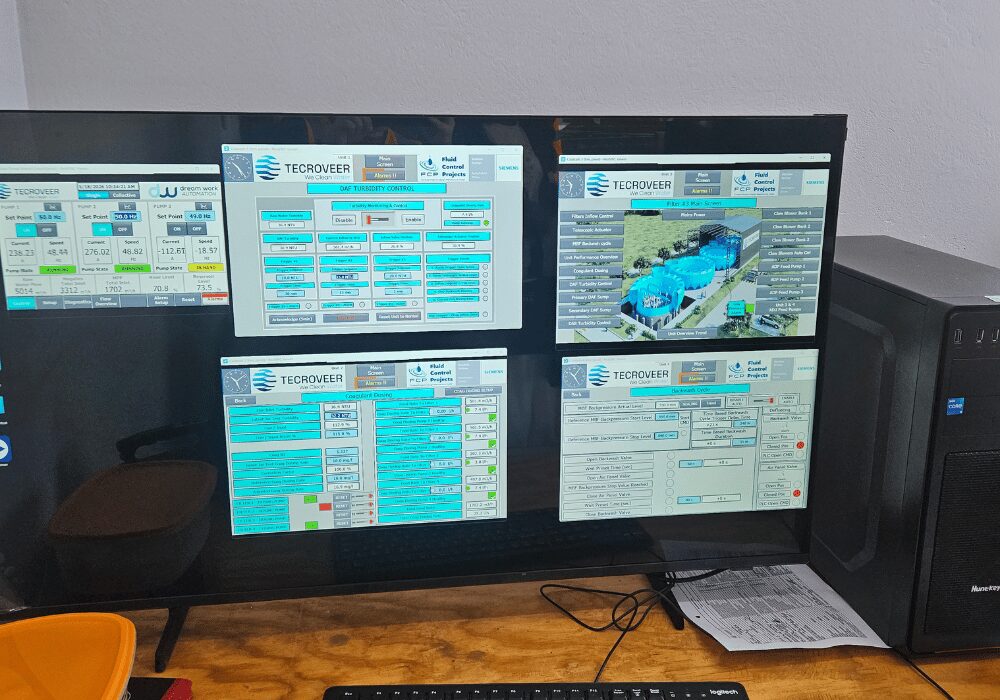
The plant is equipped with an advanced supervisory control and data acquisition (SCADA) system that provides operators with real-time visibility of water quality, flows, chemical dosing and equipment performance