Water sector reform, new service delivery models and smarter infrastructure could transform how South Africa manages water and secures its future
Our continent can no longer solve today’s water challenges with yesterday’s thinking. Climate change, ageing infrastructure, urbanisation, pollution, growing demand and financial pressures are forcing the sector to rethink how water is governed, financed and managed.
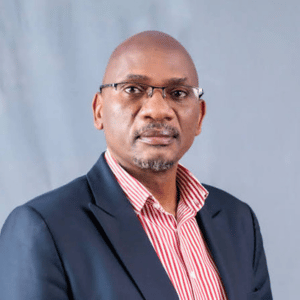
According to Rand Water and AWSISA chairperson – Ramateu Monyokolo – that transformation is already underway. “One of the most significant reforms supporting this shift is the proposed Water Services Amendment Bill. The Bill seeks to strengthen the separation between Water Services Authorities (WSAs), which are responsible for oversight and planning, and Water Services Providers (WSPs), which are responsible for delivering water and sanitation services. Under these reforms, all WSPs must obtain an operating licence from the Department of Water and Sanitation. This will give the Minister greater authority to intervene where water services consistently fail, requiring municipalities to appoint capable, licensed service providers to restore and maintain service delivery,” says Monyokolo. He adds that there is a dire need for different models when providing water and sanitation services such as concessions and special purpose vehicles (SPVs). “Rand Water’s new public-public SPV with Emfuleni Local Municipality marks a major shift in how failing municipal water and sanitation systems can be stabilised. The Vaal Corporation Water Utility is a ring-fenced, professionally managed utility designed to restore service delivery, improve billing and revenue collection, reduce non-revenue water, and rebuild public trust. While it is not a debt relief mechanism, it creates a long-term structure for operations, maintenance and infrastructure investment. Even though this specific SPV is a public-public partnership, many SPVs can be packaged to welcome participation from the private sector.” Rather than viewing the initiative simply as an intervention in a struggling municipality, Monyokolo describes it as a blueprint for a new way of delivering water services.
Another model is the water concession, which is a long-term agreement in which a municipality retains ownership of its water infrastructure but appoints an external operator to finance, operate and maintain the system. South African Water Works is successfully operating one concession in Mbombela and another concession in Ballito.
While concessions represent a new approach to improving municipal water services, reform is also taking place at the national level. The establishment of the South African National Water Resources Infrastructure Agency (NWRIA) is intended to strengthen the planning, financing, development, operation and maintenance of South Africa’s strategic water resource infrastructure. The agency will oversee major assets such as dams and bulk water transfer schemes, while also assuming many of the infrastructure development and financing responsibilities previously undertaken by the Trans-Caledon Tunnel Authority. By bringing these functions together under a single institution, the NWRIA aims to accelerate investment in the infrastructure needed to secure the country’s long-term water future.
Rather than viewing the initiative simply as an intervention in a struggling municipality, Monyokolo describes it as a blueprint for a new way of delivering water services.
Another model is the water concession, which is a long-term agreement in which a municipality retains ownership of its water infrastructure but appoints an external operator to finance, operate and maintain the system. South African Water Works is successfully operating one concession in Mbombela and another concession in Ballito.
While concessions represent a new approach to improving municipal water services, reform is also taking place at the national level. The establishment of the South African National Water Resources Infrastructure Agency (NWRIA) is intended to strengthen the planning, financing, development, operation and maintenance of South Africa’s strategic water resource infrastructure. The agency will oversee major assets such as dams and bulk water transfer schemes, while also assuming many of the infrastructure development and financing responsibilities previously undertaken by the Trans-Caledon Tunnel Authority. By bringing these functions together under a single institution, the NWRIA aims to accelerate investment in the infrastructure needed to secure the country’s long-term water future.
“The creation of the NWRIA demonstrates a move away from fragmented infrastructure delivery towards a more coordinated and financially sustainable approach. Water boards will be invoiced by the agency,” adds Monyokolo.
Better governance
He believes national government has made encouraging progress in developing the policies and regulatory reforms needed to strengthen the water sector. “We have always argued that water needs to be depoliticised. This means that all board members should be qualified, with the relevant experience. Long term planning is imperative, it provides clarity on the direction of an organisation. Entities need a business plan or master plan that is independent from those in power. For instance, many of the Rand Water projects (like Vlakfontein Reservoir and System 5A Water Purification Plant at Rand Water’s Zuikerbosch Station) that were completed over the past few years were part of the Rand Water Strategy in 2009,” maintains Monyokolo. Municipalities must have the ability to plan over decades rather than election cycles. If municipalities create long term strategies, then politicians can focus on supporting the implementation and prioritisation of agreed upon aspects of a strategy rather than continually changing its direction.
Utilities of the future
“Water Boards have historically focused on bulk water services, but our role is evolving to encompass water reticulation in response to changing sector needs. In the future, I see utilities adopting more technologies for leak detection and asset management. I see water boards increasingly embracing water reclamation and reuse, while also expanding their role as technical advisers to large water users,” adds Ramateu. He believes South Africa’s self-funding water boards are well positioned to expand their footprint across the African continent by exporting their technical, operational and management expertise. Rand Water has been selected as the preferred international partner to work with the Zanzibar Water Authority (ZAWA) through a 10-year management, operations and maintenance contract. The partnership represents one of the largest international ventures undertaken by a South African water utility and forms part of Rand Water’s strategy to expand its technical services across Africa while generating additional revenue outside its traditional bulk water business. “For Rand Water, the partnership has several strategic benefits. It provides a new revenue stream that is expected to strengthen our balance sheet while allowing us to export the engineering, operational and management expertise we have developed over more than a century of supplying bulk water in South Africa. By diversifying our revenue base beyond municipal water sales, these partnerships help to reduce our exposure to municipal debt, while generating income in different currencies and strengthening our long-term financial sustainability. It also positions Rand Water as a leading player on the African continent, supporting other African countries through the transfer of skills, technology and institutional expertise, while strengthening regional cooperation and long-term relationships. The experience gained through managing different water systems further enhances our own operational capability and supports our long-term strategy of becoming a leading global water utility.” Two of South Africa’s water boards (Rand Water and uMngeni-uThukela Water) have been debt listed on the Johannesburg stock exchange, and there is a possibility of more water boards following this example as they are well governed institutions that understand the business of water.Climate change and water security
 Changing rainfall patterns, prolonged droughts and increasingly severe floods mean resilience must become part of everyday planning rather than emergency response.
“We cannot continue managing water through crisis after crisis,” says Monyokolo.He believes greater emphasis should be placed on developing alternative water sources, including groundwater, desalination, water reuse and water reclamation. “Municipalities also need to expand their water storage capacity and strengthen the enforcement of bylaws relating to water storage by businesses. A fundamental shift in the mindset of citizens is also required. Water can no longer be viewed as an unlimited resource that will always be available at the turn of a tap. Households, businesses, industries and public institutions all have a role to play in using water more responsibly and valuing every drop. For instance, it is a waste to use potable water to flush out toilets and water our gardens. Lasting change will depend not only on better infrastructure and governance, but also on changing behaviours and building a culture that values and protects South Africa’s most precious resource.” In his concluding remarks, Monyokolo adds that South Africa should have greater confidence in the expertise it has developed. Too often, he says, South Africans attend international conferences expecting only to learn, and then discover that the rest of the world is equally interested in learning from them. As the operator of the largest water utility in Africa and one of the largest in the world, Rand Water supplies 4.57 billion litres of water every day to millions of people, giving its operational experience that many developed countries simply do not have. While South Africa can continue to adopt international best practice in areas such as groundwater development and emerging technologies, it should also recognise the value of its own achievements.
“We should not be shy of what we are capable of as South Africans,” he says. “The continent, and indeed the world, has a great deal to learn from us as well.”