
South Africa’s catchment management agencies are playing a growing role in water security, governance, climate resilience and resource management.
South Africa’s catchment management agencies (CMAs) are becoming central to the country’s water sector while they confront intensifying pressure from climate variability, rising demand, ecological degradation, pollution and financial constraints.
Annual Performance Plan (APP) presentations delivered to Parliament’s Portfolio Committee on Water and Sanitation by multiple CMAs, including the Limpopo-Olifants Catchment Management Agency (LOCMA), the Inkomati-Usuthu Catchment Management Agency (IUCMA), the Vaal-Orange Catchment Management Agency (VOCMA), the Pongola-Umzimkulu Catchment Management Agency (PUCMA), the Breede-Olifants Catchment Management Agency (BOCMA), and the Mzimvubu-Tsitsikamma Catchment Management Agency (MTCMA), collectively reveal institutions attempting to operationalise a decentralised water governance model under increasingly difficult conditions. The presentations outline expanding responsibilities in water use licensing, pollution prevention, ecological restoration, stakeholder engagement, revenue collection, climate adaptation and regional cooperation. At the same time, they expose deep structural pressures facing the sector, including growing water deficits, escalating operational costs and the need for stronger enforcement and institutional capacity. Together, the APPs provide one of the clearest pictures yet of how South Africa’s regional water management system is evolving, despite facing similar issues around financial stability that plague the water sector.A decentralised system under pressure
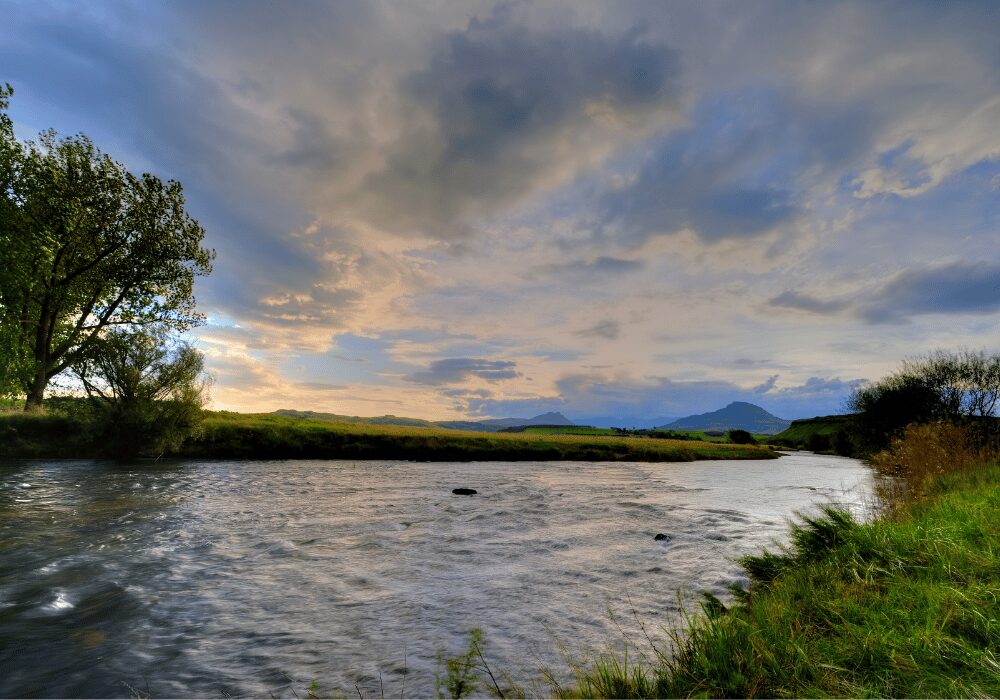
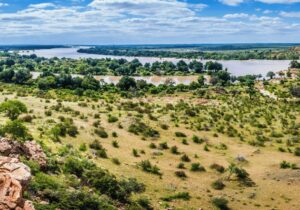
Umzimkulu River forming part of the Pongola-Umzimkulu Catchment, managed by the Pongola-Umzimkulu Catchment Agency
- Protecting and conserving water resources;
- Compiling Catchment Management Strategies (CMS);
- Coordinating water users and water management institutions;
- Promoting implementation of development plans;
- Supporting community participation in water governance.
Water scarcity and imbalance intensify
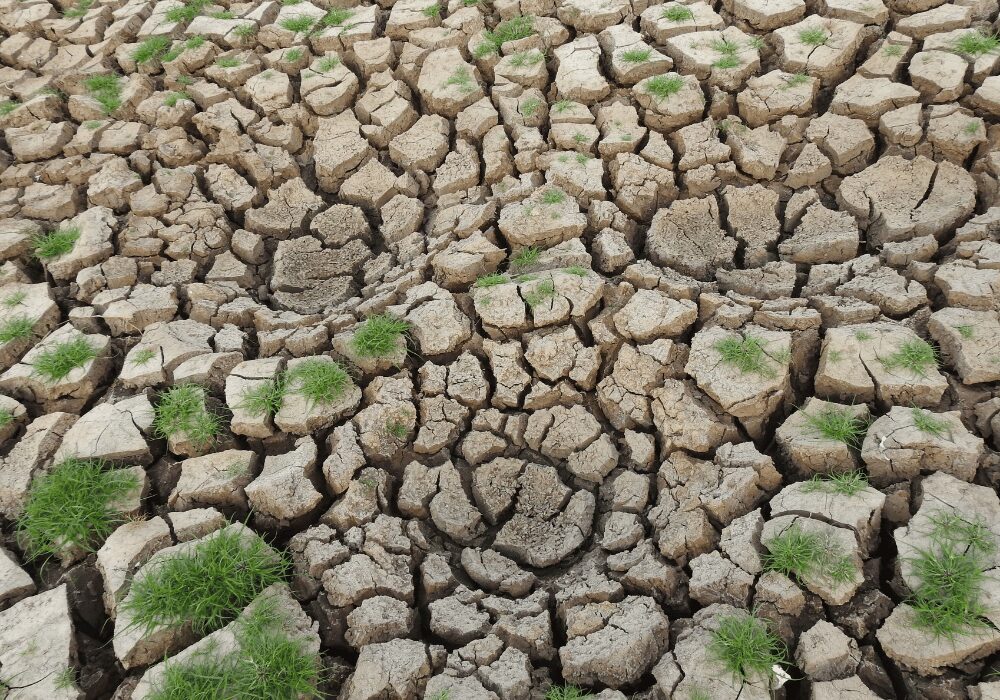 Across the presentations, water scarcity and regional imbalance emerged as dominant concerns.
LOCMA warned that the Limpopo-Olifants Water Management Area is already experiencing demand levels that exceed available water supply in several sub-catchments.
The agency estimated registered annual water use volumes at approximately 3.77 billion cubic metres against available yield volumes of around 2.8 billion cubic metres.
To offset deficits, approximately 500 million cubic metres of water are transferred annually from the Orange-Senqu Basin.
The economic implications are significant. LOCMA noted that the Olifants catchment contributes approximately 5% of South Africa’s GDP while supporting mining, agriculture, power generation and heavy industry.
PUCMA similarly acknowledged mounting pressure within its own systems, stating that although the broader water management area still maintains a positive overall balance, “demand in many areas outstrips the yield, indicating a degree of water stress.”
The agency noted that reconciliation strategies and national water balance assessments have identified increasing supply challenges, prompting prioritisation of updated water balance studies and intervention planning.
MTCMA’s catchment profile illustrates the complexity of water management in the Eastern Cape. The agency operates across a vast 168 966 km² region supporting approximately 7.2 million people, with economic activity heavily dependent on agriculture, tourism, forestry and growing agro-processing sectors.
Its revenue profile reflects the agricultural dominance of the region:
Across the presentations, water scarcity and regional imbalance emerged as dominant concerns.
LOCMA warned that the Limpopo-Olifants Water Management Area is already experiencing demand levels that exceed available water supply in several sub-catchments.
The agency estimated registered annual water use volumes at approximately 3.77 billion cubic metres against available yield volumes of around 2.8 billion cubic metres.
To offset deficits, approximately 500 million cubic metres of water are transferred annually from the Orange-Senqu Basin.
The economic implications are significant. LOCMA noted that the Olifants catchment contributes approximately 5% of South Africa’s GDP while supporting mining, agriculture, power generation and heavy industry.
PUCMA similarly acknowledged mounting pressure within its own systems, stating that although the broader water management area still maintains a positive overall balance, “demand in many areas outstrips the yield, indicating a degree of water stress.”
The agency noted that reconciliation strategies and national water balance assessments have identified increasing supply challenges, prompting prioritisation of updated water balance studies and intervention planning.
MTCMA’s catchment profile illustrates the complexity of water management in the Eastern Cape. The agency operates across a vast 168 966 km² region supporting approximately 7.2 million people, with economic activity heavily dependent on agriculture, tourism, forestry and growing agro-processing sectors.
Its revenue profile reflects the agricultural dominance of the region:
- Agriculture accounts for 70% of raw water revenue.
- Local government water services contribute 25%
- Commercial forestry contributes 4%
- Other users contribute 1%
Ecological restoration and pollution control expand
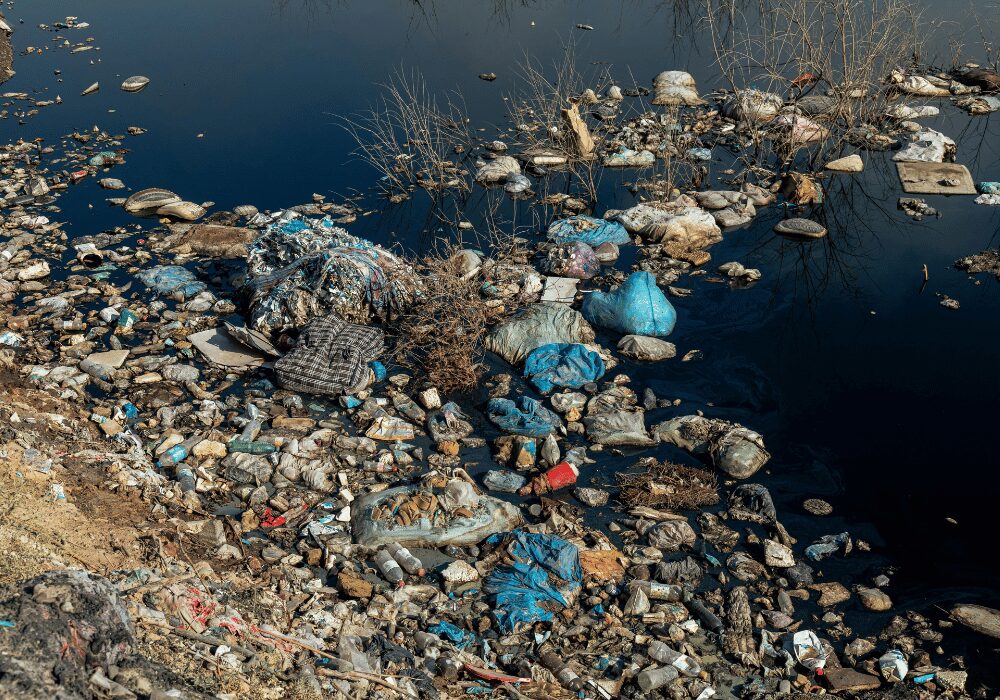
Environmental protection is a key function of catchment management
- 269 surface water quality sites;
- 31 river flow sites;
- 25 rainfall stations;
- 12 groundwater monitoring sites;
- 25 ecological water requirement sites;
- 10 international obligation monitoring points.
- Implementing at least 90% of its waste discharge charge strategy
- Processing 85% of high-risk water use licence applications within 74 working days
- Monitoring water users for compliance
- Responding to 80% of pollution incidents within 48 hours
- Monitoring 139 strategic water quality points annually
- Riverbank stabilisation
- Erosion control
- Ecological rehabilitation
- Water quality restoration

BOCMA has allocated over R30 million towards water resource management initiatives, including alien vegetation clearing, water quality testing and public engagement programmes.
Collectively, the APPs indicate that ecological restoration is increasingly being treated not as a secondary environmental concern, but as a core water security intervention.Water licensing and compliance enforcement accelerate
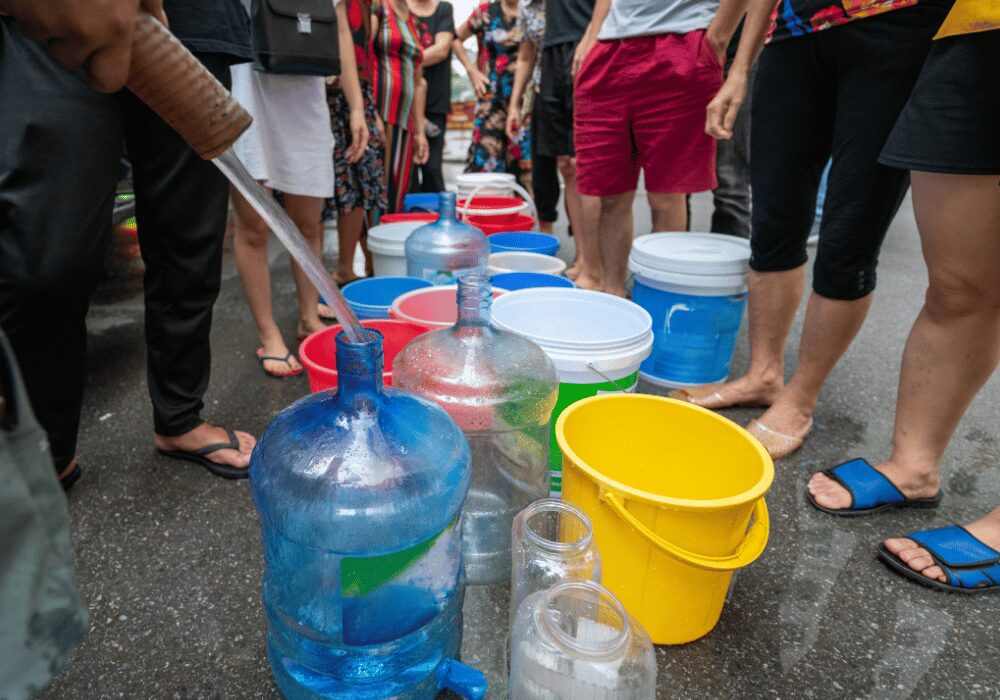
Without catchment management water security becomes a water availability issue
Financial sustainability emerges as a structural risk
Despite growing responsibilities, the agencies continue facing substantial financial pressure. PUCMA’s projected 2026/27 budget totals R149 million, of which 78.2% will come from own revenue generated primarily through water tariffs. The agency warned that compensation costs are growing faster than revenue, with employee costs projected to increase at approximately 6.9% annually compared to revenue growth of only 0.4%. Travel and subsistence alone account for R18.9 million, approximately 32% of all goods and services expenditure. PUCMA also plans expenditure on:- River health programmes
- Water resource studies
- River rehabilitation initiatives valued at approximately R8 million
- Water quality testing budgets of approximately R4 million.
- R180 million for administration
- R240 million for Water Resource Management
- Credit control enforcement
- Use of National Treasury-appointed debt collectors
- Water debt relief incentive schemes
- Intergovernmental cooperation measures
- R101 million from water resource charges
- R32 million from parliamentary grants
Institutional capability and transformation remain priorities
The APPs also reveal a strong focus on organisational development, staffing and institutional transformation. MTCMA plans to fill 90% of vacant positions while implementing new ICT, communications, audit and risk management strategies. Its procurement targets include:- 40% expenditure to be directed toward women-owned businesses
- 30% toward youth-owned enterprises
- 7% toward persons with disabilities
Regional cooperation and strategic infrastructure remain critical
Several WMAs span international river systems, making regional cooperation increasingly important. LOCMA operates within the Limpopo Basin shared with Botswana, Zimbabwe and Mozambique, while IUCMA manages systems linked to Mozambique and Eswatini. PUCMA highlighted the strategic importance of the Mgeni system and the Mooi-Mgeni Transfer Scheme, both central to water security in KwaZulu-Natal. As drought risk, climate variability and infrastructure stress intensify across Southern Africa, transboundary water governance is expected to become increasingly important.A defining decade for South Africa’s water governance system
 Taken together, the APPs illustrate a water sector entering uncharted waters where these relatively new organisations are becoming very important, very quickly.
The agencies are simultaneously attempting to:
Taken together, the APPs illustrate a water sector entering uncharted waters where these relatively new organisations are becoming very important, very quickly.
The agencies are simultaneously attempting to:
- Improve ecological resilience
- Expand compliance enforcement
- Accelerate licensing processes
- Stabilise finances
- Strengthen governance systems
- Support economic growth
- Address climate-related risks
- Protect increasingly stressed water resources