
SAETA tracks progress on South Africa’s electricity reforms, highlighting gains, delays and the priorities needed to build a competitive energy market.
In February 2026, the South African Electricity Traders Association (SAETA) released a comprehensive report (Policy to Power: 10 Actions to Deliver Green, Accessible and Secure Electricity) which identified the minimum decisions and deliverables required to move from a monopoly to a functioning multi-market electricity system.
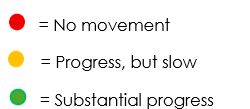
SAETA has been tracking progress against the report over the past six months. South Africa’s electricity reform process is critical to securing a reliable, affordable and increasingly decarbonised power system. The shift towards a competitive multi-market model has the potential to strengthen energy security, expand access, unlock investment and support economic growth and job creation. Tracking progress is essential to assess whether policy commitments are translating into implementation, identify delays and institutional gaps, and maintain accountability across the reform process. There has been progress across most of the reform actions, with some moving ahead faster than others. Khaya Mbatha, Chairperson of SAETA, says: “The Department of Electricity and Energy’s recently published draft electricity sector market transformation position paper is welcome. The position paper is a first step in achieving a cabinet-endorsed electricity reform roadmap that the Policy to Power report calls for.“Where some reforms have stalled, such as Electricity Distribution Industry interventions and transmission rollout, it is encouraging to note that these are likely to gain momentum in coming months, as they are given priority by the Eskom Restructuring Task Team.”SAETA says that the next phase must focus on coordinated delivery, including a clear reform roadmap, stronger institutions, effective tariff reform, Eskom’s unbundling and accelerated grid expansion. The table below provides a high-level assessment of progress to date. Table 1: Six-month progress on 10 key actions
| Action | Description | |
| Publish a Cabinet-endorsed electricity reform roadmap |  |
Cabinet in July 2026 approved the publication of a Draft Electricity Sector Market Transformation Position Paper for public consultation. It was subsequently gazetted by the Department of Electricity and Energy on 21 August 2026 with a 30-day public consultation to follow. The paper provides a high-level overview of the South African Wholesale Electricity Market, and the role of an unbundled Eskom. The position paper is the precursor to a Cabinet-endorsed electricity reform roadmap with milestones and timeframes that hold the minister to account. The final roadmap would likely be finalised after 2026 but there is at least movement in the right direction with the position paper helping to reduce uncertainties. |
| Finalise and implement the Electricity Pricing Policy | |
The revised draft Electricity Pricing Policy, updating the 2008 policy to reflect Eskom unbundling and the ERA Act, was gazetted on 28 August 2026 for public comment. The policy seeks to achieve cost-reflective, efficient pricing important to drive investment. It also aims to achieve predictable tariff structures and affordability. However the mechanics of achieving these ambitions are not all clear and the public comment period is important to nail down the details around milestones and timelines to ensure implementation. The final policy is critical to directing tariff reform as the electricity market shifts from a single-buyer model with regulated prices to a competitive market that includes market pricing. The DoEE plans to submit the final policy for Cabinet approval by the end of the current financial year (March 2027). |
| Strengthen institutional capacity at Nersa and the DoEE | 
|
Nersa has appointed consultancy Thero Services to complete an organisational assessment to identify gaps in governance, performance and effectiveness and align its management system with international standards. The findings of the report would inform recommendations and an implementation plan. The impact of the assessment will take time before it can yield results but there is an acknowledgment from Nersa that the organisation needs to be fit for purpose. Nersa also has key vacancies – CEO and chairperson – that need to be filled. In August it also issued an advertisement to fill part-time regulator positions as the terms of three existing regulators are expiring. It’s an opportunity to appoint people with experience in energy market reforms. The DoEE also had a high vacancy rate and appointments were targeted between April and June, this is critical as the department assumes some functions of Necom. This reform area is still a work in progress. |
| Define a credible long-term role for Eskom |
|
President Cyril Ramaphosa in July 2026 endorsed the Eskom Restructuring Task Team’s (ERTT’s) Phase 1 final report which confirms that transmission assets can be unbundled out of Eskom without compromising its financial sustainability. Phase 2 kicks off where an implementation plan will be developed over three months. Treasury will also appoint a transaction advisor to manage the complexity of the financial structures at hand and negotiate with lenders. The president met with Eskom board chair Mteto Nyati in late August where the latter affirmed support for the policy direction being taken but also raised concerns around the execution of the reform. In this regard, the implementation plan will be key to monitor as it will guide the pace of reform delivery. |
| Deliver the transmission development plan |
|
The National Transmission Company South Africa (NTCSA) fell behind on its target to rollout transmission infrastructure in 2025/26, achieving only 270.8km out of the required 423km. The NTCSA is trying to secure R134bn in funding for priority transmission projects- out of the required R440bn to finance 14,500km transmission lines outlined in the plan. According to Ramokgopa several Chinese companies plan to set up factories in South Africa for transmission equipment such as wires, pylons and transformers that could help shorten timelines but it’s not yet clear how concrete these commitments are. Meanwhile the operationalisation of the Credit Guarantee Vehicle (CGV) continues, the CGV is important to support the bankability of private sector transmission projects part of the Independent Transmission Project procurement programme. IPP Office head Precious Edward recently indicated the final request for proposals should be issued in Q4, slightly later than Treasury and the DoEE’s Q3 target, this is probably to align with the finalisation of the CGV which still needs its licence from the Prudential Authority. Once the RFPs are issued there should be more movement in this reform area to unlock new grid capacity. |
| Reform the electricity distribution industry | 
|
This reform area has not progressed at all as the Department of Electricity and Energy and Eskom have prioritised rolling out Distribution Agency Agreements over pursuing EDI reform outlined in the Necom-developed roadmap which still has not been published for public consultation. In the meantime municipal debt has grown to R119bn. One positive is that the Eskom Restructuring Task Team has recommended a working group be set up to accelerate programmes to deal with municipal debt including EDI reform, the metro trading services reform programme, the municipal debt relief programme as well as the rollout of smart meters and DAAs. |
| Finalise trading rules for bilateral markets |
|
Nersa has called a second public consultation on the trading rules after reverting back to a less contentious draft, although some competition concerns persist, including that traders are restricted from participating in the Sawem during the early stages. To allow stakeholders to consider the Electricity Pricing Policy (EPP), Nersa has pushed out the consultation on the rules from August to September. The finalisation of the rules is now expected to be the end of October, which is still ambitious. The EPP indicates independent traders and wheeling customers will not be excluded from contributing to network maintenance and subsidies. While traders are not opposed to this, these costs must be transparent. Although slower than expected, Nersa has opted for a more cautious approach to ensure broad-based acceptance as opposed to getting locked into court battles over controversial rules. The lack of rules has not deterred companies from acquiring trading licences which shows there is still strong investor appetite in trading which will drive new projects provided that the rules allow fair competition and a more efficient trading environment. |
| Improve wheeling frameworks and grid access |
|
Eskom has published a new wheeling and net billing policy. The policy removes restrictions of wheeling across indebted municipalities, but municipalities still require wheeling frameworks and policies to enable wheeling. Other restrictions remain such as those linked to voltage, portfolio sizes and administrative burdens and associated costs. Eskom also still requires developers to confirm committed off-taker details when applying for grid access and does not accept traders as off-takers – which has implications for developing merchant capacity. A positive step forward has been the NTCSA launching its Grid Access Unit which helps alleviate conflict-of-interest issues linked to grid access to the transmission network and projects connected at the distribution level that have implications at transmission level. However most renewable energy projects are connected to the distribution network. |
| Launch SAWEM with the Market Code in place |
|
Nersa held a public hearing on the market code, but there is a risk it may face delays in finalisation as Eskom has threatened a judicial review if certain legal issues are not addressed. So far Nersa, which is reviewing the comments, has extended the deadline for finalisation from August to October 2026. Other key regulations to finalise include the vesting contracts framework and wholesale tariff methodology. During the public hearings in August it was clear that the two frameworks require further technical workshops, the same model followed for finalising trading rules. This would push out the finalisation date beyond October, and would also impact the Sawem launch to external participants which is due Q2 2027. |
| Enable cross-border electricity trade |
|
There is still no breakthrough in this area until the trading rules are finalised and cross-border transmission arrangements are finalised by NTCSA. |
“The priority now is to maintain momentum and coordination across the reform programme. A fragmented approach would create further delays, weaken investor confidence and slow the delivery of the infrastructure and market changes needed to support economic growth,” says Peter Attard Montalto, managing director at Krutham.“It is equally important to embed the reforms in durable institutions, policies and implementation processes. Doing so will help sustain progress over time, reduce uncertainty and ensure that the reform programme remains resilient through future leadership and administrative changes,” Mbatha added. Achieving this will require sustained collaboration between government, business and other industry stakeholders, as demonstrated through Necom. With responsibility for implementation now shifting to the Department of Electricity and Energy and National Treasury, the same level of coordination must be maintained. No single institution can deliver these reforms alone. Finalising the Cabinet-endorsed electricity reform roadmap therefore remains a central priority. It will provide clear milestones and timeframes, coordinate implementation across institutions and strengthen accountability for delivery.